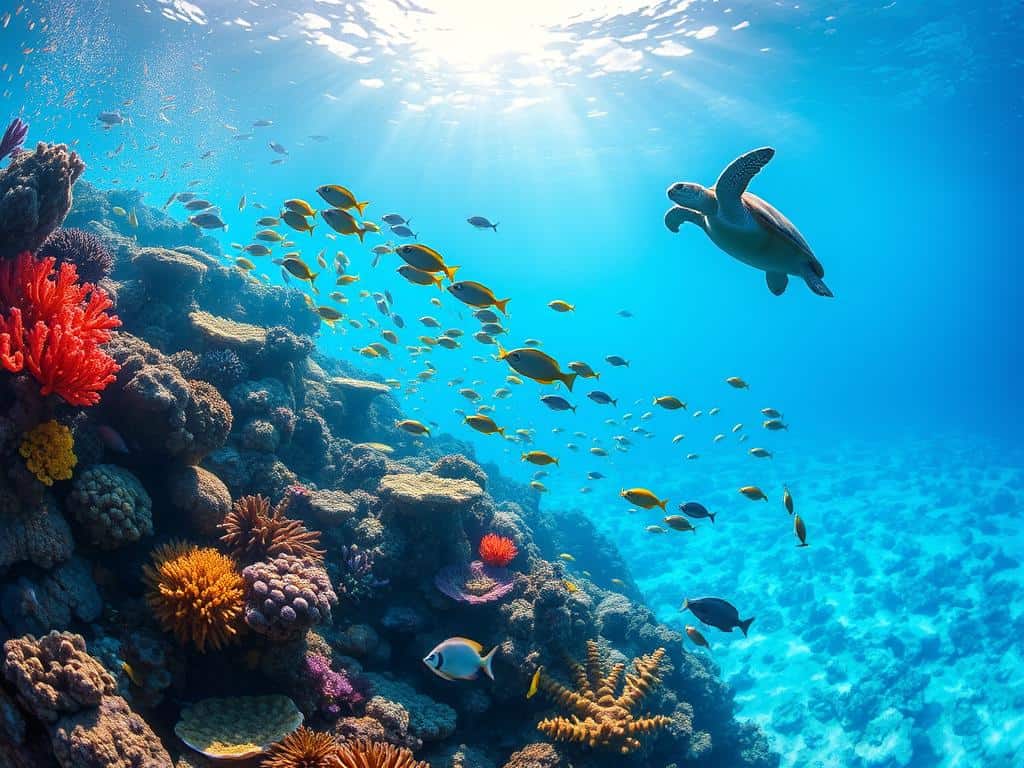
Did you know that about 33 billion pounds of plastic enter our oceans every year? This is a huge problem for our marine life and ecosystems. We can all help by working together to protect our seas for the future.
Right now, only 8% of Earth’s waters are safe. The 30×30 movement wants to change this by 2030. Groups like the Surfrider Foundation and Sustainable Coastlines Hawaii are working hard to clean our coasts and teach us how to live sustainably. By making smart choices, we can help keep our oceans healthy.
Let’s take steps to reduce plastic waste and help our oceans thrive. Together, we can make a big difference for marine life.
Key Takeaways
- 33 billion pounds of plastic enter the oceans each year.
- Only 8% of Earth’s waters are currently protected.
- The 30×30 initiative aims to protect 30% of lands and waters by 2030.
- Individual actions, like reducing plastic waste, can significantly aid conservation.
- Organizations like the Surfrider Foundation are key for ocean protection.
Understanding the Importance of Ocean Conservation
Ocean conservation is vital for our planet’s health. Oceans cover most of the Earth, supporting life with essential functions. They produce up to 50% of the oxygen we need, making them critical for our survival.
These vibrant ecosystems are home to countless species. They are key for global food security. The health of our oceans is essential for all life on Earth.
The Role of Oceans in Our Ecosystem
Oceans absorb about 98% of the sun’s heat, helping regulate our climate. They provide protein to nearly 3 billion people, highlighting their importance as a food source. Spending time by the coast can improve our mental and physical health.
Being near the ocean can calm us, thanks to its natural elements. The sound of waves helps us relax and focus. It’s a powerful way to clear our minds.
The Threats Facing Our Oceans
Ocean ecosystems face severe threats. Climate change causes sea levels to rise and ocean acidity to increase. This leads to coral bleaching, harming marine life.
Plastic pollution is another major issue. It could make our oceans have more plastic than fish by 2050. Overfishing and harmful fishing practices also harm marine populations. Around 40% of marine ecosystems are damaged by human actions.
Without urgent action, the future of marine life and global health is at risk. We must act now to protect our oceans.
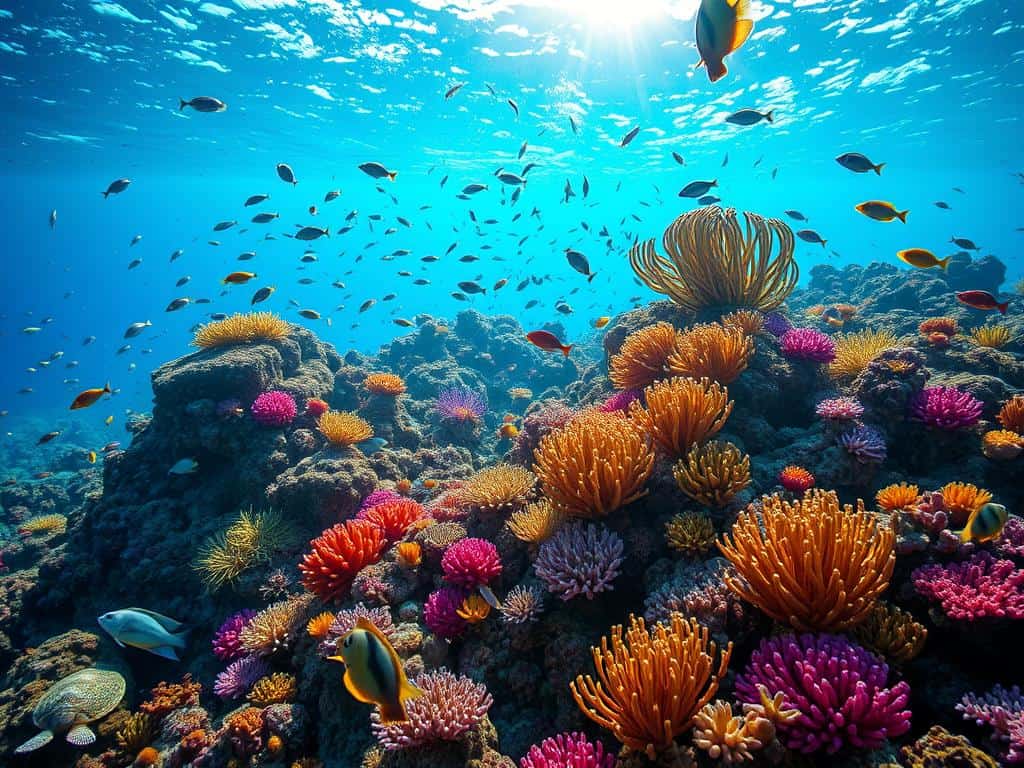
Simple Steps to Contribute to Ocean Conservation
Small actions can make a big difference in saving our oceans. I focus on three main areas: cutting down plastic waste, choosing sustainable seafood, and joining local clean-up efforts. These steps are key to keeping our oceans healthy and protecting marine life.
Reduce Plastic Waste
It’s vital to reduce plastic waste for our oceans’ health. Every year, 33 billion pounds of plastic pollute our seas, or two garbage trucks’ worth every minute. I use reusable bags, bottles, and containers to help. Recycling plastic also helps keep our oceans clean. Knowing how plastic harms marine animals motivates me to use less plastic.
Support Sustainable Seafood Choices
Choosing sustainable seafood helps protect our oceans. Fish from well-managed fisheries are better for the planet than beef. Seafood Watch guides me in picking seafood that supports healthy marine life. By choosing wild seafood, I support ocean conservation and enjoy healthy meals.
Get Involved in Local Clean-Up Efforts
Joining local clean-ups helps me make a real difference. Volunteering or organizing my own clean-up efforts can significantly reduce pollution. Working together raises awareness and strengthens our conservation efforts. Every small action contributes to a cleaner ocean and a healthier planet for all.
Conclusion
Reflecting on ocean conservation, I see my role is key in protecting our oceans. Marine protected areas (MPAs) boost biodiversity and manage fish well. Yet, they can’t solve all problems like pollution and overfishing.
Supporting MPAs helps the ocean’s health and boosts marine life and fishing. Working with groups like Marine Applied Research and Exploration (MARE) keeps me updated on research and advocacy. Every action I take against plastic waste and for sustainable seafood helps marine conservation.
The ocean, covering over 70% of our planet, is vital for our ecosystem and economy. By working together, educating, and involving communities, we can stress the need for ocean protection. With ongoing advocacy and action, we can ensure a healthy marine environment for the future. Every small step counts, and together, we can make a big difference.



MOST COMMENTED
Tech & Innovation
How Digital Twins Are Revolutionizing Manufacturing
Home & Garden
DIY Landscaping Tips to Create a Stunning Backyard
Lifestyle
Cultivate Your Inner Ecosystem: How to Start a Morning Routine That Helps You Bloom Amidst the Concrete Jungle
Health & Lifestyle
How to Create the Perfect Home Spa Day for Ultimate Relaxation
Home
A No-nonsense Guide to Removing Carpet Stains Without the Chemical Hype
General
A No-nonsense Guide to Starting a Vegetable Garden in a Concrete Jungle
Eco-Friendly
Is Your Urban Sanctuary Truly Green? the Real Difference Between Biodegradable and Compostable Materials You Need to Know.