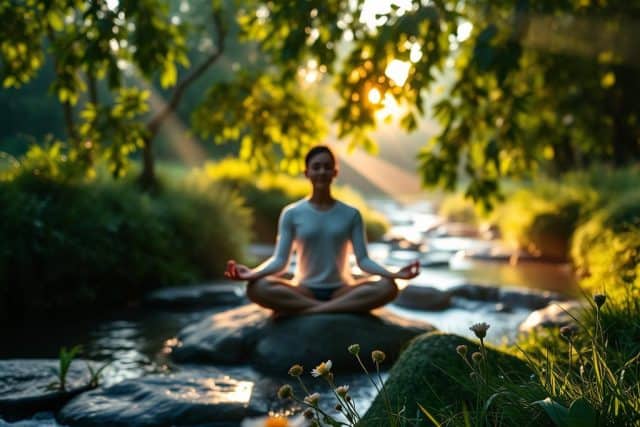
Did you know over 200 studies show mindfulness-based therapy works well for stress, anxiety, and depression? This ancient practice is getting more attention for its ability to relax and improve mental health. Just a few minutes of meditation can bring calm and peace to our busy lives.
Meditation is easy to do anywhere—while you’re on the move, in a park, or even in a busy meeting. It helps us be more mindful and aware of ourselves. This makes meditation a great way to reduce stress and improve our emotional and physical health.
Key Takeaways
- Meditation is an effective method for reducing stress and anxiety.
- Practicing mindfulness enhances emotional well-being and self-awareness.
- Regular meditation can significantly improve physical health, including cardiovascular benefits.
- It can be done anywhere, adapting easily to everyday life.
- A variety of meditation techniques exist, providing different ways to relax.
The Benefits of Meditation on Stress Relief
Meditation is more than just a spiritual practice. It’s a powerful tool for reducing stress and improving our overall well-being. By practicing meditation, we can better handle daily stress and build resilience against life’s challenges.
Understanding Meditation
There are many types of meditation, like mindfulness and loving-kindness. These practices help clear our minds and are easy to start. They don’t need special tools, making them accessible to everyone.
Regular meditation can lower stress markers in our bodies. It shows how effective it is in helping us relax.
Impact on Emotional Well-being
Meditation can greatly reduce anxiety. A 2014 study found that people with high anxiety levels saw a big drop in symptoms. Another study showed that mindfulness meditation can make us feel less lonely and more connected to others.
These results show how meditation can positively impact our emotional health. It helps us deal with life’s ups and downs better.
Physical Health Benefits
Meditation also has physical health benefits. It can lower blood pressure, improve sleep, and reduce chronic pain. People who practice mindfulness report a better quality of life and less insomnia.
Even just 13 minutes of meditation a day can improve our focus and memory. This shows its value for both mental and physical health.
Meditation for Stress: Techniques and Practices
Meditation has many ways to reduce stress and improve well-being. I’ve found several methods that help me relax and think clearly. Each one suits different tastes and can be added to my daily routine for peace of mind.
Mindfulness Meditation
Mindfulness meditation helps me stay in the present moment. It lets me observe my thoughts and feelings without judgment. Studies show it can greatly improve mental health, making it a key stress-reducing technique.
Guided Meditation
Guided meditation uses an instructor’s voice to guide you to a calm state. It’s great for beginners who find it hard to meditate alone. Guided meditation apps offer structured sessions to help manage stress and boost mindfulness.
Body Scan and Progressive Relaxation
The body scan focuses on each body part to find tension. It helps me relax deeply and understand stress physically. Progressive relaxation adds to this by tensing and relaxing muscles, releasing stress. Both techniques are essential for managing stress and improving well-being.
Conclusion
Meditation is a great way to reduce stress and improve mental health. It’s easy to do and can really help. By trying out mindfulness and guided meditation, I’ve seen how it can ease anxiety and stress.
Studies show that meditation is good for your brain and body. It can even help with physical health issues like diabetes. I’ve noticed it makes me feel better emotionally, helping me deal with everyday problems.
Adding meditation to my daily routine has been a game-changer. It’s changed how I handle stress, showing big benefits for my mind and body. Meditation is a path to a calm mind and better emotional health. It’s worth trying for anyone looking to reduce stress and improve their well-being.



MOST COMMENTED
Nature & Sustainability
Affordable Green Energy Solutions for Your Home
Health & Lifestyle
How to Gain Weight the Healthy Way with These 5 Tips
Home & Garden
Outdoor Rugs That Will Instantly Elevate Your Patio Decor
Home & Garden
Top 10 Flowers to Plant for a Colorful, Vibrant Garden
Health & Lifestyle
7 Effective Cardio Workouts You Can Do Anywhere
Health & Lifestyle
10 Guilt-Free Healthy Snacks You Can Enjoy Anytime
Home & Garden
How to Build with Recycled Materials for a Sustainable Home