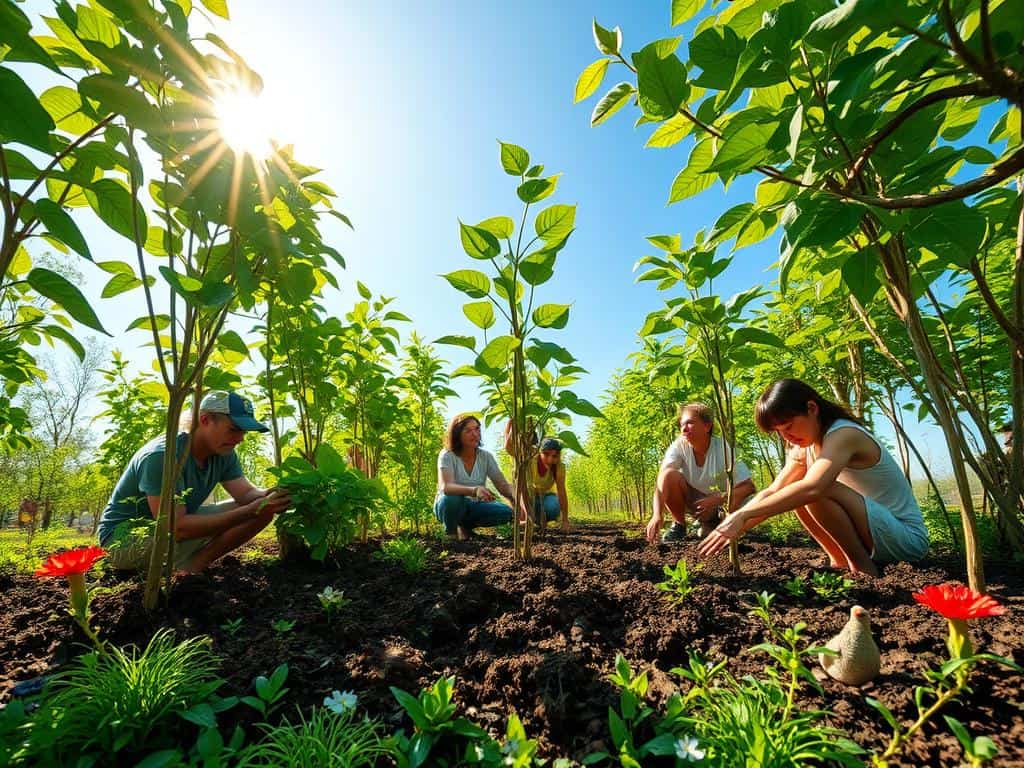
Did you know planting over half a trillion trees could capture about 205 gigatons of carbon? This would lower atmospheric carbon levels by nearly 25 percent. Trees play a key role in fighting climate change by absorbing carbon dioxide. Planting trees is not just good for the environment; it’s also vital for our planet’s future.
Trees are vital in the battle against climate change. They absorb carbon dioxide and help biodiversity. They also provide homes for wildlife. If we add 900 million hectares of forests, that’s 25 percent more than we have now. This shows the impact of tree planting on our planet.
By understanding how trees absorb carbon and taking steps to plant more, we can make a big difference. We can restore our environment and create a healthier planet for all.
Key Takeaways
- Tree planting can capture significant amounts of carbon dioxide, aiding in the fight against climate change.
- Effective carbon sequestration can help maintain global temperatures below critical thresholds.
- Reforestation provides essential habitats for wildlife, supporting biodiversity.
- Expanding forests could mitigate the impacts of lost trees and reduce atmospheric CO2 levels.
- Collective efforts in tree planting can build broad bipartisan support for climate initiatives.
Understanding the Role of Trees in Carbon Sequestration
Trees are key in fighting climate change by absorbing carbon dioxide. This process is vital for reducing greenhouse gases. U.S. forests play a big role in this effort.
How Trees Absorb Carbon Dioxide
Trees take in CO2 through photosynthesis, turning it into energy. A single tree can absorb a lot of CO2, helping lower atmospheric carbon levels. America’s forests absorb over 800 million tons of carbon each year, which is about 12% of the country’s emissions.
Young forests are great at capturing carbon quickly. But older forests, while slower, store more carbon overall. This shows the different ways forests help fight climate change.
The Contribution of U.S. Forests
U.S. forests are a vital resource in the battle against climate change. They absorb a lot of carbon and improve soil’s carbon retention. Urban forests also help by storing carbon in trees and capturing CO2 from the air.
Forest management, like selective harvesting and controlling invasive plants, boosts carbon capture. By protecting and sharing knowledge about forests, we can keep these ecosystems healthy and fight climate change.
The Importance of Reforestation in Environmental Restoration
Reforestation is key to fixing our environment. It brings back damaged ecosystems and helps our planet breathe better. Many National Forests in the U.S. need help due to wildfires, pests, and harsh weather.
These problems have left over a million acres needing trees to be planted. This effort is vital for our planet’s health.
The Current State of National Forests
Our National Forests are in bad shape. Many areas are now empty, losing their ability to support life. Reforestation can fix this by growing back trees and protecting wildlife.
Trees are home to over 80% of the world’s animals. They keep our ecosystems balanced. By planting the right trees, we can make our forests healthy again.
Experts say we can plant trees on about 148 million acres in the U.S. This is a big chance to bring back our forests.
Supporting Biodiversity through Tree Planting
Tree planting helps many species survive. It makes places for animals to live and grow. By choosing the right trees for the right places, we help our forests thrive.
Native trees are best because they fit well with their surroundings. They help capture carbon and make soil better. By planting trees, we create homes for animals and help people too.
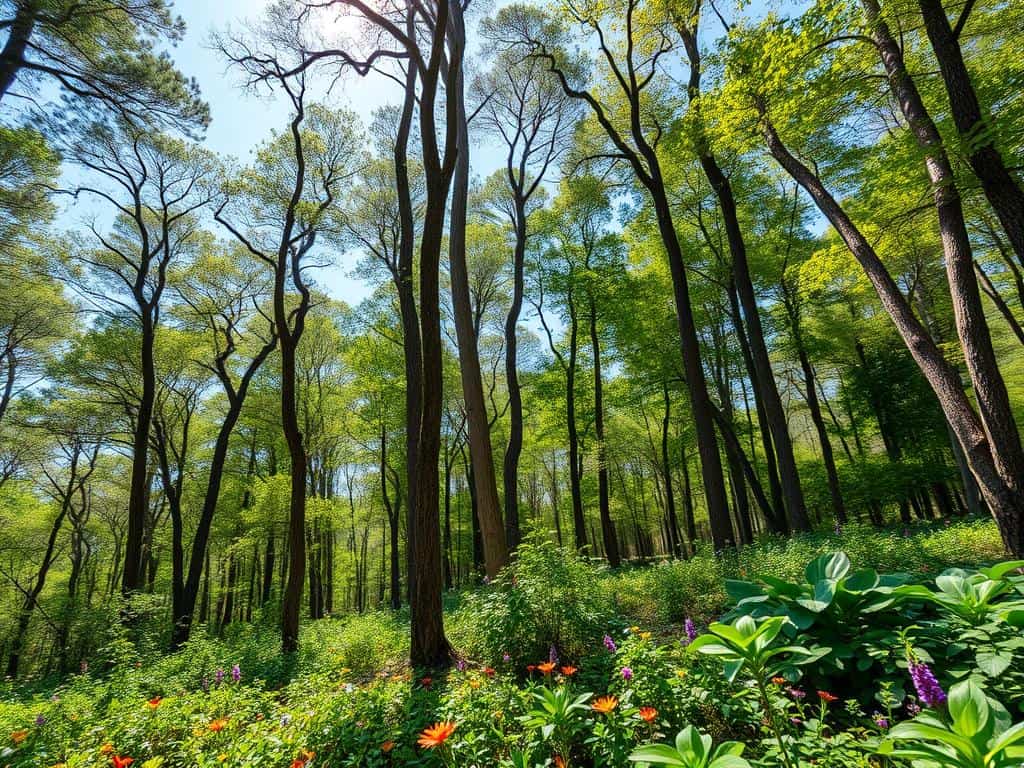
Tree Planting: A Sustainable Solution for Climate Change
Tree planting is a strong way to fight climate change. It brings many benefits, not just for the environment. It also helps the economy by improving air quality and lowering energy costs.
Planting trees can also make properties more valuable. These trees do more than just look good. They help save water, prevent soil erosion, and support local wildlife.
Economic and Social Benefits of Tree Planting
Tree planting is a smart investment with many benefits. It boosts tourism and creates jobs in forestry and landscaping. It also cuts down on healthcare costs by improving air quality.
Trees make cities cooler, which means less energy used for cooling. This leads to lower energy bills. Communities that plant trees see better community spirit and overall well-being.
Steps for Successful Tree Planting
To get the most from tree planting, it’s important to follow key steps. First, choose the right tree species for your area. This helps them grow better.
Prepare the planting site by removing weeds and checking the soil. Make sure the area drains well. After planting, keep the soil moist and mulched. This helps the trees grow strong and healthy.
Conclusion
Tree planting is key in the fight against climate change. Studies show trees absorb carbon dioxide and boost biodiversity. They also help restore ecosystems.
By 2050, trees could remove 22.04 gigatons of greenhouse gases in the first scenario. In the second, they could remove 35.09 gigatons. This shows the big benefits of planting more trees.
Looking at the current situation, planting more trees on 718 million hectares of land is promising. It could bring in $3.17 trillion in profit over time. This proves tree planting is good for the environment and the economy.
So, planting trees is not just a duty to the planet. It’s a promise to a greener future for all. With many ways to support tree planting, we can make our planet healthier. This helps us fight climate change well.



MOST COMMENTED
Nature & Sustainability
Affordable Green Energy Solutions for Your Home
Health & Lifestyle
How to Gain Weight the Healthy Way with These 5 Tips
Home & Garden
Outdoor Rugs That Will Instantly Elevate Your Patio Decor
Home & Garden
Top 10 Flowers to Plant for a Colorful, Vibrant Garden
Health & Lifestyle
7 Effective Cardio Workouts You Can Do Anywhere
Health & Lifestyle
10 Guilt-Free Healthy Snacks You Can Enjoy Anytime
Home & Garden
How to Build with Recycled Materials for a Sustainable Home