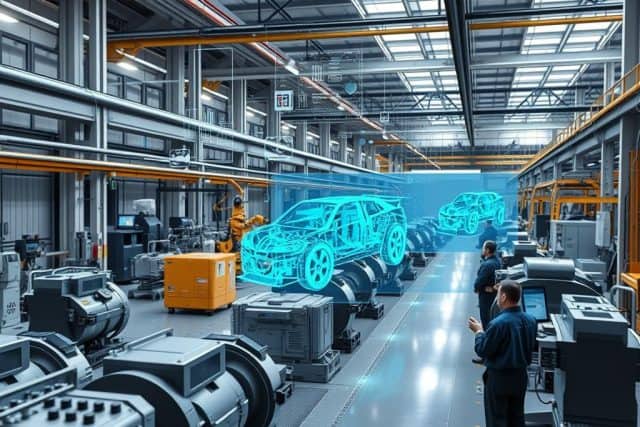
Did you know that 86% of top executives think Digital Twins can really help their companies? This shows how big of a deal industry innovation is for making things better. With problems like supply chain issues and not enough workers, digital twins are changing how things are made.
Digital twins are like virtual copies of real processes. They give us deep insights into how things work. More leaders are seeing how important this is, with 44% already using digital twins. These models help make fast decisions, use resources better, and boost productivity. They’re key to the future of factories.
The digital twin market is expected to grow a lot. It will go from $17.73 billion in 2024 to $259.32 billion by 2032. This shows a huge growth rate of 39.8%. As we explore this tech more, it’s clear digital twins are vital for any company wanting to succeed today.
Key Takeaways
- Digital Twins enable enhanced manufacturing efficiency through real-time data monitoring.
- Implementation can lead to significant cost savings, with savings of 5 to 7 percent monthly reported.
- The global digital twin market is set to grow substantially, indicating its increasing relevance.
- Predictive maintenance via digital twins can drastically reduce unscheduled downtimes in manufacturing.
- Customization and personalization in production are facilitated by digital twin technology.
Understanding Digital Twins in Manufacturing
In the world of manufacturing, digital twins are key. They are virtual copies of real objects or processes. This lets manufacturers watch, study, and improve operations easily.
This method combines data from many places. It gets closer to real-world conditions than old ways of simulating.
Definition and Overview
A digital twin is more than a virtual copy. It covers whole production systems, giving a full view of how things are made. Thanks to modern tech, these systems can watch and analyze things all the time.
This makes operations more efficient. The growth of technology lets digital twins use real-time data. This increases productivity and cuts down on downtime.
Historical Context and Development
The history of digital twins starts in the early 2000s, tied to managing product lifecycles. At first, it was just a small idea. But new tech opened up more possibilities.
Now, with digital transformation leading the way, digital twins are more popular. They help make production faster and more efficient.
The Role of Industry 4.0
Industry 4.0 changes how digital twins are used in making things. It focuses on automation, learning from machines, and connecting things. Companies that use these ideas can guess when machines will break and make things run smoother.
This lets them meet market needs faster. By using digital twins, companies can be more competitive and run things better.
Benefits and Applications of Digital Twins
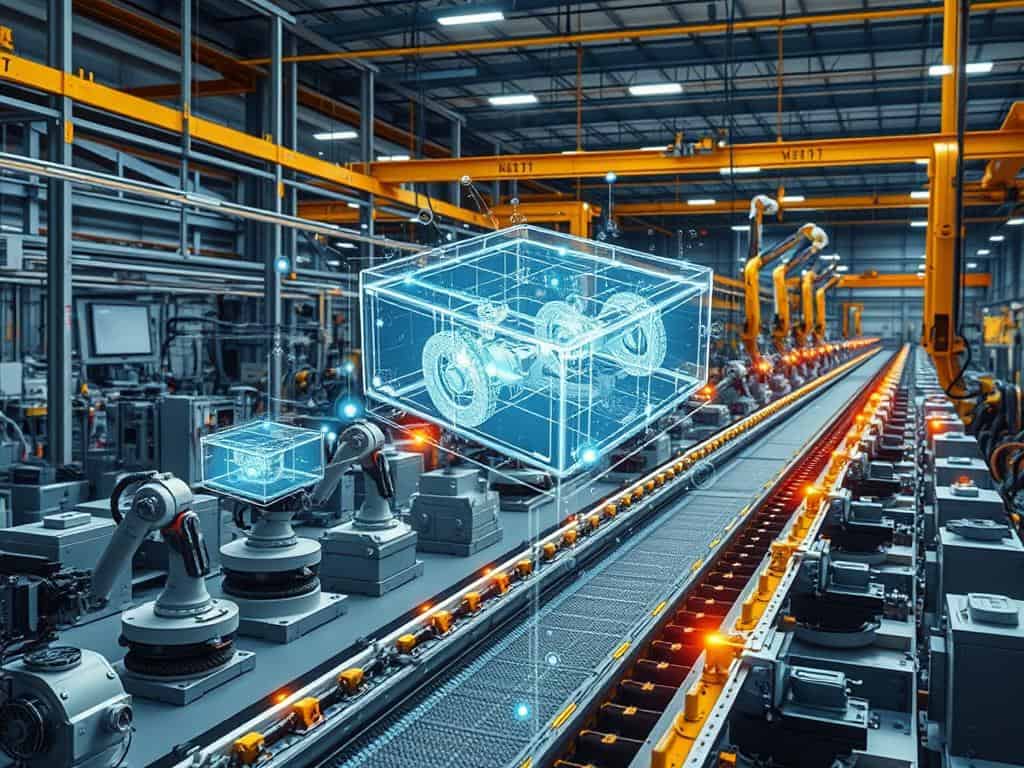
Digital twins are changing the game in manufacturing. They give real-time insights into how equipment is performing. This helps manufacturers work more efficiently.
These technologies bring many benefits across different areas. They help organizations improve in many ways.
Real-Time Data Analysis and Monitoring
Digital twins make it easy to monitor equipment continuously. Engineers can see how things are working in real-time. This helps them spot problems fast.
They can act quickly to prevent equipment failures. This keeps production running smoothly and keeps things productive.
Predictive Maintenance for Equipment Efficiency
Digital twins help predict when equipment might fail. They use sensors and machine learning to analyze data. This helps plan maintenance better.
By doing this, companies can reduce downtime and save on maintenance costs. It also makes equipment last longer.
Simulation Scenarios for Enhanced Decision-Making
Digital twins allow teams to test different scenarios. They can see how changes might affect production. This helps make better decisions.
It lets organizations see how changes might impact efficiency or find bottlenecks. This is a big help in planning.
Supporting Training and Employee Development
Digital twins are great for training employees. They offer immersive learning experiences. Trainees can practice without the risks of real-world operations.
This approach prepares employees for different scenarios. It helps build a skilled team ready for modern manufacturing challenges.
Conclusion
Digital Twins are changing the game in manufacturing. They offer many benefits, like better performance and more innovation. This makes companies more competitive and ready for the future.
Digital Twins are being used in many fields, like aerospace and healthcare. As more industries use them, we’ll see new ways of working. With 5G and DTaaS, these solutions will get even better.
Investing in Digital Twins is more than just updating systems. It’s about creating a smarter, more agile way of making things. This path leads to a future where efficiency and creativity go together.


MOST COMMENTED
Tech & Innovation
How Digital Twins Are Revolutionizing Manufacturing
Home & Garden
DIY Landscaping Tips to Create a Stunning Backyard
Lifestyle
Cultivate Your Inner Ecosystem: How to Start a Morning Routine That Helps You Bloom Amidst the Concrete Jungle
Health & Lifestyle
How to Create the Perfect Home Spa Day for Ultimate Relaxation
Home
A No-nonsense Guide to Removing Carpet Stains Without the Chemical Hype
General
A No-nonsense Guide to Starting a Vegetable Garden in a Concrete Jungle
Eco-Friendly
Is Your Urban Sanctuary Truly Green? the Real Difference Between Biodegradable and Compostable Materials You Need to Know.