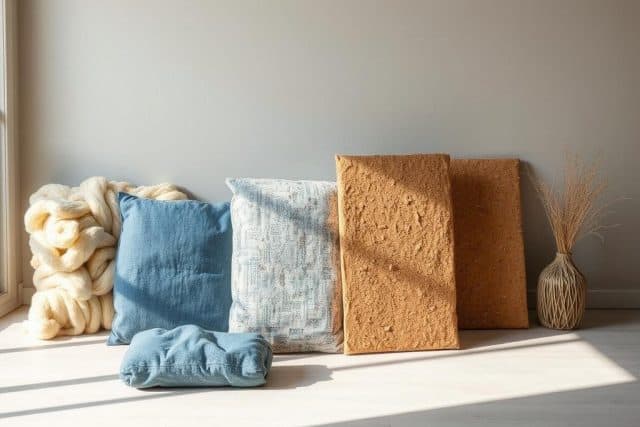
Did you know that over 50% of total energy costs in most homes are spent on HVAC (heating, ventilation, and air conditioning)? This is a huge number that shows how important insulation is for your energy bills. By choosing eco-friendly insulation, I can make a big difference in my home’s energy use. This choice not only helps the planet but also cuts down on my utility costs.
In this article, I’ll look at five great options: sheep’s wool, cotton, aerogel, rigid polystyrene, and Icynene spray foam. Each is made from renewable resources or recycled materials. This means my home stays cozy while being kind to the environment.
Using eco-friendly insulation helps make my home more sustainable. It also supports green building practices that lower carbon emissions. The R-value of these materials shows how well they keep energy in. For example, sheep’s wool has an R-value of 4.3 per inch, which means big savings.
This shows that investing in insulation is a smart move. It saves money and helps the planet.
Key Takeaways
- Over 50% of energy costs are linked to HVAC systems in homes.
- 25-40% of heating and cooling bills result from heat loss due to air leaks.
- Higher R-values indicate better insulation performance, with many eco-friendly materials showing good ratings.
- Eco-friendly insulation materials are usually non-toxic and have fewer harmful chemicals.
- Good insulation in US homes can greatly reduce CO2 emissions.
Understanding Eco-Friendly Insulation and Its Benefits
Choosing eco-friendly insulation offers many benefits for both homeowners and the planet. It’s important to know what makes insulation green. This knowledge helps improve your home and support sustainability.
What Makes Insulation Eco-Friendly?
Eco-Friendly Insulation uses materials that are renewable and safe. For example, sheep’s wool, cotton, and cellulose are better for the environment than fiberglass. They have less environmental impact and are healthier for indoor air.
Fiberglass insulation requires a lot of energy to make. It also has harmful fibers. In contrast, green materials are safer and more energy-efficient.
Financial Benefits of Eco-Friendly Insulation
Choosing eco-friendly insulation can save you money. Homes with this insulation use 30% to 50% less energy. This means lower utility bills.
The US Department of Energy says 44% of home energy use is for heating and cooling. These savings are good for the planet and your wallet. Plus, government incentives make these options even more appealing.
Energy Efficiency and Sustainable Home Building
Eco-friendly insulation makes homes more energy-efficient. It helps keep temperatures stable, reducing the need for heating and cooling. This saves energy and money.
Using materials like aerogel can improve a home’s energy use. Insulation not only cuts energy costs but also reduces a home’s carbon footprint. This supports sustainable living goals.
Top Eco-Friendly Insulation Materials to Consider
Choosing eco-friendly insulation for your home can save money and keep your home warm. Each material has special qualities that help save energy. This makes picking the right one very important.
Sheep’s Wool: Nature’s Cozy Blanket
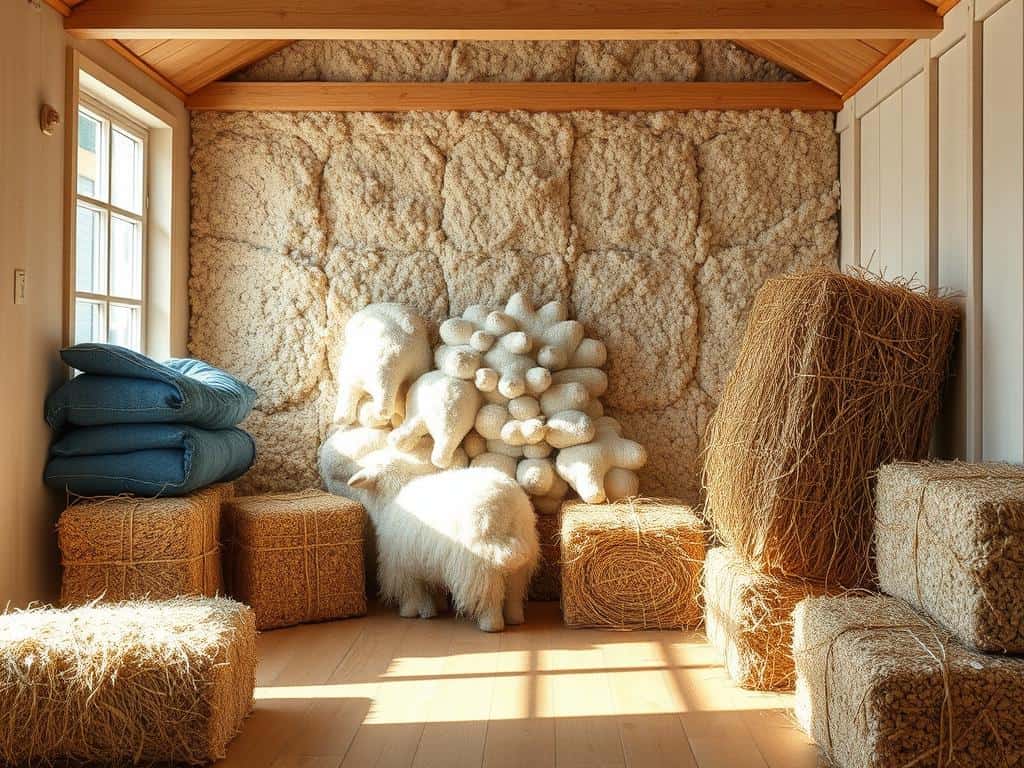
Sheep’s wool insulation is great at controlling moisture and breathing. It has an R-value of R-3 to R-4 per inch, making it very good at keeping warm. It might cost more, about £18 to £25 per square meter, but it’s worth it for its sustainability and performance.
Cotton: The Sustainable Alternative
Cotton insulation, often from recycled denim, is a green choice. It has an R-value of R-3.2 to R-3.7 per inch. It’s free from harmful chemicals and is fire-safe. Though pricier than fiberglass, its eco-friendliness and durability save money in the long run.
Aerogel: The Super Insulator
Aerogel insulation has an R-value of R-10.3 per inch, making it very effective. It’s pricey, up to $2 per foot, but it can greatly cut down energy costs. Investing in aerogel can lead to big savings on energy bills.
Rigid Polystyrene: Innovative Plastic Insulation
Rigid polystyrene insulation has an R-value of R-3.8 to R-4.4 per inch. It’s used in panels and is 100% recyclable. While it has some environmental drawbacks, its benefits might make it a good choice for many.
Icynene: Versatile Spray Foam Insulation
Icynene, from renewable castor oil, has an R-value of R-3.6 per inch. It can cut energy bills by 30 to 50%. Though expensive, its energy-saving benefits and long-term savings make it a wise choice for eco-conscious homeowners.
Why Choosing Eco-Friendly Insulation Matters
Our insulation choices have a big impact on energy-efficient homes. Traditional insulation can harm the environment, making it hard to live sustainably. Eco-friendly insulation offers big benefits for new homes.
Environmental Impact of Traditional Insulation
Traditional insulation comes from petrochemicals and uses a lot of energy. This leads to a big carbon footprint and environmental problems. For instance, fiberglass and polystyrene can stay in landfills for years, adding to waste.
Switching to eco-friendly insulation can greatly reduce harm to the environment. It can cut a building’s carbon footprint by up to 80%. This shows how sustainable options are powerful.
Advantages of Sustainable Insulation in New Constructions
Sustainable insulation in new homes has many benefits. It reduces harm from harmful materials and improves air quality. It uses renewable resources like cotton, wool, and cellulose.
These materials help save energy because they keep temperatures better. This means less need for heating and cooling. Using eco-friendly insulation makes homes more sustainable, saves energy, and helps the planet.
Conclusion
Exploring Eco-Friendly Insulation shows us how smart choices help our planet and save money. Using materials like sheep’s wool, recycled denim, and cellulose cuts down energy costs. These choices also make our homes more comfortable and eco-friendly.
Choosing eco-friendly insulation makes our homes healthier. It reduces harmful air pollutants, improving air quality. Today, we have many options, including new ones like mushroom-based insulation. It’s key to stay updated on these advancements for both our wallets and the planet.
Thinking about the benefits, I believe eco-friendly insulation is a wise choice. It’s made to last and handle tough weather. It helps us live comfortably while protecting our planet for the future.

MOST COMMENTED
Nature & Sustainability
How to Be an Ethical Consumer in a Modern World
Tech & Innovation
How Digital Twins Are Revolutionizing Manufacturing
Home & Garden
DIY Landscaping Tips to Create a Stunning Backyard
Lifestyle
Cultivate Your Inner Ecosystem: How to Start a Morning Routine That Helps You Bloom Amidst the Concrete Jungle
Health & Lifestyle
How to Create the Perfect Home Spa Day for Ultimate Relaxation
Home
A No-nonsense Guide to Removing Carpet Stains Without the Chemical Hype
General
A No-nonsense Guide to Starting a Vegetable Garden in a Concrete Jungle