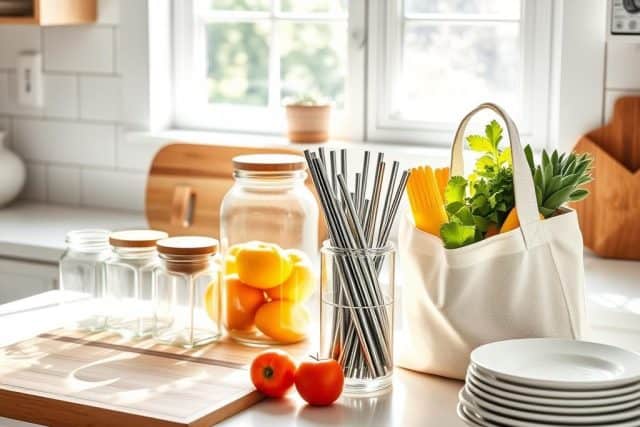
Did you know that only 9% of the world’s plastic is recycled? This is a shocking fact that shows we need to switch to a plastic-free kitchen fast. Every year, we produce 300 million tons of plastic, with half being used once and then thrown away. Choosing eco-friendly options in our kitchens can really help the planet.
Choosing eco-friendly alternatives opens up many options that are good for our planet and our health. A green kitchen means swapping out plastic for items that last longer. This includes everything from food storage to cooking tools. There are many products out there to help us make this change.
In the next sections, I’ll show you the top five products to make your kitchen plastic-free. These products will help us live more sustainably every day.
Key Takeaways
- Switching to a plastic-free kitchen can greatly reduce plastic waste.
- Most plastic isn’t recycled, making eco-friendly choices even more important.
- There are many sustainable alternatives to common kitchen items available.
- Small changes in our kitchens can make a big difference for the environment.
- Using reusable products promotes a culture of sustainable living for the future.
Understanding the Importance of a Plastic-Free Kitchen
Switching to a plastic-free kitchen is key for health and the planet. Plastic containers can leak harmful chemicals into our food. This can lead to hormonal problems, developmental issues in kids, and higher cancer risks.
The harm from plastic goes beyond our kitchens. It’s a big threat to wildlife and our ecosystems.
Impact of Plastic on Health and Environment
Plastics can take up to 1,000 years to break down. This causes huge problems for our environment. Every year, millions of tons of plastic waste pollute our oceans, harming marine life.
Using beeswax wraps and glass containers helps cut down on plastic. More stores are now selling eco-friendly products because of our demand for sustainable living.
Statistics on Plastic Waste
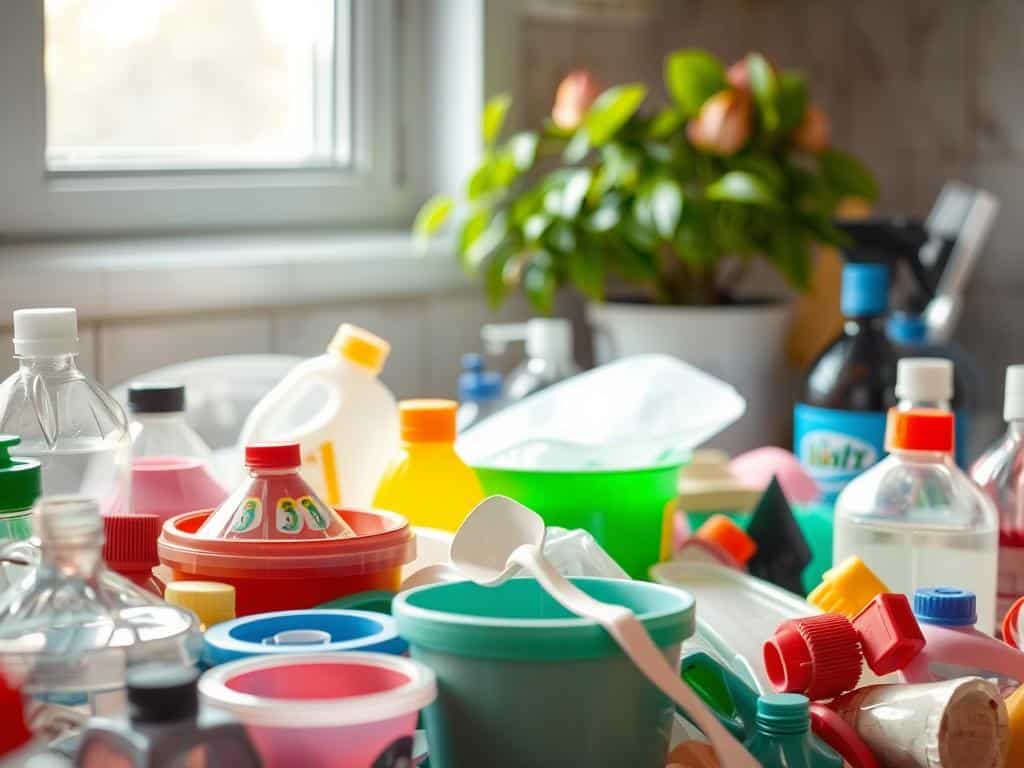
Plastic waste numbers are scary. In 2014, only about 10% of plastics in the U.S. were recycled. Most ended up in landfills or oceans.
Single-use plastics are the main culprits. They create a lot of debris that hurts our oceans. By choosing glass or stainless steel containers, we can make a difference. These options are durable and safe from harmful chemicals.
Top 5 Products for a Plastic-Free Kitchen
Switching to a plastic-free kitchen offers many sustainable choices. I’ve found five key products that are both useful and eco-friendly. They help with food storage and support sustainable living.
Beeswax Wraps
Reusable beeswax wraps are my top pick for food storage. Made from organic cotton and beeswax, they replace plastic wrap and foil. They keep food fresh and can be washed for reuse. This choice helps cut down on kitchen waste.
Glass Storage Containers
Glass containers have changed my meal prep game. They’re stylish, long-lasting, and safe for hot foods. The silicone lids keep food fresh and healthy. These containers are a key part of my eco-friendly kitchen.
Silicone Cooking Utensils
Silicone tools have made my cooking safer. They handle high heat without chemical leaks. These tools also don’t stain or hold odors, making cooking more sustainable.
Stainless Steel Water Bottles
Stainless steel bottles have transformed my hydration. They’re strong, often insulated, and keep drinks at the right temperature. These bottles help me avoid single-use plastics and support my eco-friendly lifestyle.
Organic Cotton Produce Bags
Organic cotton bags are my go-to for grocery shopping. They’re durable, washable, and biodegradable. Using these bags shows my dedication to a plastic-free life.
Conclusion
Switching to a plastic-free kitchen is more than a trend; it’s a big change for a better life. Using eco-friendly items like beeswax wraps and glass containers has made a big difference. It shows how we can help our health and the planet.
Did you know we might eat a whole credit card’s worth of microplastics a week? This is why we need to live without plastic. Using safe alternatives helps keep our food free from harmful chemicals.
The kitchen is a big source of waste, with up to 50% of food thrown away at home. Simple steps like making our own items or buying reusable ones help a lot. It shows how small actions can lead to big changes, making our homes greener.
As I make my kitchen better, I feel like I’m helping the planet for the future. Living without plastic means I’m doing my part for the environment. Let’s all make a difference and encourage others to do the same.



MOST COMMENTED
Nature & Sustainability
Affordable Green Energy Solutions for Your Home
Health & Lifestyle
How to Gain Weight the Healthy Way with These 5 Tips
Home & Garden
Outdoor Rugs That Will Instantly Elevate Your Patio Decor
Home & Garden
Top 10 Flowers to Plant for a Colorful, Vibrant Garden
Health & Lifestyle
7 Effective Cardio Workouts You Can Do Anywhere
Health & Lifestyle
10 Guilt-Free Healthy Snacks You Can Enjoy Anytime
Home & Garden
How to Build with Recycled Materials for a Sustainable Home