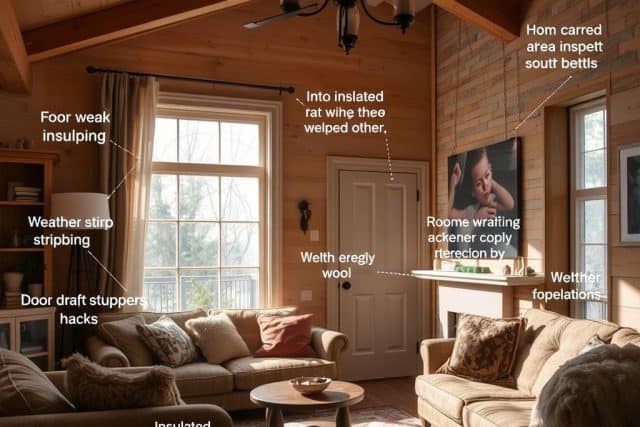
Did you know that the Environmental Protection Agency says homeowners can save 15% on heating and cooling costs? This is by air sealing their homes and adding insulation. This shows how important good home insulation is for energy efficiency and comfort. By using smart insulation tips, I can make my home more energy-efficient. This will lower my monthly bills and make my home more comfortable all year.
In this article, I’ll share five easy yet effective home insulation hacks for big energy savings. These include sealing air leaks and improving window insulation. These steps are not only affordable but also simple to do. With a few changes, I can make my home more energy-efficient. This makes my home cozier and keeps my energy bills low.
Key Takeaways
- Home insulation can save you around 15% on heating and cooling costs.
- Sealing gaps, as small as 1/8 inch, can dramatically affect heating efficiency.
- Window film can reduce heat loss by approximately 10%.
- Proper insulation of water heaters can lead to 7% to 16% savings in water heating costs.
- Using heavy curtains can help retain heat in winter and block heat in summer.
- Spray foam insulation can virtually eliminate heat loss in attics.
Understanding the Importance of Home Insulation
Home insulation is key to making your home energy-efficient. It keeps your home comfortable and lowers your energy bills. By stopping heat from escaping or entering, it reduces the need for heating and cooling.
How Effective Insulation Reduces Energy Costs
Insulation works by blocking heat flow through conduction, convection, and radiation. Using materials with high R-values helps a lot. The U.S. Department of Energy says heating and cooling use 50 to 70 percent of a home’s energy.
A well-insulated home can save up to 15% on heating and cooling costs. This shows how important insulation tips are for saving energy.
Common Areas Where Insulation is Needed
Many areas in your home need insulation for better energy use. These include attics, walls, basements, and around windows and doors. It’s important to pick the right insulation, like fiberglass, cellulose, or foam.
Experts suggest using continuous insulation (CI) for better energy efficiency. Knowing where and how to insulate makes your home more energy-efficient and comfortable.
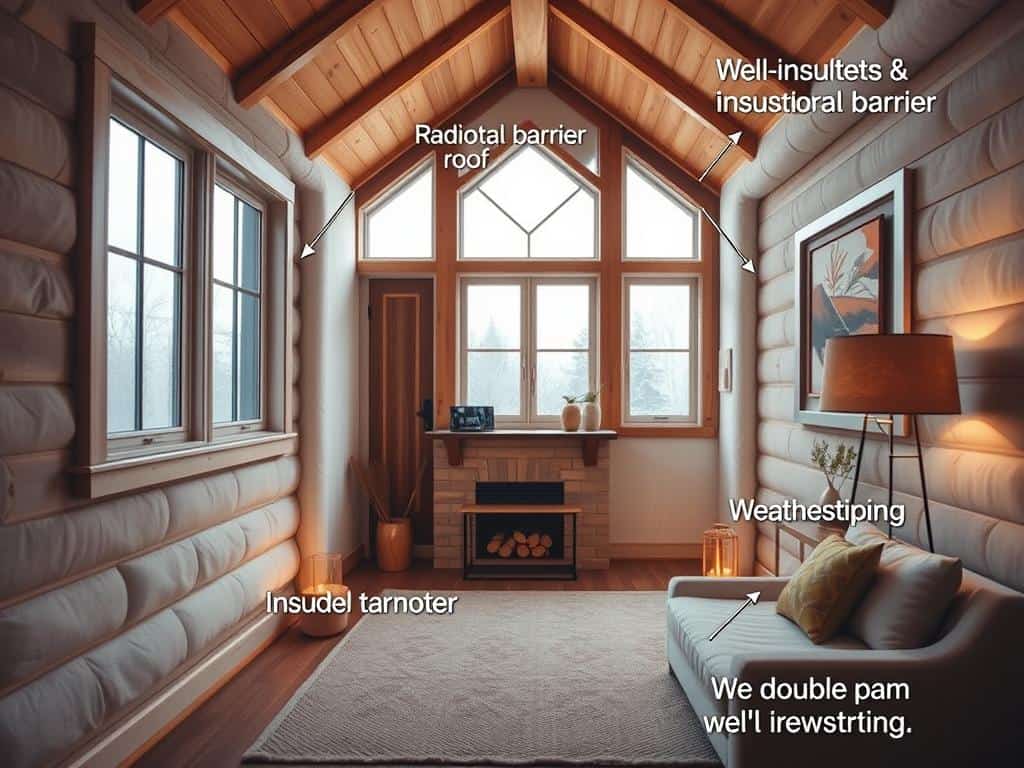
5 Practical Home Insulation Hacks
Improving home insulation can save a lot on energy costs and make your home more comfortable. I’ve found some useful tips to make your home more energy-efficient. These hacks help cut down on air leaks and improve heating, making your home warmer and cheaper to run.
Seal Air Leaks with Weatherproofing
Using weatherproofing strips and caulk around windows and doors is a smart move. It stops air leaks that can make your heating bills go up.
Add Insulation to Your Windows
Window insulation film acts as an extra layer against cold air, cutting down heat loss by up to 10%. Adding heavy curtains or thermal liners can also keep warmth in your home.
Utilize Door Draft Stoppers
Door draft stoppers are a simple way to block air leaks. They help keep your home cozy and save on heating costs by stopping heat from escaping through gaps.
Fix Your Chimney Flue
A chimney balloon can stop heat from escaping through the fireplace flue. This small change can make a big difference in keeping your home warm and saving energy.
Enhance Your Attic Insulation
Boosting attic insulation with better materials can really improve energy efficiency. Getting your attic to about 20 inches deep with good insulation can save a lot on energy bills.
Conclusion
Effective home insulation is key for an energy-efficient home. By using the tips shared, I can cut down on energy costs. This makes my home more comfortable and helps the environment too.
Good insulation also increases my home’s value. Energy-efficient homes sell for more. It keeps my home’s temperature steady and air clean, making it healthier for my family.
So, focusing on insulation is smart. It saves money now and makes my home better for the future. My efforts will make my home cozy all year and help protect our planet.


MOST COMMENTED
Nature & Sustainability
Affordable Green Energy Solutions for Your Home
Health & Lifestyle
How to Gain Weight the Healthy Way with These 5 Tips
Home & Garden
Outdoor Rugs That Will Instantly Elevate Your Patio Decor
Home & Garden
Top 10 Flowers to Plant for a Colorful, Vibrant Garden
Health & Lifestyle
7 Effective Cardio Workouts You Can Do Anywhere
Health & Lifestyle
10 Guilt-Free Healthy Snacks You Can Enjoy Anytime
Home & Garden
How to Build with Recycled Materials for a Sustainable Home