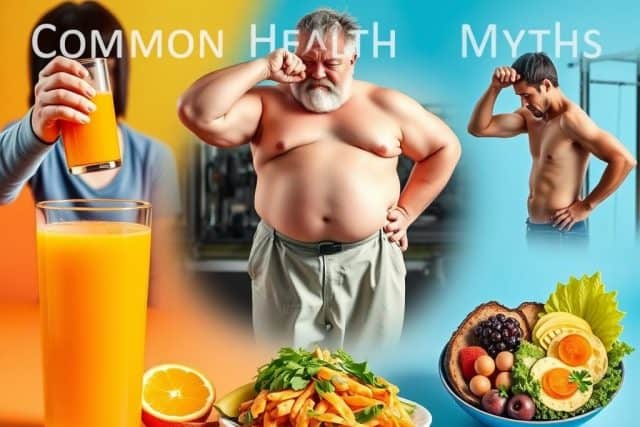
Did you know the “8×8” rule about drinking water was based on a mistake from 1945? This shows how health myths can shape our habits without real science backing them. It’s important to sort through these myths to find true wellness facts that support our health.
Many of us follow diet myths and fitness tips without checking if they’re scientifically proven. This can harm our health and lead to bad choices. It’s time to question these old beliefs and learn from the latest science.
Key Takeaways
- The “8×8” drinking rule is based on a misinterpretation of earlier reports.
- Only about 20% of our daily water intake comes from food.
- Cracking knuckles does not lead to arthritis.
- New research shows eating eggs does not significantly affect cholesterol levels.
- Believing in outdated health myths can negatively impact wellness choices.
- Understanding genuine health facts can enhance our overall health and wellbeing.
Understanding the Impact of Health Myths
Many health myths come from old beliefs or science mistakes. They show how society’s views and bad communication spread false info. For example, the idea that we must drink eight glasses of water daily is based on a 1945 report. This shows how diet beliefs can change and not always be based on new science.
Origins of Health Myths
Looking into the origins of health myths gives us interesting views on how old ideas shape today’s beliefs. For example, the belief that reading in low light harms your eyes is not true. These myths often start from stories passed down through generations, affecting what people think a lot. Such historical health misconceptions can lead to practices that are not good or needed.
Psychological Effects of Believing Myths
Believing in health myths can harm your mind. The need to follow these myths can make people choose health options based on fear, not facts. This can make people worry more about what they eat and how they stay healthy. The effects of these health beliefs go beyond just spreading wrong information; they can affect your overall happiness and how you live your life. It’s important to understand these psychological effects when dealing with health information.
Common Health Myths Explained
Understanding common health myths can change how we think about wellness. It’s key to know what’s true and what’s not, like with joint health and nutrition. I’ll look at two big misconceptions that confuse people about their health.
Myth: Cracking Your Knuckles Causes Arthritis
Many believe cracking knuckles leads to arthritis. This myth has been around for a long time. But, studies show that people who crack their knuckles don’t get arthritis more often than those who don’t.
The sound of cracking knuckles comes from gas bubbles in the joints. Knowing this can help clear up worries about this common habit.
Myth: Eating Eggs Increases Cholesterol
Eggs and heart health are often debated because of old cholesterol myths. Many think eggs raise cholesterol and heart disease risk. But, recent research says eggs don’t really affect blood cholesterol much.
In fact, eggs might even be good for the heart. The Centers for Disease Control and Prevention says eggs are very nutritious. It’s time to rethink the myths about eggs in our diet.
Why You Should Stop Believing These Health Myths
Health misinformation is a big problem for those trying to live healthier. Knowing the dangers of these myths helps us deal with them better. These myths can lead to bad food choices and make us doubt scientific advice.
The Dangers of Misinformation
Health misinformation spreads fast, thanks to social media. For example, many think eggs raise cholesterol, but research shows they don’t. This false belief can cause us to eat less and worry about what we eat.
Transforming Your Wellness Routine
Improving our health beliefs is key. By choosing evidence-based practices, we can change our wellness routine for the better. Knowing the truth helps us make better choices, like realizing all sugars are processed the same way.
Conclusion
It’s clear that wrong information can cause big misunderstandings about health and nutrition. We must learn to tell fact from fiction. Looking back, we see how myths about vaccines and food can harm us.
By learning and sharing true facts, we help people make better choices. It’s key to challenge old ideas and follow science. Eating more fruits, veggies, and whole grains can prevent many diseases.
Sharing accurate info helps stop bad health myths from spreading. We all have a part to play in keeping our community healthy. By doing this, we can make our society more informed and healthier.


MOST COMMENTED
Nature & Sustainability
Affordable Green Energy Solutions for Your Home
Health & Lifestyle
How to Gain Weight the Healthy Way with These 5 Tips
Home & Garden
Outdoor Rugs That Will Instantly Elevate Your Patio Decor
Home & Garden
Top 10 Flowers to Plant for a Colorful, Vibrant Garden
Health & Lifestyle
7 Effective Cardio Workouts You Can Do Anywhere
Health & Lifestyle
10 Guilt-Free Healthy Snacks You Can Enjoy Anytime
Home & Garden
How to Build with Recycled Materials for a Sustainable Home