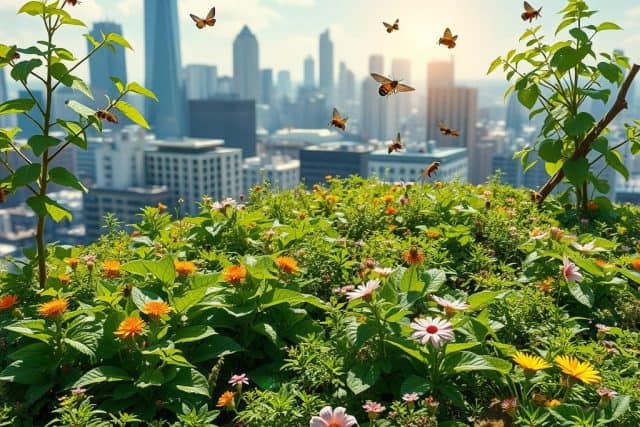
Did you know green roofs can hold up to 90% of rainwater in summer? This shows how green roofs can manage stormwater runoff, which is key for cities facing floods. These roofs, also known as living roofs, are more than a trendy look. They are a smart, green way to build homes, bringing many benefits.
In this article, we’ll dive into what green roofs are and why they’re becoming more popular. Learning about their design can help eco-friendly homeowners think about adding them to their homes. Green roofs save energy, support wildlife, and make homes look better. They’re not just about looks; they’re a smart choice for the future.

Key Takeaways
- Green roofs can significantly reduce stormwater runoff and manage precipitation effectively.
- They lower energy demand for cooling, specially during hot summer months.
- These roofs enhance property value and marketability of buildings.
- Green roofs promote biodiversity by providing habitats for various species.
- Investing in green roofs can create numerous jobs and stimulate economic growth.
Introduction to Green Roofs
Green Roofs turn rooftops into living spaces. They have layers like waterproofing and plants. Homeowners get a beautiful view and help nature.
Understanding the Concept of Green Roof
Green Roofs are fascinating. They use 30% of urban land for good. They keep buildings cool and save energy.
These roofs also help the environment. They clean rainwater and support wildlife. This makes cities greener.
Why Green Roofs Are Gaining Popularity
Green Roofs are becoming more popular. They solve urban problems like heat and water issues. Germany shows how effective they can be.
In North America, people are starting to see their benefits. They make cities look better and feel cleaner. They even offer places for fun and rest.
Benefits of Implementing a Green Roof
Green Roofs offer many benefits beyond just looking good. They help us build in a way that’s better for the planet. They save energy, protect the environment, and make communities better.
Improved Energy Efficiency
Green Roofs help save energy by keeping buildings cool in summer and warm in winter. Studies show they can cut energy use by 0.7%. This means big savings on heating and cooling bills for homeowners.
Stormwater Management
Green Roofs are great at managing stormwater. They soak up rainwater, reducing runoff by 65%. In summer, they hold up to 90% of rain, helping to prevent floods and keeping water clean.
Increased Roof Lifespan
Green Roofs can make a regular roof last much longer. The plants on them protect against sun and extreme weather. This means they can last over 60 years, making them a smart choice for sustainable building.
Enhanced Aesthetics and Biodiversity
Green Roofs turn cities into beautiful, lively places. They make buildings look better and attract birds, insects, and other wildlife. Living or working among greenery boosts social interaction and community spirit.
Challenges of Green Roof Installation
Starting a Green Roof project comes with many challenges. These include high initial costs, ongoing maintenance, and structural needs. These factors are key to making a Green Roof work in sustainable building.
Higher Initial Costs
Green Roofs cost more to start than regular roofs. This is because they need extra support for the soil and plants. A Green Roof can weigh up to 200 kg per square meter.
While the start-up costs are high, saving on energy in the long run can make it worth it. This makes the investment in sustainable building a good choice.
Maintenance Requirements
Maintenance is another challenge for Green Roofs. Keeping the plants healthy and preventing weeds and water issues is important. It’s like caring for a garden.
Hiring experts to maintain the Green Roof is best. Annual costs can be $0.75 to $1.50 per square foot. This is more than the $0.10 per square foot for regular roofs. This ongoing cost is part of the sustainability plan.
Structural Considerations
Before starting a Green Roof, check if the building can handle the extra weight. Older buildings might not have enough strength. Experts in eco-roofs can help make the necessary changes.
This ensures the building can support the Green Roof and thrive sustainably.
Conclusion
Adding a green roof to my home brings big environmental wins. It also makes my home better and increases its value. A green roof saves energy, which means lower cooling costs and less heat in cities.
It also helps manage stormwater and boosts local wildlife. These perks make green roofs a smart choice. Despite the setup and upkeep hurdles, the benefits far outweigh them.
More and more homeowners are seeing the value in green roofs. This trend is making them a key part of green building in the U.S. It’s a step towards making cities greener and more resilient.
Choosing a green roof is more than just making your home look good. It’s a way to care for the environment and live sustainably. As we work to make our homes and communities better, green roofs are a key solution. They help us reach our goal of a healthier, greener future.

MOST COMMENTED
Nature & Sustainability
Affordable Green Energy Solutions for Your Home
Health & Lifestyle
How to Gain Weight the Healthy Way with These 5 Tips
Home & Garden
Outdoor Rugs That Will Instantly Elevate Your Patio Decor
Home & Garden
Top 10 Flowers to Plant for a Colorful, Vibrant Garden
Health & Lifestyle
7 Effective Cardio Workouts You Can Do Anywhere
Health & Lifestyle
10 Guilt-Free Healthy Snacks You Can Enjoy Anytime
Home & Garden
How to Build with Recycled Materials for a Sustainable Home