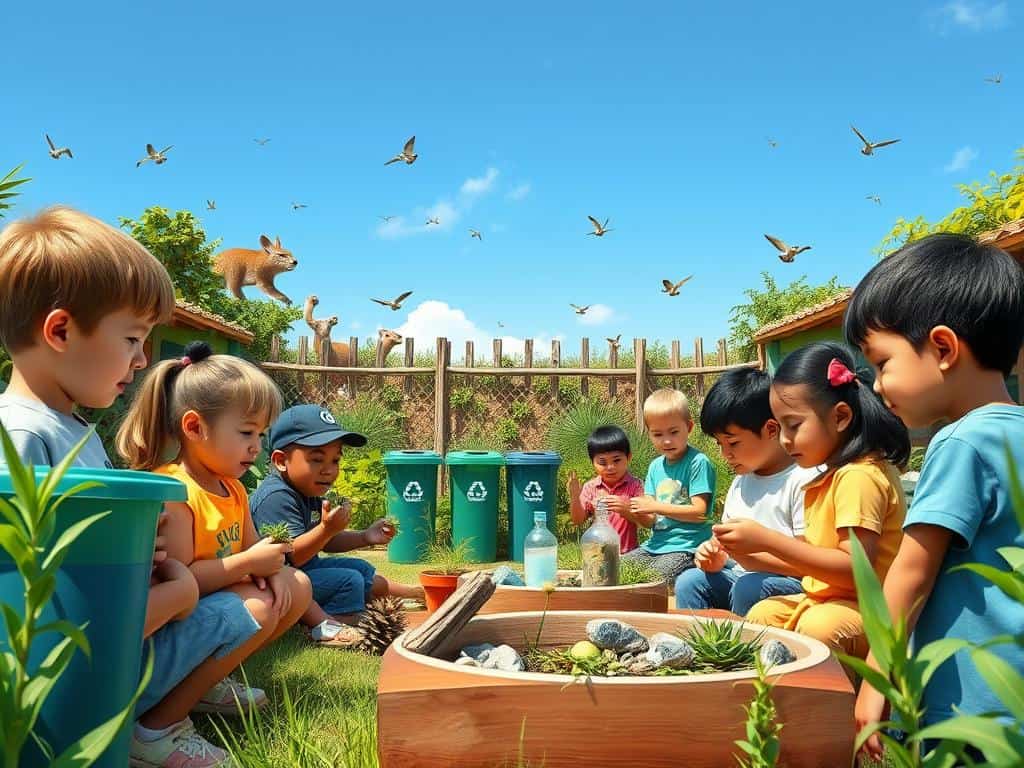
Did you know kids who learn about the environment do better in school? They get better grades in science, math, and reading. This shows how important it is to teach kids about nature.
By connecting with nature, kids learn to care for the planet. They understand science and see how their actions affect the world. It’s a powerful way to teach them.
Teaching kids about sustainability is more than just lessons. It shapes their values and actions for life. When kids do eco-friendly activities, they learn to see the world differently. They become curious and wonder about nature.
This approach helps kids do well in school and prepares them to protect the environment. It’s about raising a generation that cares about conservation. They will be ready to face environmental challenges.
Key Takeaways
- Environmental education improves children’s academic performance across various subjects.
- Engaging with nature fosters a lifelong respect and affection for the environment.
- Hands-on eco-friendly activities enhance critical thinking and collaboration skills.
- Understanding ecosystems and conservation encourages proactive environmental stewardship.
- Teaching the three Rs (Reduce, Reuse, Recycle) lays the foundation for sustainable habits.
- Environmental programs align with Next Generation Science Standards to enhance learning.
Understanding the Importance of Environmental Education
Environmental education is key in shaping young minds. It teaches students about our planet and its resources. This education gives kids the knowledge and a sense of responsibility towards the environment.
Defining Environmental Education
Environmental education is a mix of different subjects. It helps students think deeply and make smart choices about nature. It makes learning fun and sparks curiosity about the world.
Why is Environmental Education Essential for Children?
This education is important for kids. It prepares them for future conservation efforts. By learning about nature, kids understand the importance of ecosystems and biodiversity. This knowledge shapes their actions as they grow up.
Long-term Benefits of Raised Environmental Awareness
Higher environmental awareness brings big benefits. A generation that understands conservation can help fight climate change and pollution. Programs that offer hands-on learning in conservation inspire students to fight for sustainability. By teaching these values early, we can create a community that protects our planet for the future.
Eco-Friendly Activities to Engage Kids
Getting kids involved in eco-friendly activities is a great way to connect them with nature. It’s fun and teaches them about taking care of the planet. These activities help kids stay active and learn about the environment.
Fun Nature Games and Scavenger Hunts
Games and scavenger hunts are a fun way to show kids the beauty of nature. They encourage kids to explore and learn about their surroundings. By searching for plants and animals, they learn about nature and how to protect it.
Outdoor games like nature bingo or scavenger hunts make learning fun. They spark kids’ curiosity and make them excited to learn more.
Creative Art Projects Using Natural Materials
Art projects with natural materials are a great way for kids to be creative and learn about sustainability. They can make art with leaves, flowers, and twigs. This hands-on activity teaches them to think creatively and appreciate nature.
These projects inspire kids to see the world in a new way. They learn to value the resources around them and think about sustainability.
Science Experiments to Learn About Nature
Science experiments are a great way for kids to learn about the environment. Simple projects like building terrariums or making water filters teach important lessons. They help kids understand nature and ecosystems better.
Through these experiments, kids develop a deeper love for nature. They learn by doing and become more passionate about conservation.
Building Positive Habits for Conservation
Starting early with sustainable living habits can make a big difference. Teaching kids the Three Rs—Reduce, Reuse, Recycle—is a great start. It helps them understand how their actions affect the planet.
By reducing waste, kids learn about their environmental impact. They can get creative with reuse, like turning jars into storage or making art from old clothes.
Teaching Kids the Three Rs: Reduce, Reuse, Recycle
At home, we make the Three Rs a part of our daily life. We cut down on single-use items like plastic and paper towels. This helps save resources and reduces waste.
I encourage my kids to choose reusable items over disposable ones. We even set up a recycling station to make learning fun.
Encouraging Energy and Water Conservation Practices
Teaching kids about saving energy and water is key. It teaches them practical skills and shows they can make a difference. I remind them that a family of four uses about 400 gallons of water every day.
Simple actions like turning off lights or fixing leaks become a family habit. Seeing these actions in action helps them feel responsible for the environment.
Incorporating Gardening and Composting Activities
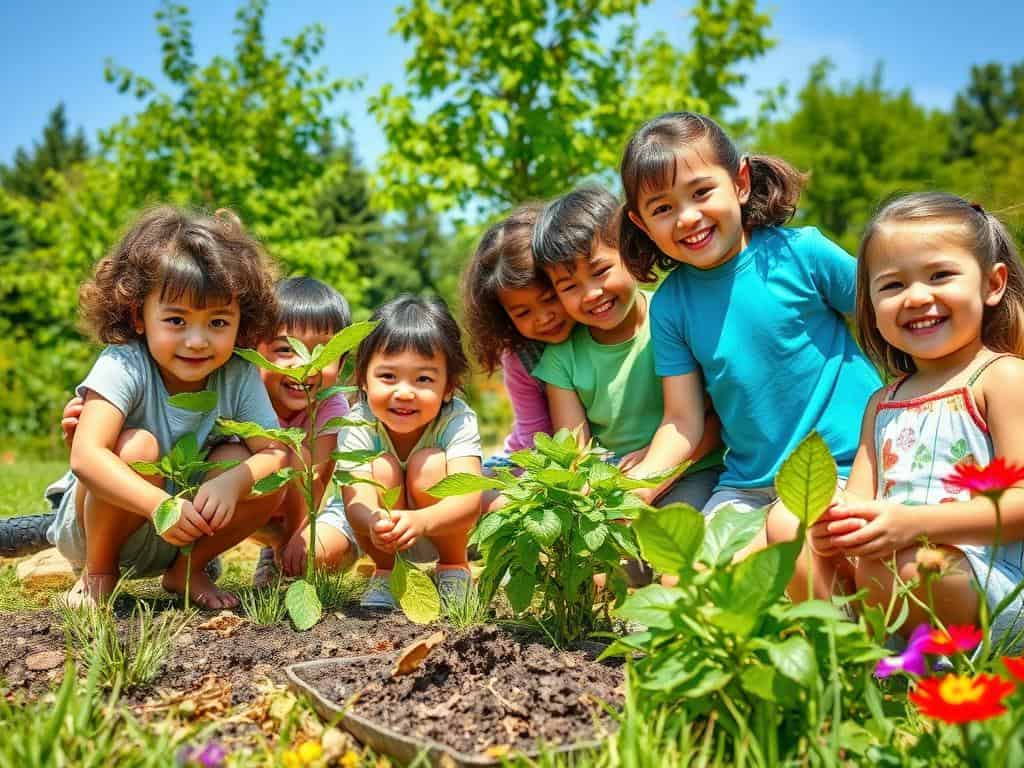
Gardening with kids is a great way to teach them about nature. They see plants grow and learn about the food cycle. They also understand the importance of healthy soil.
We compost to show how organic waste can improve soil. These activities help them appreciate nature and adopt eco-friendly habits. They can then share these with their friends.
Conclusion
Teaching kids about saving the environment is more than just learning. It’s a key step in securing our planet’s future. By giving them knowledge and hands-on experiences, I’m helping raise a generation that values sustainability. This way, they learn to care for our planet and face today’s big challenges.
Teaching kids about saving the environment early on is vital. It helps them grow up caring for the planet. Studies show kids who spend time outdoors have stronger immune systems. This shows how important it is to surround our youth with nature.
I aim to teach my kids about reducing waste and conserving resources. I want them to appreciate nature and understand its importance. As they grow, I’m sure they’ll use these lessons to make the world a better place for everyone.


MOST COMMENTED
Home & Garden
Outdoor Rugs That Will Instantly Elevate Your Patio Decor
Home & Garden
Top 10 Flowers to Plant for a Colorful, Vibrant Garden
Health & Lifestyle
7 Effective Cardio Workouts You Can Do Anywhere
Health & Lifestyle
10 Guilt-Free Healthy Snacks You Can Enjoy Anytime
Home & Garden
How to Build with Recycled Materials for a Sustainable Home
Health & Lifestyle
Beyond the Concrete: How to Reclaim Your Soul Through the Life-changing Benefits of Walking in Nature Daily
General
From Blue Light to Green Light: Is the Way How People Spend Their Evenings Now Costing Us Our Connection to Nature?