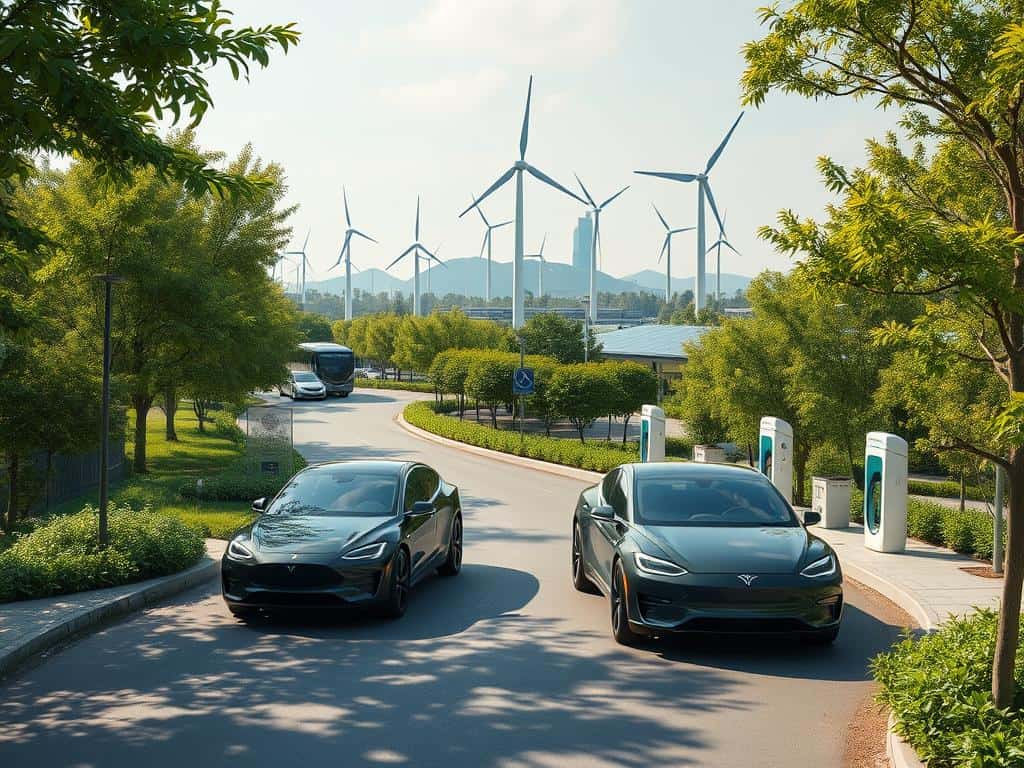
Did you know that cars and trucks use about 30% of all energy in the U.S.? They also use 70% of the country’s oil. This makes electric cars a must for our planet’s future. In the last year, electric car use has grown by 93% worldwide.
Now, almost half a million electric cars are on the roads. They help cut down on pollution and use less oil. In this article, we’ll see how electric cars improve air quality, save energy, and make our transportation systems better.
Electric cars are changing our world for the better. They’re leading us to a cleaner, greener future. Let’s look at what’s making this change happen.
Key Takeaways
- Transportation is a significant contributor to U.S. energy needs and petroleum consumption.
- Global EV adoption surged by an impressive 93% in the last year.
- Electric vehicles can drive 100 miles on just 25–40 kilowatt-hours of electricity.
- Nearly 53,000 publicly accessible charging stations exist in the U.S., making EVs more convenient.
- EVs can provide significant emissions benefits over traditional vehicles.
EV Popularity and Adoption Trends
The world of transportation is changing fast, with electric vehicles leading the way. More and more people are choosing electric cars, showing a big move towards cleaner transport and caring for the environment.
Rapid Global Growth in Electric Vehicle Adoption
Electric cars are growing in popularity worldwide. In 2023, China saw a huge jump in electric car sales, with nearly 8.1 million new cars. This is a 35% increase from the year before, making up almost 60% of all new car sales in China.
The United States also saw a big rise, with 1.4 million electric cars registered. This is a 40% increase. Tesla’s Model Y was a big factor in this growth, thanks to tax breaks.
In Europe, electric car sales are also on the rise. With over 3.2 million cars registered, it’s a 20% increase from 2022. Germany hit a milestone with half a million electric cars sold. Even countries like India and Thailand are seeing more electric cars on the road, showing that electric cars are becoming more popular everywhere.
Impact on CO₂ Emissions
More electric cars mean less CO₂ emissions. Companies like EV100 are leading the way by using electric vehicles. They’ve added over 168,000 electric cars to the roads, cutting emissions like a big reduction in U.S. home energy use.
As we move to electric cars, we’re getting cleaner air and less greenhouse gases. Electric cars are better for the planet than gas cars. This change shows we’re serious about meeting our climate goals and making transport cleaner.
What Makes Electric Vehicles More Sustainable?
Electric vehicles (EVs) are more sustainable for many reasons. They offer big advantages over traditional cars. Let’s explore why.
Zero Tailpipe Emissions
EVs have a key feature: zero tailpipe emissions. This cuts down on air pollution in cities, improving health. Unlike gas cars, EVs don’t release harmful gases.
Yes, making batteries does create emissions. But EVs emit less greenhouse gases over their life. This makes them a cleaner choice for our planet.
Energy Efficiency Advantages
EVs are super efficient. They turn over 80% of battery energy into movement. Gas cars only use about 20% of their fuel energy.
Driving an EV is cheaper, too. It costs about 3 cents per mile. Gas cars cost around 10 cents per mile. This saves money and is better for the environment.
Renewable Energy Connection
EVs can run on renewable energy, making them even greener. As more renewable energy goes into the grid, EVs get even cleaner. Tesla, for example, wants to make all its batteries with 100% clean energy.
As battery production gets cleaner, EVs play a bigger role in fighting climate change. This is a big step towards a more sustainable future.
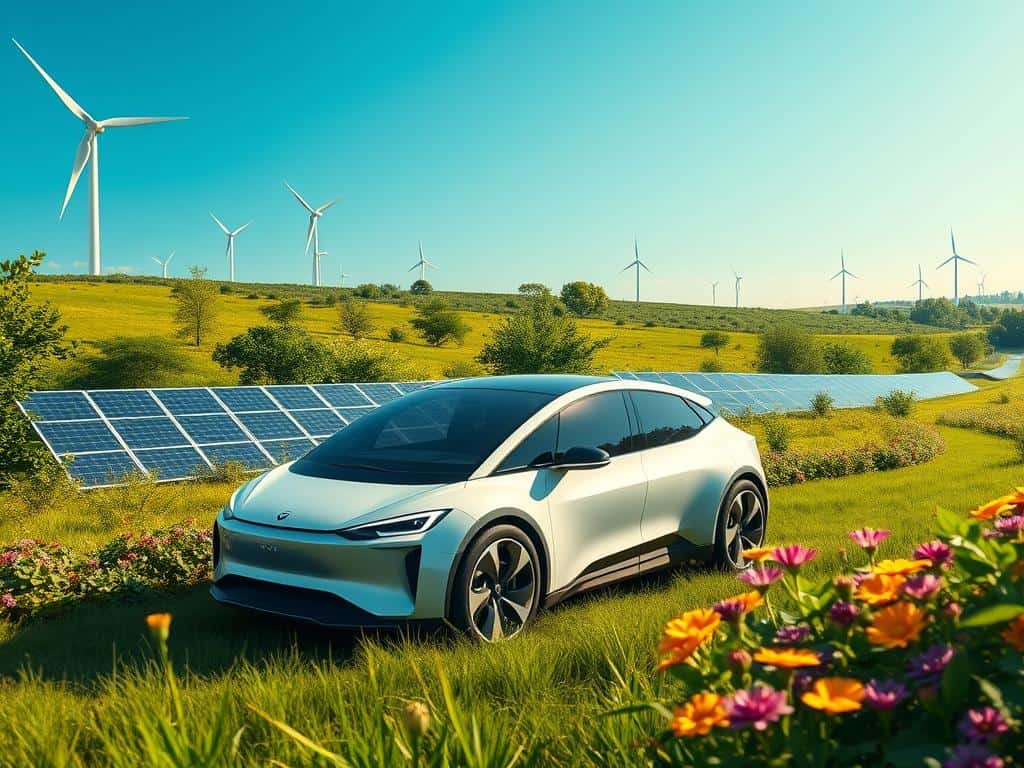
Electric Vehicles in Fleet Management
Electric vehicles (EVs) are changing how fleets manage their operations. They help save money and work more efficiently. EVs use less fuel, which is cheaper than traditional fuels.
The U.S. General Services Administration found that EVs cost about 3 cents per mile to run and maintain. This is a big savings over time.
Cost Savings and Operational Efficiency
EVs need less maintenance because they have fewer parts. This means they break down less often and cost less to fix. Battery prices are also dropping, making EVs more affordable.
Government incentives, like tax credits, make EVs even more appealing. These savings make EVs a smart choice for fleets.
EVs also make fleets work better. They come with advanced telematics that help manage routes. This leads to less fuel use and safer drivers.
For fleets like police cars and buses, EVs help show they care about the environment. This improves their image and meets sustainability goals.
There are more ways to charge EVs now. Level 2 charging is good for overnight use. DC fast-charging stations can add 100 miles of range in 20 minutes.
Geotab’s data helps fleets use their EVs wisely. This ensures they get the most out of their electric vehicles.
The demand for EVs is rising. Adding them to fleet plans is getting more benefits. It saves money and makes fleets more efficient, leading to a greener future.
Conclusion
Looking back at electric vehicles (EVs), it’s clear they’re key for a sustainable future. Over 275,000 EVs are now on U.S. roads, showing big growth from 2011. In Europe, EV sales have grown four times a year, showing a big move toward electric cars.
These numbers show more people are choosing electric vehicles. They also show how EVs can cut down CO₂ emissions and make energy use better.
Electric vehicles are more than just a trend; they’re a big step toward cleaner transport. Advances in battery tech and government support will keep pushing the EV market forward. Despite challenges, the data shows EVs can help us use more renewable energy, making our environment cleaner.
In the end, the evidence is clear: EVs are a way to a healthier planet for our kids and grandkids. By supporting EV tech and building more charging stations, we can all help fight climate change. Choosing electric vehicles is more than a personal choice; it’s a promise to a better future for everyone.



MOST COMMENTED
Nature & Sustainability
Affordable Green Energy Solutions for Your Home
Health & Lifestyle
How to Gain Weight the Healthy Way with These 5 Tips
Home & Garden
Outdoor Rugs That Will Instantly Elevate Your Patio Decor
Home & Garden
Top 10 Flowers to Plant for a Colorful, Vibrant Garden
Health & Lifestyle
7 Effective Cardio Workouts You Can Do Anywhere
Health & Lifestyle
10 Guilt-Free Healthy Snacks You Can Enjoy Anytime
Home & Garden
How to Build with Recycled Materials for a Sustainable Home