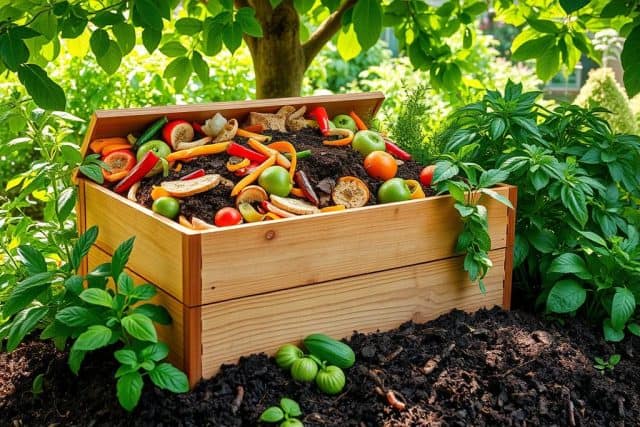
Did you know food waste makes up 21 percent of landfill waste in the U.S.? This shows we need to compost at home to help the environment. Millions of tons of organic waste, like kitchen scraps and yard debris, are thrown away each year. This waste produces methane, which is worse than carbon dioxide.
By composting, we cut down on food waste and reduce harmful greenhouse gas emissions. I’ve found that turning kitchen scraps into compost improves soil health and helps our gardens grow. It’s time to use eco-friendly methods that benefit our gardens and the planet. In this article, I’ll share six key tips to make your kitchen scraps into garden gold.
Key Takeaways
- Composting reduces reliance on landfills by transforming organic waste.
- Creating compost eliminates harmful methane emissions from food decomposing in landfills.
- The right balance of brown and green materials accelerates decomposition.
- Vermicomposting can provide valuable nutrients for houseplants and gardens.
- Backyard composting may lower waste pickup costs for homeowners.
- Utilizing community composting programs enhances local sustainability efforts.
Understanding the Benefits of Composting
Composting is more than just recycling kitchen scraps. It tackles big environmental problems like food waste. The U.S. Environmental Protection Agency (EPA) says food and garden waste make up over 28 percent of household trash.
Millions of tons of this waste go to landfills each year. This leads to a lot of greenhouse gas emissions. Methane from rotting waste is a big contributor to global warming, similar to millions of cars.
Composting helps reduce these emissions. It’s key for living sustainably.
Reducing Food Waste and Methane Emissions
An average American family throws away about $150 worth of food each month. This adds up to a huge loss each year. But, only about 6 percent of food waste in the U.S. is composted.
By composting, people can help reduce landfill waste. San Francisco shows how effective this can be, diverting over 80 percent of waste from landfills. This cuts down on carbon emissions, saving over 90,000 metric tons of emissions each year.
This success shows the need for better waste disposal practices.
Enriching Soil Health
Composting also improves soil health. It adds nutrients and boosts organic matter. Research shows compost can hold up to 20,000 gallons more water per acre with just a 1 percent increase in soil organic matter.
This leads to healthier plants and less need for synthetic fertilizers. It’s good for the environment and saves money on farming. I’ve seen my plants grow better with compost, showing its value in gardening.
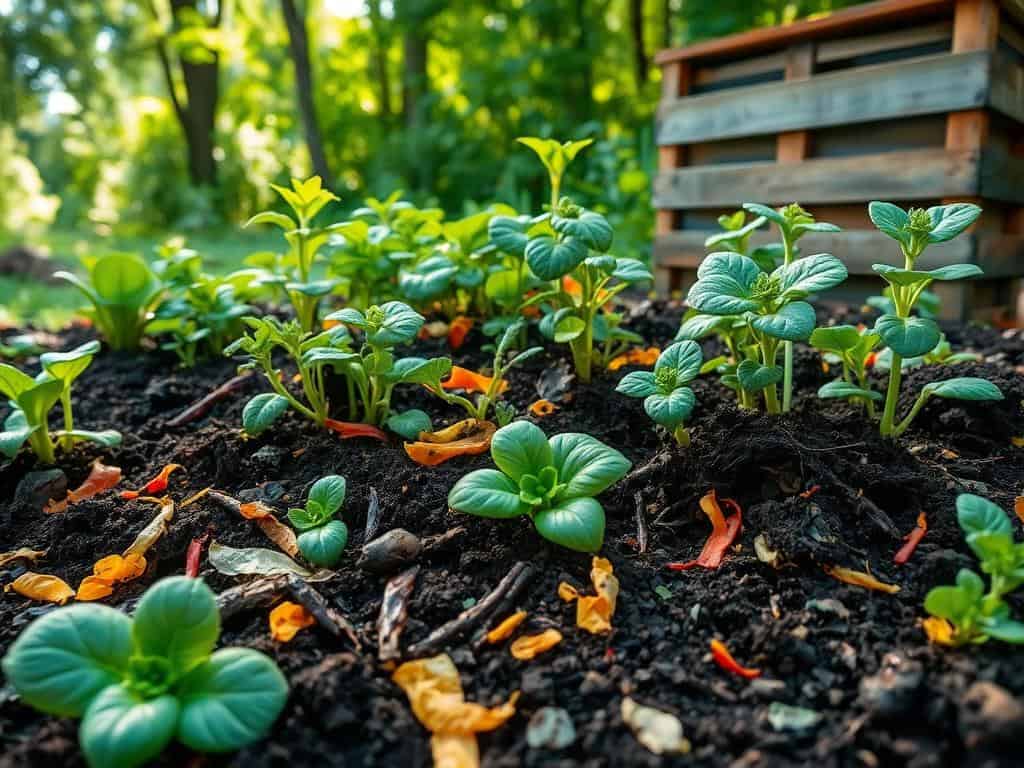
Composting at Home: Simple Tips for Success
Setting up a composting system at home is easy and rewarding. By following some key composting at home tips, I can turn kitchen scraps and yard waste into valuable compost for my garden.
Choose the Right Compost Bin
The first step is picking the right compost bin. A good bin is about three feet in all directions. This size ensures good air flow and heat. You can find bins in plastic, wood, or even old containers.
Choosing a bin that fits your space and looks good is important. It makes composting more fun.
Know What to Compost
It’s important to know what compost materials to use. I sort items into greens and browns. Greens are high in nitrogen, like fruit scraps and veggie peels. Browns are high in carbon, like dry leaves and cardboard.
Keeping a balance of two parts brown to one part green is key. This balance helps microorganisms break down materials well.
Maintaining the Brown-to-Green Ratio
Keeping the brown-to-green ratio right is vital. It helps the compost pile get hot, between 100-140 degrees Fahrenheit. Turning the pile every few days keeps it hot.
With the right care, compost can be ready in 18 days. Watching the pile’s moisture and temperature is important. This keeps it healthy.
Conclusion
Starting to compost at home is a big step towards a greener future. It turns kitchen and yard waste into something valuable. This enriches the soil, cuts down on chemical use, and helps plants grow better.
Home gardening becomes even more rewarding with compost. Knowing how to mix brown and green materials and keep it moist makes a big difference. It’s great to know that composting helps reduce waste in landfills.
Composting is good for the planet and our gardens. It helps fight global warming by reducing methane from landfills. As more people compost, we all help create a better world for the future.



MOST COMMENTED
Nature & Sustainability
Affordable Green Energy Solutions for Your Home
Health & Lifestyle
How to Gain Weight the Healthy Way with These 5 Tips
Home & Garden
Outdoor Rugs That Will Instantly Elevate Your Patio Decor
Home & Garden
Top 10 Flowers to Plant for a Colorful, Vibrant Garden
Health & Lifestyle
7 Effective Cardio Workouts You Can Do Anywhere
Health & Lifestyle
10 Guilt-Free Healthy Snacks You Can Enjoy Anytime
Home & Garden
How to Build with Recycled Materials for a Sustainable Home