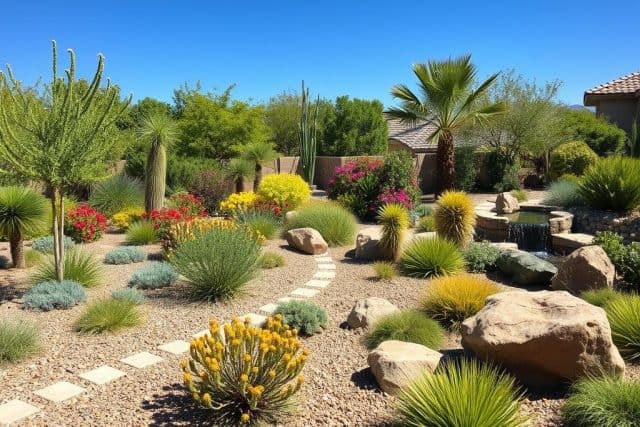
Did you know lawns use a lot of water? They account for about 30% of household water use. Xeriscaping is a new way to save water in gardens. It uses plants that don’t need much water and special irrigation systems.
This can save up to 70% of water. It’s perfect for places like California, Arizona, and Texas. Xeriscaping changes how we landscape, making gardens more water-friendly.
Xeriscaping is more than a trend. It’s a way to garden that’s good for the planet. By using plants like Lavender and succulents, we can have beautiful gardens that need less water.
Let’s explore how xeriscaping works. It’s a way to make our gardens beautiful and water-efficient. Join me as we learn more about this green gardening method.
Key Takeaways
- Xeriscaping can save 50% to 70% of water usage through efficient irrigation methods.
- Lawns are the largest residential water consumers, highlighting the importance of alternatives like xeriscaping.
- Drought-tolerant plants reduce the need for watering, weeding, and fertilizing.
- Xeriscaping enhances curb appeal with visually stunning, environmentally responsible landscapes.
- This approach is ideal for arid regions, making gardens both beautiful and sustainable.
Understanding Xeriscaping
Xeriscaping is a modern way to garden and landscape that saves water. It lets homeowners create green spaces that need little water.
What is Xeriscaping?
Xeriscaping is about designing landscapes to use less water. It uses drought-tolerant plants that fit local climates. Adding native plants boosts biodiversity and cuts down on chemicals.
Choosing hardy plants like cacti and lavender is smart. They need less water, making them perfect for green spaces.
The Importance of Drought-Tolerant Plants
Drought-tolerant plants are key in xeriscaping. They save water with thick skins and special roots. Plants like agave and black walnuts thrive in dry spots.
These landscapes need less care than regular gardens. They use up to 80% less water, saving a lot of water.
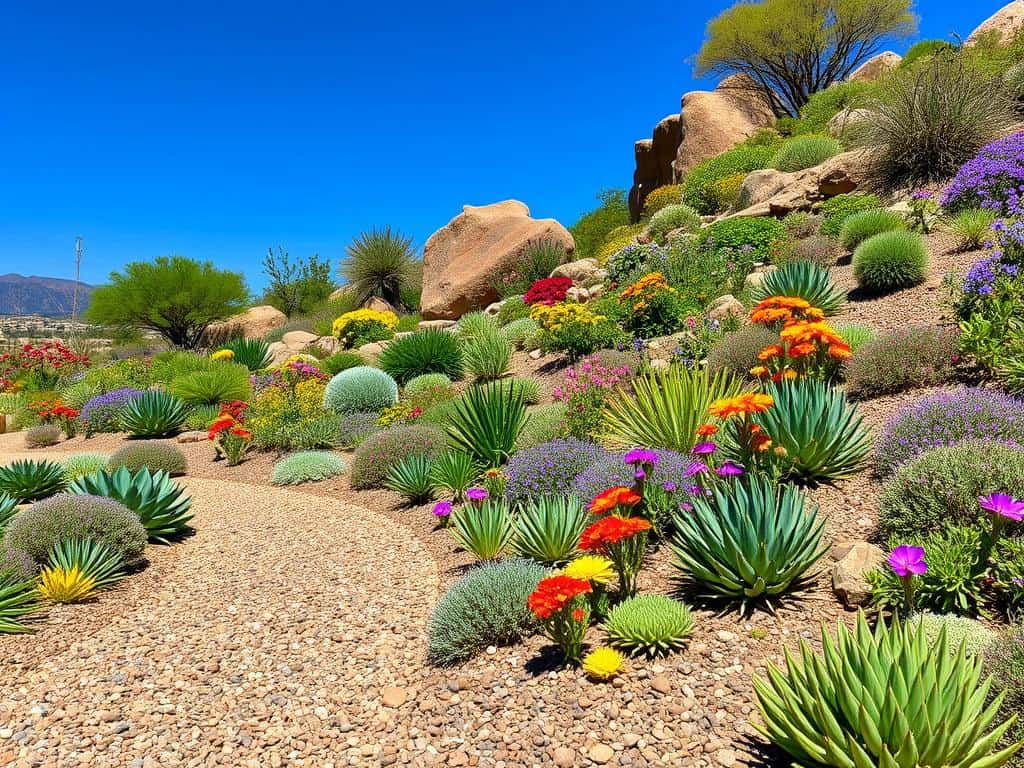
Xeriscaping improves water saving and looks great. In places like Novato, California, it can save 120 gallons of water daily.
By using xeriscaping, you can make a beautiful, eco-friendly garden. It’s good for the planet too.
Xeriscaping Principles for Sustainable Gardening
Learning the basics of xeriscaping is key to a thriving garden. It’s all about picking the right plants and using smart irrigation. This combo saves water and makes your garden look great.
Choosing the Right Plants
When picking drought-tolerant plants, I always think of native species. They need less water and care. Planting them close together cuts down on water use.
Planning your garden with sun and growth in mind is vital. It ensures your plants thrive.
Efficient Irrigation Systems
Using efficient irrigation is another big part of xeriscaping. A sub-drip system can cut water use by a lot. It only needs two minutes of water each day, unlike old spray systems.
Mulching also helps keep soil moist and cool. These steps make gardening easier and keep your garden looking good.
Conclusion
Xeriscaping is key for saving water in our gardens. It uses plants that don’t need much water and smart irrigation. I’ve seen how it cuts water use by up to 75% compared to old ways.
This method saves water and makes my garden look great. It’s good for the planet and looks good too.
Setting up a xeriscaped garden might cost a bit more at first. But, it saves a lot on water bills and upkeep over time. In Florida, for example, it can save 20,000 gallons of water a year.
Also, I spend less time taking care of my garden. This is because I chose plants that don’t need much water. It lets me enjoy my garden more.
Choosing xeriscaping helps our planet by using less water. Mulching and gravel can cut down water loss by up to 30%. It’s a big step toward a healthier planet.
As we face climate change, xeriscaping is important. It helps our communities and the environment. It’s a step toward a greener future.



MOST COMMENTED
Nature & Sustainability
Affordable Green Energy Solutions for Your Home
Health & Lifestyle
How to Gain Weight the Healthy Way with These 5 Tips
Home & Garden
Outdoor Rugs That Will Instantly Elevate Your Patio Decor
Home & Garden
Top 10 Flowers to Plant for a Colorful, Vibrant Garden
Health & Lifestyle
7 Effective Cardio Workouts You Can Do Anywhere
Health & Lifestyle
10 Guilt-Free Healthy Snacks You Can Enjoy Anytime
Home & Garden
How to Build with Recycled Materials for a Sustainable Home