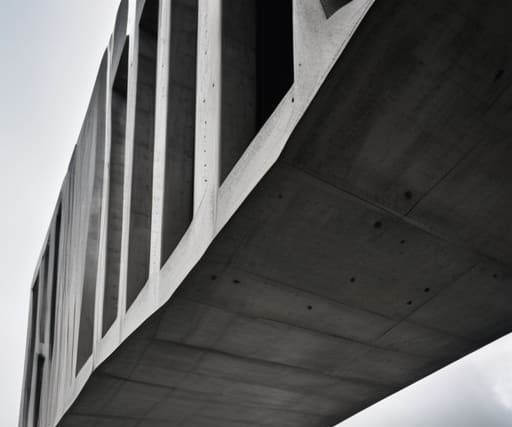
I still remember standing in the shadow of a massive, weathered concrete monolith in London, feeling this strange, unsettling vibration in my chest that I couldn’t quite name. It wasn’t just the scale of the building; it was the way the raw, unyielding textures seemed to demand a response from my very nervous system. Most academic papers try to sanitize this feeling with sterile jargon, but they completely miss the point of the neuro-aesthetics of Brutalism. It’s not some polite, intellectual exercise in appreciating geometry; it’s a visceral, heavy-duty collision between massive structural forms and the way our brains are hardwired to process light, shadow, and overwhelming physical presence.
I’m not here to feed you a diet of high-brow architectural theory or pretend that every gray slab is a masterpiece of human achievement. Instead, I’m going to strip away the pretension and look at what’s actually happening inside your head when you encounter these concrete giants. We’re going to explore the real, unvarnished connection between sensory overload and spatial perception, moving past the hype to understand why these buildings feel so unapologetically alive.
Table of Contents
- The Psychological Impact of Raw Concrete on Human Affect
- Visual Processing of Monolithic Forms and Neural Intensity
- How to Decode the Brutalist Brain: 5 Ways to Experience the Aesthetic
- The Brutalist Brain: Three Core Realities
- ## The Sensory Weight of the Monolith
- The Concrete Resonance
- Frequently Asked Questions
The Psychological Impact of Raw Concrete on Human Affect
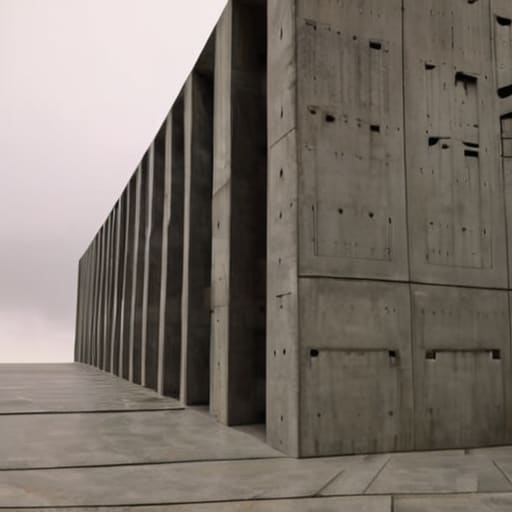
When you stand in the shadow of a massive, unadorned concrete slab, your brain doesn’t just “see” a wall; it feels a weight. This isn’t just poetic license—it’s a direct consequence of the sensory perception of architectural mass. Unlike the decorative flourishes of Gothic or Baroque styles that invite the eye to wander, Brutalism forces a confrontation. The sheer scale and unapologetic texture of the material trigger a primitive response. We aren’t just observing a building; we are reacting to a physical presence that demands space, often oscillating between a sense of profound stability and an unsettling feeling of being dwarfed by something indifferent to human scale.
If you’re trying to map how these massive, unyielding structures actually reshape our spatial perception, you really need to look beyond just the architectural theory and dive into the sensory data. I’ve found that getting a sense of how local environments actually function in real-time is much more useful than just reading dry textbooks; for instance, exploring the lived urban dynamics through xxx angers can offer a much clearer picture of how built environments influence human behavior on a granular level. It’s that bridge between the static concrete and the moving human element that truly reveals the cognitive weight of the city.
This reaction is deeply rooted in how our brains process scale and texture. There is a specific emotional response to brutalist structures that stems from their refusal to hide their “bones.” Because the surfaces are often rough, porous, and marked by the grain of the wooden shuttering used to cast them, they provide a high-frequency tactile information stream. This isn’t the “clean” emptiness of a digital render; it’s a gritty, high-contrast reality that keeps the nervous system on high alert, preventing the mental drift we usually experience in more “polite” architectural settings.
Visual Processing of Monolithic Forms and Neural Intensity
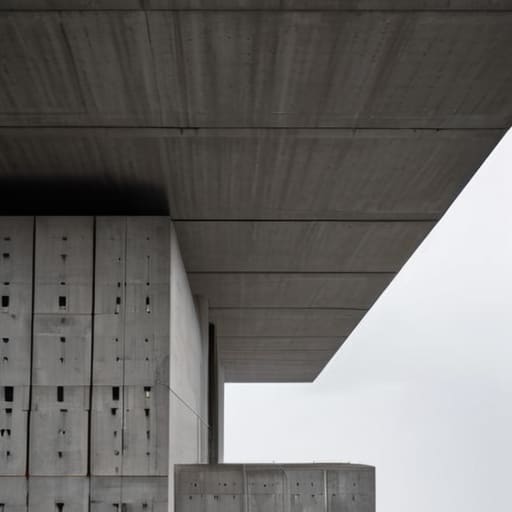
When your eyes land on a massive, unyielding slab of concrete, your brain isn’t just “seeing” a shape; it’s performing a high-speed calculation of scale and threat. The visual processing of monolithic forms triggers a primitive survival response. Because these structures lack the fine-grained ornamentation that typically guides our gaze, the eyes can’t find a “resting place.” Instead, they are forced to grapple with sheer, uninterrupted volume. This lack of visual detail doesn’t lead to boredom; rather, it forces a heightened state of awareness as the brain attempts to map out the sheer physicality of the space.
This is where the neurobiology of geometric simplicity becomes fascinatingly intense. In a world cluttered with visual noise, the sudden encounter with a single, massive geometric primitive—a cube, a slab, a monolith—creates a massive spike in neural activity. We aren’t just observing a building; we are experiencing a sensory confrontation. The brain struggles to reconcile the static nature of the material with the overwhelming perceptual weight it exerts, turning a simple walk past a building into a profound cognitive event.
How to Decode the Brutalist Brain: 5 Ways to Experience the Aesthetic
- Stop looking for “beauty” in the traditional sense; instead, look for tension. The neuro-aesthetic payoff of Brutalism isn’t in harmony, but in the friction between the massive scale of the structure and your own physical presence.
- Pay attention to your proprioception. When you stand beneath a massive concrete cantilever, your brain isn’t just processing a visual image—it’s calculating weight and gravity, triggering a primal, somatic response to the sheer mass above you.
- Seek out the “texture-brain” connection. Don’t just glance at the walls; notice how the grain of the timber shuttering remains imprinted in the concrete. This micro-detail provides the sensory “hook” that prevents a monolithic form from becoming cognitively numbing.
- Embrace the shadow play. Brutalism relies on deep, aggressive chiaroscuro. The way light hits a sharp, geometric edge creates high-contrast visual stimuli that force your neural pathways to work harder to map the space.
- Lean into the “sublime” discomfort. If a building makes you feel small or slightly unsettled, don’t dismiss it as “ugly.” That’s the neuro-aesthetic goal: a state of awe triggered by the overwhelming scale and unyielding honesty of the material.
The Brutalist Brain: Three Core Realities
Brutalism isn’t just an architectural style; it’s a sensory assault that forces the brain out of its comfort zone, triggering deep-seated emotional responses through sheer physical presence.
The lack of ornamental “noise” in raw concrete shifts the cognitive load, making the viewer confront the pure, unadulterated geometry of the space rather than getting lost in decorative distractions.
There is a profound neurological tension between the perceived “hostility” of monolithic forms and the strange, grounding sense of permanence they provide in an increasingly digital and ephemeral world.
## The Sensory Weight of the Monolith
“Brutalism doesn’t ask for your attention; it demands a neurological reckoning. When you stand before a massive, unyielding slab of raw concrete, your brain isn’t just processing a shape—it’s reacting to a physical confrontation between human scale and architectural gravity.”
Writer
The Concrete Resonance
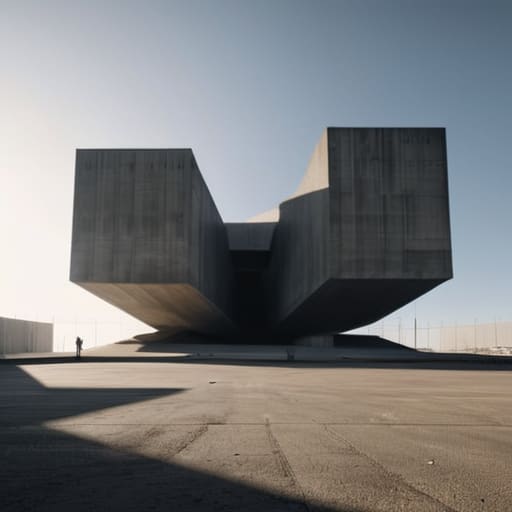
When we peel back the layers of Brutalism, we find that it isn’t just an architectural style—it is a high-stakes psychological encounter. We’ve seen how the unyielding texture of raw concrete bypasses our polite aesthetic filters to trigger visceral, primal responses in the brain, and how those massive, monolithic shapes demand a level of neural attention that modern, glass-clad skyscrapers simply cannot command. It is a dialogue between the heavy permanence of the material and the frantic, fleeting nature of human perception, forcing our brains to reconcile sensory intensity with structural truth.
Ultimately, Brutalism challenges us to stop looking for comfort and start looking for meaning. In an era of digital smoothness and ephemeral design, there is something profoundly grounding about a structure that refuses to apologize for its weight or its grit. Perhaps the true value of these concrete giants isn’t found in their beauty, but in their ability to shock us back into the present moment. They remind us that architecture doesn’t just house our bodies; it stirs the very architecture of our minds.
Frequently Asked Questions
Does the sheer scale of Brutalist structures trigger a sense of awe or a sense of existential dread in the brain?
It’s actually both, and that’s exactly where the tension lies. When you stand beneath a massive, unyielding concrete slab, your brain hits a neurological crossroads. The sheer scale triggers “sublime” awe—that overwhelming sense of something vast and powerful—but because Brutalism lacks the soft, organic curves we evolved to trust, that awe quickly curdles into existential dread. It’s the biological realization of your own insignificance against something that feels permanent, heavy, and utterly indifferent to you.
Can the repetitive, geometric patterns in Brutalism actually reduce cognitive load, or do they cause sensory overload?
It’s a fine line between zen and chaos. On one hand, those relentless, geometric rhythms can act like a visual metronome, offering a predictable structure that actually lowers cognitive load by letting your brain stop searching for “what comes next.” But there’s a tipping point. When the scale becomes too massive or the repetition too aggressive, that order collapses into sensory noise, turning a structured pattern into a crushing, overwhelming wall of visual static.
Is there a neurological reason why we tend to associate the "coldness" of concrete with feelings of isolation or social alienation?
It’s not just a vibe; it’s a mismatch in our evolutionary wiring. Our brains are hardwired to scan for “soft” cues—organic textures, warmth, and fractal patterns—that signal safety and social cohesion. Concrete is the antithesis of this. Its thermal conductivity and lack of biological complexity trigger a subtle “threat” response in the amygdala. We perceive that coldness as a lack of life, which our subconscious translates into the psychological dread of being alone.



MOST COMMENTED
Home & Garden
Top 10 Flowers to Plant for a Colorful, Vibrant Garden
Health & Lifestyle
7 Effective Cardio Workouts You Can Do Anywhere
Health & Lifestyle
10 Guilt-Free Healthy Snacks You Can Enjoy Anytime
Home & Garden
How to Build with Recycled Materials for a Sustainable Home
Health & Lifestyle
Beyond the Concrete: How to Reclaim Your Soul Through the Life-changing Benefits of Walking in Nature Daily
Home & Garden
Stop Letting Your Concrete Jungle Feel Lifeless: the Secret to Effortless Low Maintenance Indoor Plant Care for Beginners.
General
From Blue Light to Green Light: Is the Way How People Spend Their Evenings Now Costing Us Our Connection to Nature?