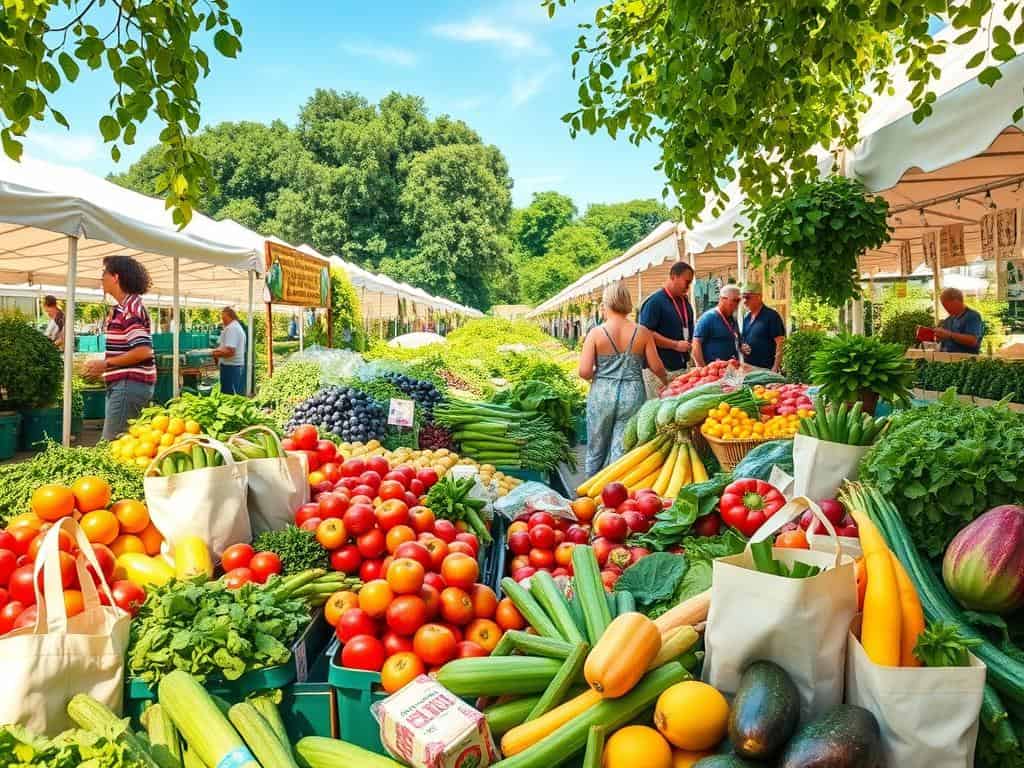
Did you know food production is responsible for over 37% of global greenhouse gas emissions? This fact shows how our food choices affect the planet. With the world’s population set to hit 8.5 billion by 2030, we must act fast. Our current food systems harm the environment, contribute to climate change, and threaten biodiversity.
Exploring sustainable food options is key. I’ll show how choosing plant-based, local, and organic foods helps our planet. These choices not only improve our health but also protect the environment. Making eco-friendly food choices is vital for our future and the planet’s.
Key Takeaways
- Food production is responsible for over 37% of global greenhouse gas emissions.
- Shifting to a plant-based diet can significantly reduce one’s carbon footprint.
- Supporting local farmers helps bolster the economy and reduce transportation emissions.
- Minimizing food waste is essential, as up to 30% of food produced is discarded.
- Organic farming practices can lead to healthier crops without synthetic pesticides.
- Making sustainable food choices contributes to environmental preservation and biodiversity.
Understanding Sustainable Food Choices
Our food choices are key to fighting climate change. Food production is a big source of greenhouse gas emissions, making up nearly one-third of global emissions. The way we grow, harvest, and distribute food affects our planet’s health.
Understanding how our diets impact the environment can lead to positive changes. By making sustainable food choices, we can help ensure a healthier future for all.
The Impact of Food on Climate Change
The food system is a big source of greenhouse gas emissions. These include methane, carbon dioxide, and nitrous oxide. Each gas plays a role in climate change.
Livestock production, like beef, is a major contributor, with 8.1 gigatonnes of emissions. Switching to plant-based foods can cut emissions by up to 84%. This is important because Americans eat a lot of meat, more than the planet can sustain.
Why Eating Less Meat Matters
Meat consumption has grown a lot, hurting our climate. The livestock sector, mainly beef, is responsible for half of its emissions. Vegetarian diets can cut emissions by 59% compared to meat-heavy diets.
Choosing a flexitarian diet, with some meat, can lower carbon footprints. Making these sustainable food choices improves health and the environment for everyone.
Sustainable Food Choices for a Healthier Planet
Choosing what I eat can really help my health and the planet. By eating more mindfully, I can help cut down on greenhouse gases. This makes our planet a healthier place.
Embracing a Plant-Based Diet
Switching to a plant-based diet is a big step towards eating sustainably. Studies show that food production is responsible for a third of greenhouse gas emissions. Foods like red meat and dairy are the biggest culprits.
By eating more legumes, whole grains, nuts, and fruits, I can greatly reduce my carbon footprint. These foods have lower emissions than animal products.
Choosing Local and Organic Products
Choosing local and organic foods is another way to support sustainability. Organic farming uses up to 56% less energy than traditional farming. This helps reduce environmental harm.
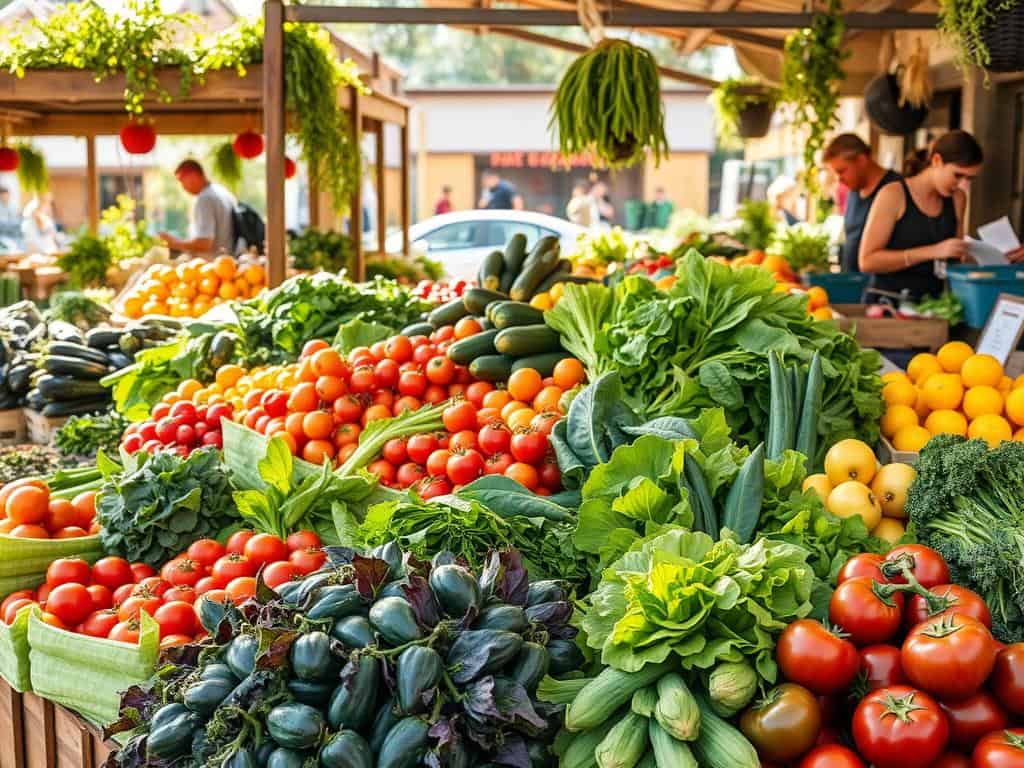
Buying from local farmers means I get fresher food and help the planet. Eating seasonal foods connects me to my community. It also helps me eat more sustainably.
Mitigating Food Waste and Reducing Plastic Usage
Reducing food waste and plastic use is key for a sustainable lifestyle. By cutting down on the environmental cost of what we buy, we can help the planet a lot. Food waste is a big problem, causing one-third of greenhouse gas emissions.
Every household adds to this waste, with 37% coming from kitchens. Making better choices and organizing the fridge can save money and help the environment.
The Environmental Cost of Food Waste
Billions of tons of food are wasted every year, harming ecosystems and releasing gases. The food industry is responsible for over 26% of global emissions. This makes fighting food waste very important.
Food waste not only harms the environment but also wastes resources. Donating food and turning leftovers into new products can help. Programs like Tesco’s “Perfectly Imperfect” show how small changes can make a big difference.
Strategies for Minimizing Plastic Packaging
Plastic packaging is a big obstacle to living sustainably. In 2019, 368 million tons of plastic were made, with food packaging being a big part. Choosing unpackaged, local foods is a good way to reduce plastic.
Working with local farms like Lufa Farms can help. Using reusable bags and containers also supports sustainable packaging. Every choice I make helps fight pollution and supports a greener future.
Conclusion
Thinking about my food choices shows me how big of a role they play in fighting climate change. By choosing healthy, sustainable foods, I help the planet. Eating more plants and buying local and organic supports the environment.
Studies show that eating right can help solve big environmental problems. It’s key for us to think about what we eat. This can make a big difference.
Knowing how food affects the planet is important. Animal farming and food waste are big issues. Every choice I make, from buying to throwing away food, helps or hurts the planet.
It’s shocking that so much food is wasted worldwide. This shows how critical it is to reduce waste. We all need to work together to make food choices that are better for the planet.
Working towards a sustainable future means making changes in how we eat. By understanding the problems and making better choices, I can help. This change not only improves my health but also encourages others to make a difference.



MOST COMMENTED
Nature & Sustainability
Affordable Green Energy Solutions for Your Home
Health & Lifestyle
How to Gain Weight the Healthy Way with These 5 Tips
Home & Garden
Outdoor Rugs That Will Instantly Elevate Your Patio Decor
Home & Garden
Top 10 Flowers to Plant for a Colorful, Vibrant Garden
Health & Lifestyle
7 Effective Cardio Workouts You Can Do Anywhere
Health & Lifestyle
10 Guilt-Free Healthy Snacks You Can Enjoy Anytime
Home & Garden
How to Build with Recycled Materials for a Sustainable Home