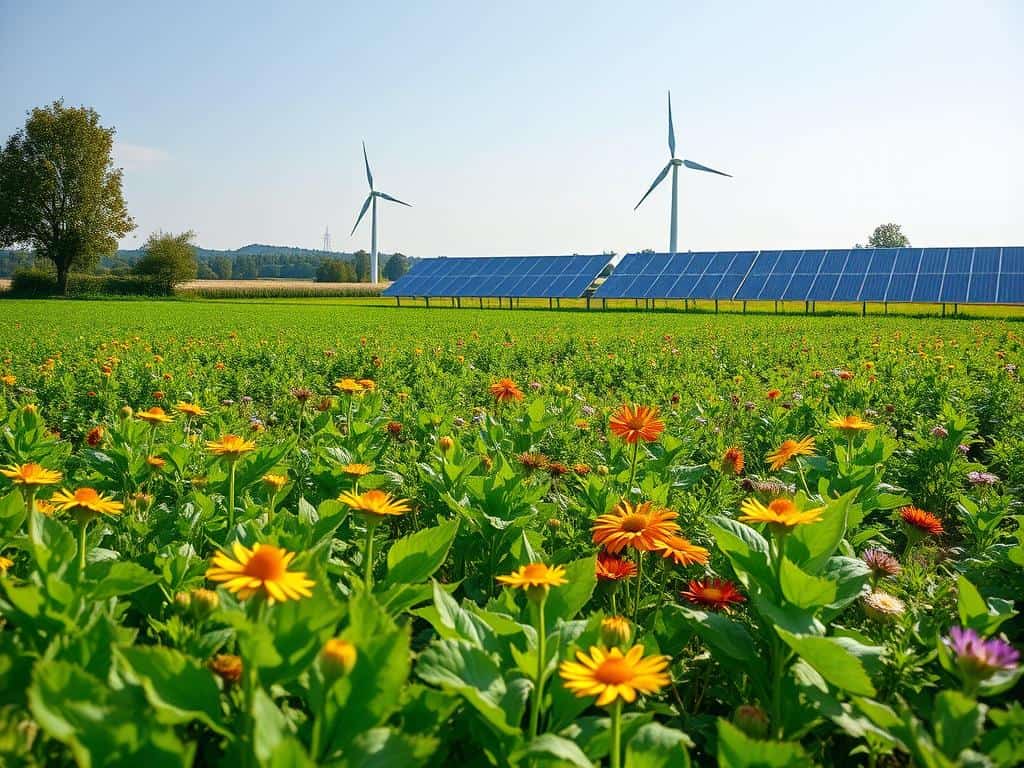
Did you know 40% of today’s global population works in agriculture? It’s the biggest job in the world. With more people needing food and facing challenges like climate change, sustainable farming is key. It aims to keep our planet healthy while feeding everyone.
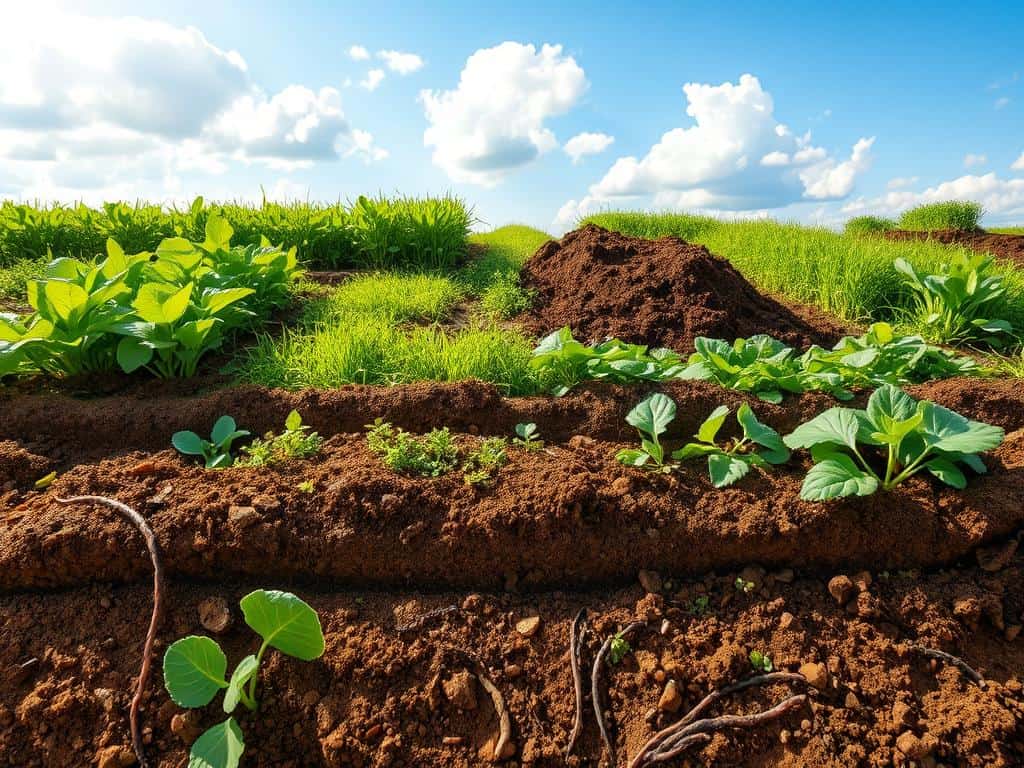
Farmers are focusing on soil health more than ever. They use methods like minimal tillage and cover cropping to keep soil fertile. These practices help the land stay productive and protect our planet’s resources.
Farming is not just about growing food. It’s about taking care of our planet for the future. Sustainable agriculture shows us how to do this.
Key Takeaways
- Around 40% of the global population works in agriculture, highlighting its importance.
- Soil conservation techniques are vital for maintaining agricultural productivity.
- Sustainable farming integrates economic viability with environmental and social concerns.
- Regenerative practices help restore ecosystem health.
- The shift toward eco-friendly farming is essential in addressing climate change.
The Importance of Sustainable Agriculture
Sustainable agriculture is key to solving big global problems. It tackles environmental issues, boosts economic health, and promotes social fairness. By using eco-friendly methods, we can greatly benefit the environment. At the same time, we ensure farming is profitable and build strong communities.
Environmental Impact and Benefits
Using sustainable practices makes a huge difference for our planet. Practices like growing different crops together improve soil health and fight pests. Cover crops help keep soil in place, add nutrients, and cut down on harmful chemicals.
No-till farming also helps keep soil healthy. This is important for holding water and growing strong crops. It leads to better environmental outcomes.
Economic Viability
Economic success is a big part of sustainable farming. Farmers who mix crops and livestock often see better efficiency and profits. Using fewer chemicals and keeping ecosystems healthy is good for business.
These farms can also meet the demand for organic and local foods. This helps them stay competitive in the market.
Social Equity and Community Health
Sustainable farming helps everyone by making fresh, healthy food available. It also supports local economies. This means better working conditions and health for farmworkers.
In fact, 99% of sustainable farmers aim to balance a healthy environment, economic success, and social fairness. This shows how important sustainable farming is for everyone.
Sustainable Agriculture Practices
Sustainable agriculture is key to a healthy planet. It uses smart soil management to boost farm productivity and cut down on harm to the environment. This way, farms and nature can grow together for the long haul.
Soil Health Management
Soil health is at the heart of sustainable farming. Using crop rotations and adding organic matter makes soil better for growing. It keeps the soil in good shape and supports a wide range of helpful soil life.
Conservation tillage is another key practice. It reduces soil damage and keeps moisture in, helping crops grow and keeping the ecosystem healthy.
Water Conservation Techniques
Water is precious, and farming uses a lot of it. Using drip irrigation and collecting rainwater helps save water. This ensures crops get enough water without wasting this valuable resource.
Agroecological Systems
Agroecology combines farming with nature. It fights pests and diseases by using diverse farming methods like permaculture. This approach boosts farm productivity while protecting the environment and reducing chemical use.
Technological Innovations Shaping Sustainable Agriculture
Agriculture is changing fast thanks to new technologies. These changes help make farming better for the planet. They make farming more productive and protect the environment. It’s clear that technology is key for a green future in farming.
Renewable Energy Integration
Renewable energy is vital for green farming. It gives farms clean power, reducing their use of fossil fuels. At AgriMAX, solar panels cut down on carbon emissions and lower energy costs.
These technological advancements let farms use solar power for irrigation and more. This reduces harm to the environment.
Technologies like precision farming use GPS and IoT to use resources better. They help farmers cut down waste by checking weather and soil. This leads to more accurate yield predictions.
Drones have changed farming by providing detailed aerial views. They help apply fertilizers and pesticides more precisely. This makes farming cheaper and better for the planet.
Vertical farming is another exciting trend. It uses less pesticides and herbicides, making food healthier. It also cuts down on carbon emissions by producing food locally. This supports eco-friendly farming.
Conclusion
Sustainable agriculture is key to the future of farming. It needs the teamwork of farmers, consumers, and policymakers. By using methods like crop rotation and organic farming, we boost productivity and protect our ecosystems.
As we face climate change and food shortages, focusing on soil health and biodiversity is vital. These efforts help us meet these big challenges.
Regenerative farming cuts down on greenhouse gases, making farming more eco-friendly and creative. Everyone must see the big impact of sustainable farming on our planet and economy. People’s demand for green food is pushing for change in the market.
With the world’s population set to hit nearly 10 billion by 2050, we must switch to sustainable farming fast. We need to educate farmers and offer them the support they need. This way, we can build strong food systems that help people and the planet.
The future of farming depends on our dedication to sustainable practices. We must innovate and protect our environment for future generations.



MOST COMMENTED
Tech & Innovation
Why Quantum Cryptography Is the Future of Data Security
Nature & Sustainability
Affordable Green Energy Solutions for Your Home
Health & Lifestyle
How to Gain Weight the Healthy Way with These 5 Tips
Home & Garden
Outdoor Rugs That Will Instantly Elevate Your Patio Decor
Home & Garden
Top 10 Flowers to Plant for a Colorful, Vibrant Garden
Health & Lifestyle
7 Effective Cardio Workouts You Can Do Anywhere
Health & Lifestyle
10 Guilt-Free Healthy Snacks You Can Enjoy Anytime