
Did you know that road transport caused 37% of all carbon dioxide emissions in 2021? This shows we need better options fast. The move to electric cars is key for a greener future. Big names like General Motors aim to stop making gas cars by 2035. Volvo wants to go all-electric by 2030.
These plans show the car industry is serious about fighting climate change. By choosing electric cars, we support clean energy and a greener tomorrow. Studies show electric cars are much cleaner than gas cars, even when we look at how they’re made.
This change is more than a passing trend. It’s a big step towards a better, more sustainable world for all.
Key Takeaways
- Road transport accounted for 37% of global energy-related carbon dioxide emissions in 2021.
- General Motors aims to stop selling gasoline-powered cars by 2035.
- Volvo plans to have an all-electric lineup by 2030.
- Most electric cars generate significantly lower emissions compared to gasoline-fueled vehicles.
- The adoption of electric vehicles is vital for reducing greenhouse gas emissions.
- Investment in EV infrastructure is key for sustainable transport.
- Electric vehicles lead to a cleaner, greener future with the right energy.
Understanding the Impact of Transportation on the Environment
The impact of transportation on the environment is a big issue. It’s mainly because of the greenhouse gas emissions from this sector. Transportation uses about 30% of U.S. energy and 70% of petroleum.
These emissions play a big role in climate change. We need to use sustainable practices and technologies to address this.
Greenhouse Gas Emissions from the Transportation Sector
The transportation sector is responsible for 41% of global CO2 emissions. In the U.S., light-duty vehicles are a big part of this. Electric vehicles, including plug-in hybrids, can go over 130 MPGe.
This means drivers can travel 100 miles on just 25–40 kWh of energy. Switching to electric vehicles can greatly reduce emissions. All-electric vehicles have zero tailpipe emissions.
Renewable energy is key in lowering the carbon footprint of transportation.
The Role of Clean Energy in Reducing Carbon Footprint
Using clean energy for electric vehicles is important. It helps reduce carbon footprints. Renewable energy can make EVs even cleaner, as battery production gets greener.
Recent EV tech has made battery production emissions drop a lot. Using recycled materials in EVs supports sustainable manufacturing. There are over 53,000 public charging stations in the U.S. now.
This makes it easier for drivers to choose electric vehicles. It helps make the environment cleaner.
Electric Cars: The Solution to Sustainable Transportation
The rise of electric cars is a big step toward a greener future. Trends show electric cars could soon be a big part of our roads. Countries like China and India are leading the way with big goals and incentives for green vehicles.
These efforts are pushing us toward using more eco-friendly cars. It’s a move toward cleaner technologies and greener living.
Growth in Electric Vehicle Adoption
In the United States, electric cars make up less than 1% of all cars. But, the Bipartisan Infrastructure Law has set aside $7.5 billion for more EV charging spots. This is a big step toward more electric cars on the road.
President Biden wants half of all cars sold to be electric by 2030. This means we need to make a lot more electric cars. But, electric cars are often more expensive, which raises questions about who can afford them.
Benefits of Electric Vehicles
Electric cars offer more than just cleaner air. They cost about 3 cents per mile to run, which is much cheaper than gas cars. They also produce less carbon emissions than gas cars over their lifetime.
New battery tech is making electric cars even better. These batteries are now made with less carbon than before. Electric cars are a key part of the move toward cleaner energy and less pollution.
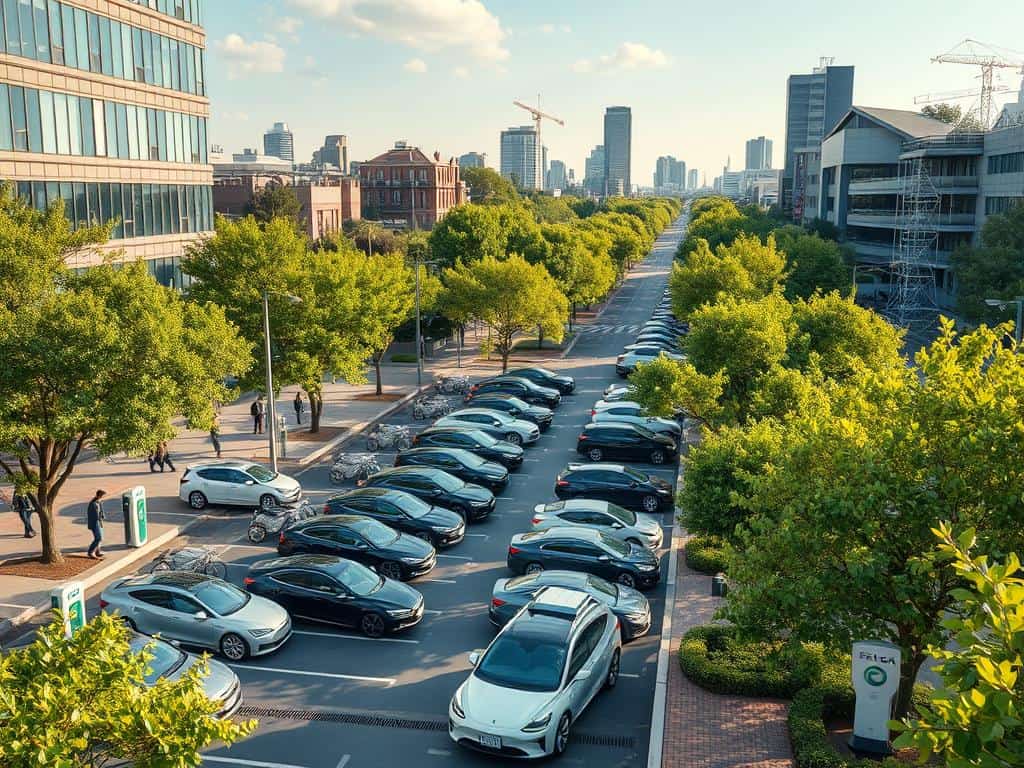
The Challenges Facing Electric Vehicle Integration
Electric vehicles are becoming more popular, but they face many challenges. One big issue is the infrastructure limitations. McKinsey & Company found that charging is a major worry for people thinking about buying electric cars in the U.S. With over 275,000 electric cars on the road, we need more charging spots.
Infrastructure Limitations
There are over 53,000 public charging stations now. But we need more. Deloitte’s 2022 study shows only 11% of people want to use public chargers. Most prefer to charge at home, but we need faster chargers for this.
Level 1 chargers take over 20 hours to charge 100 miles. Level 3 DC fast chargers can do it in about 40 minutes. We need better charging options.
Environmental Impacts of Battery Production
The environmental impacts of making batteries are also a big worry. Electric cars need lithium, cobalt, and nickel, which are hard to find and can harm the environment. As more electric cars are made, we must find ways to make batteries more sustainable.
Conclusion
Electric cars are a big step toward a greener future of travel. They face challenges, but their benefits are clear. For example, they save a lot on fuel and upkeep, thanks to the U.S. Department of Energy.
These cars cost less to run than gas-powered ones. This shows why we should move to electric vehicles. They’re good for our wallets and the planet.
Help from laws like the Bipartisan Infrastructure Law is key. It gives $7.5 billion for more EV charging spots. By 2030, we’ll have 500,000 public charging stations.
This will make electric cars easier to use. It’s a big step toward a cleaner, more efficient way to travel.
Working together is vital for electric cars to become the norm. Governments, businesses, and people must join forces. This will help us use technology to make travel better and greener.
By doing this, we can fight climate change and make the air cleaner. It’s a step toward a better future for all of us.



MOST COMMENTED
Nature & Sustainability
Affordable Green Energy Solutions for Your Home
Health & Lifestyle
How to Gain Weight the Healthy Way with These 5 Tips
Home & Garden
Outdoor Rugs That Will Instantly Elevate Your Patio Decor
Home & Garden
Top 10 Flowers to Plant for a Colorful, Vibrant Garden
Health & Lifestyle
7 Effective Cardio Workouts You Can Do Anywhere
Health & Lifestyle
10 Guilt-Free Healthy Snacks You Can Enjoy Anytime
Home & Garden
How to Build with Recycled Materials for a Sustainable Home