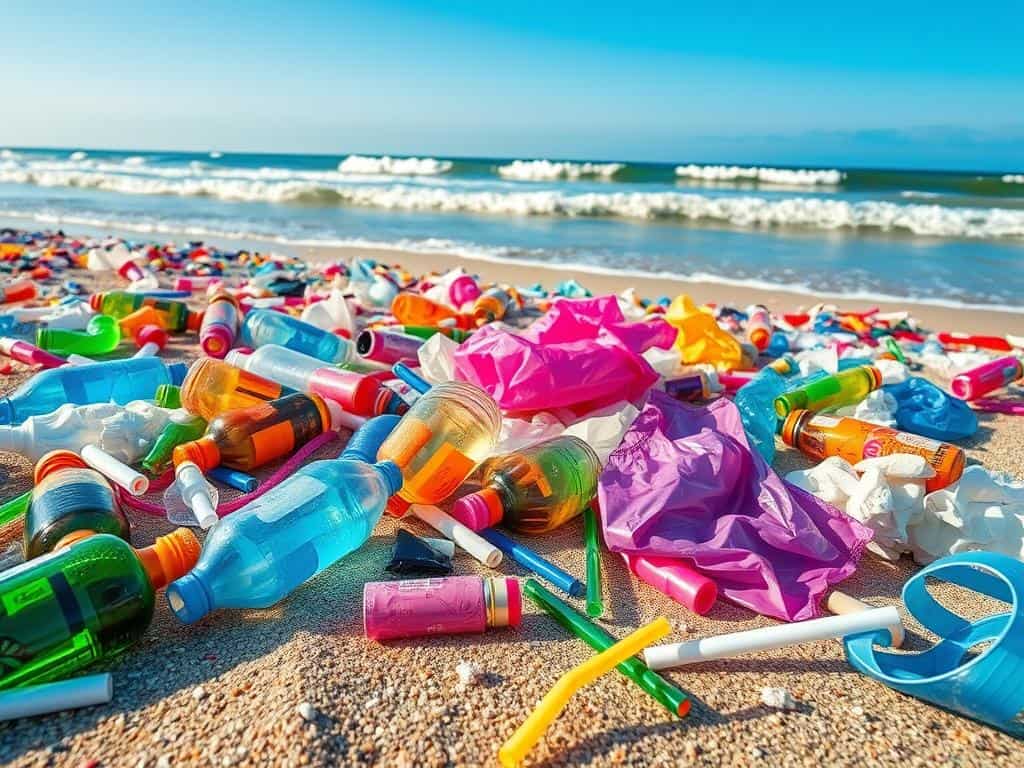
Did you know over 50% of plastic is used once and then thrown away? This is just the start of understanding plastic pollution’s harm. By 2040, plastic emissions could match those of 615 coal-fired power stations. This shows how urgent it is to tackle this problem.
Scientists say there are about 171 trillion pieces of plastic in our oceans. A study found microplastics in 80% of people tested. This highlights the need for a plastic-free future.
Key Takeaways
- Over 50% of plastic is used just once before being discarded.
- Only 9% of the total plastic ever produced globally has been recycled.
- There are approximately 171 trillion pieces of plastic in the ocean.
- 80% of individuals tested have microplastics in their blood.
- Predictions indicate plastic production will contribute to climate change significantly by 2040.
- Plastic waste accounts for 80% of all ocean pollution.
Understanding the Scope of Plastic Pollution
Plastic pollution is a growing concern with alarming statistics. Over 8.3 billion tonnes of plastic have been made, and only 9% is recycled. This highlights the need to rethink how we use and dispose of plastic. If we keep going at this rate, plastic pollution could double by 2030.
The Overwhelming Numbers
In the last 20 years, half of all plastics ever made have been produced. This shows a worrying increase in production. From 2.3 million tons in 1950 to 448 million tons in 2015, production has skyrocketed.
Every year, eight million tons of plastic waste enter our oceans. This is like dumping five garbage bags of trash on every foot of coastline worldwide. These numbers paint a bleak picture of our environment’s state.
Presence in Every Corner of the Earth
Plastic pollution has reached even the most remote parts of our planet. It’s found in deep ocean trenches and polar icecaps. This shows that no part of Earth is untouched.
Research shows that nearly 2,100 species, including endangered ones, have been harmed by plastic debris. With 11 million metric tons of plastic entering our oceans yearly, action is urgently needed.
Microplastics in Our Lives
Microplastics are a big concern, as we each ingest around 70,000 of them yearly through food and drink. The long-term health risks, including endocrine disruption and cancer, make this issue critical. It’s essential to find sustainable alternatives to our plastic dependence.
Shocking Facts About Plastic Pollution
Exploring plastic pollution reveals a disturbing reality. Single-use plastics make up about half of all plastic made. This widespread use harms our environment in ways we can’t ignore.
Single-Use Plastic Crisis
Every year, 12 million tonnes of plastic waste end up in the ocean. Daily, 8 million pieces of plastic pollute marine ecosystems. Single-use plastics, used once and then thrown away, are a big part of this problem.
Most of this plastic doesn’t break down but stays in the ocean for centuries.
Impact on Marine Life
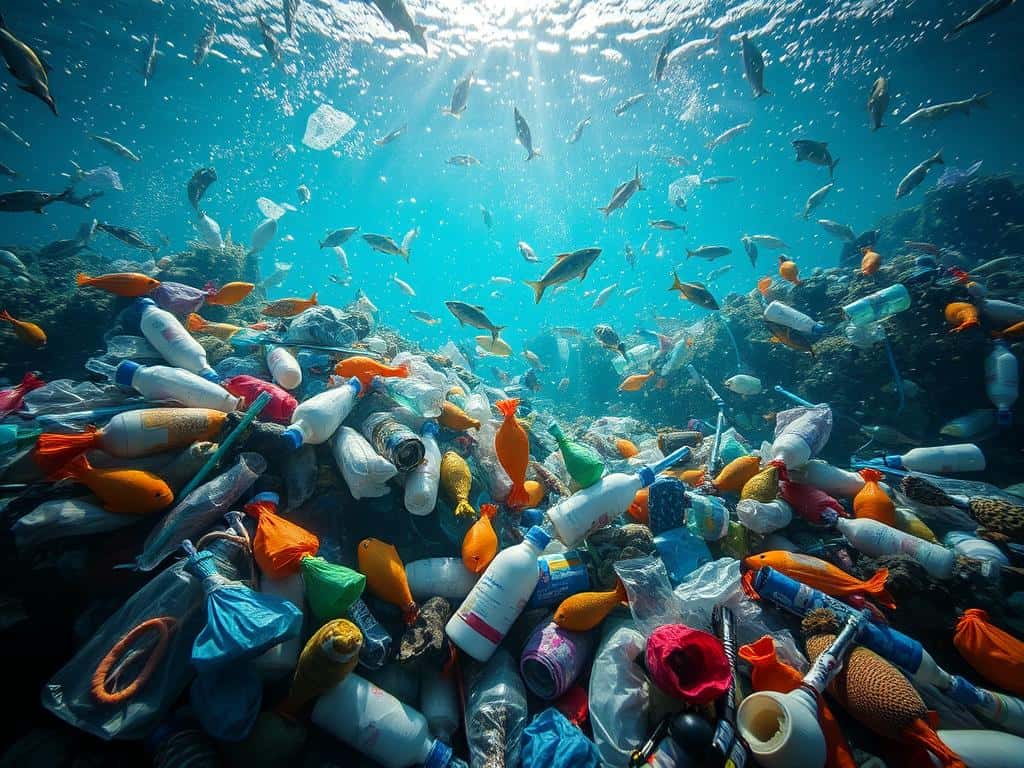
Marine pollution is very harmful to wildlife. About 100,000 marine mammals and turtles and 1 million sea birds die from plastic in the ocean each year. Fishing gear gets tangled around animals, causing suffocation or starvation.
Microplastics have also entered the food chain. This affects marine life and could harm human health too.
Growing Ocean Plastic Problem
The amount of plastic in our oceans is huge. There might be over 5.25 trillion pieces of plastic floating in the water. This weighs around 269,000 tonnes.
If we keep using plastic at this rate, it could outnumber fish in the ocean by 2030. We need to act fast to protect our oceans and marine life.
How to Fight Plastic Pollution
Stopping plastic pollution needs a team effort. People, groups, and organizations must join hands to make a difference. First, we must spread the word about the need to use less plastic.
Reducing Plastic Consumption
One key way to reduce plastic usage is to use less of single-use items. Switching to reusable bags, bottles, and containers can greatly reduce waste. By choosing wisely, we can inspire others to do the same.
Sharing our plastic use on social media helps spread the word. It builds a community focused on sustainability.
Legal Efforts and Community Involvement
Legal battles against plastic are growing, with laws like the Break Free From Plastic Pollution Act. Over 500 cities and counties have banned plastic bags. This shows the strength of working together.
Local cleanups and pushing for stronger laws are key. Supporting groups fighting plastic pollution helps make a bigger impact.
Innovative Solutions and Alternatives
Innovation is vital in fighting plastic pollution. Startups and research are creating sustainable alternatives to plastics, like biodegradable materials. New recycling tech is also coming, making it possible to recycle more plastic waste.
As the plastic problem gets worse, these new solutions are more important than ever. They help us build a greener future.
Conclusion
Every year, over 460 million metric tons of plastic are made. This shows how urgent it is to fight plastic pollution. About 20 million metric tons of plastic pollute our environment yearly. This harms our planet and our health.
Most of this pollution comes from land. So, we can make a difference by living more sustainably. This means taking steps to protect our environment.
My choices about plastic really matter. Microplastics in our food and drinks show we must use less plastic. It’s good for the planet and our health.
Plastic pollution also hurts our economy. It affects tourism and fishing, for example. This makes me want to find and share new solutions.
I’m joining community efforts and pushing for laws to change things. A global plastics treaty could help a lot. It could make our planet cleaner and healthier for the future.
Together, we can fight this big environmental problem. By working together, we can make a better future for everyone.


MOST COMMENTED
Nature & Sustainability
Affordable Green Energy Solutions for Your Home
Health & Lifestyle
How to Gain Weight the Healthy Way with These 5 Tips
Home & Garden
Outdoor Rugs That Will Instantly Elevate Your Patio Decor
Home & Garden
Top 10 Flowers to Plant for a Colorful, Vibrant Garden
Health & Lifestyle
7 Effective Cardio Workouts You Can Do Anywhere
Health & Lifestyle
10 Guilt-Free Healthy Snacks You Can Enjoy Anytime
Home & Garden
How to Build with Recycled Materials for a Sustainable Home