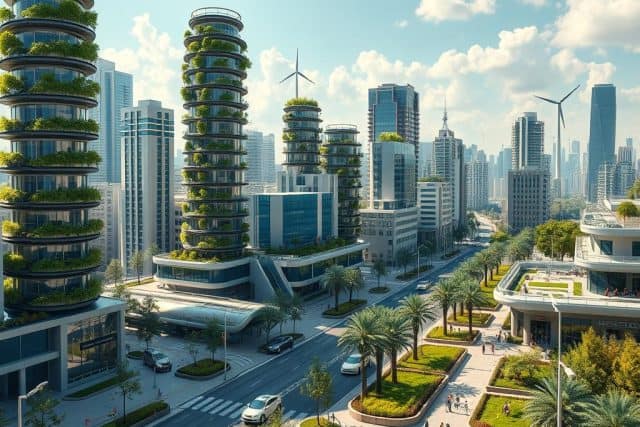
Did you know that by 2050, about 66% of the world’s people will live in cities? This growth puts a big strain on resources and buildings. Smart Cities are a key answer to these problems.
They use the latest urban tech and IoT to make cities better for the planet. The United Nations Economic Commission for Europe says there are many ways to make cities greener. But, old ways of thinking and a lack of training slow things down.
This article will show how Smart Cities use new tech to make life better and greener. They’re setting the stage for a more sustainable future.
Key Takeaways
- Smart Cities use IoT and urban tech to tackle climate change and manage resources.
- By 2050, over 66% of the world’s population will live in cities, needing sustainable solutions.
- New ways to pay for projects are key for making Smart Sustainable Cities a reality.
- It’s important to make cities welcoming and accessible for everyone.
- Cities like Amsterdam and Songdo are examples of using smart tech for sustainability.
Understanding Smart Cities and Their Role in Sustainability
Urban areas are growing fast, making smart sustainable cities key to understanding. They use Information and Communication Technologies (ICT) to improve efficiency and protect the environment. This shift aims to tackle the challenges of a growing population, expected to reach 66% by 2050.
As cities get more crowded, the need for better resource use and quality of life grows. This is a big challenge for urban planners and residents alike.
Defining Smart Sustainable Cities
Smart sustainable cities use new technologies to meet various needs. They aim to balance economic, social, environmental, and cultural aspects for now and the future. Experts worldwide have come up with 43 different definitions of smart cities.
These cities are complex, involving many sectors. This shows how diverse and multifaceted they are.
Key Components of Smart Cities
Smart cities focus on green technologies to improve urban life. These technologies aim to boost efficiency and protect the environment. They include energy-efficient infrastructure, which is vital for reducing resource use.
By 2050, cities’ natural resource use is expected to jump to 90 billion tons. Involving local communities in planning is also key. It ensures social sustainability, tackling inequalities and building a sense of belonging.
Smart Cities and the Integration of Green Technologies
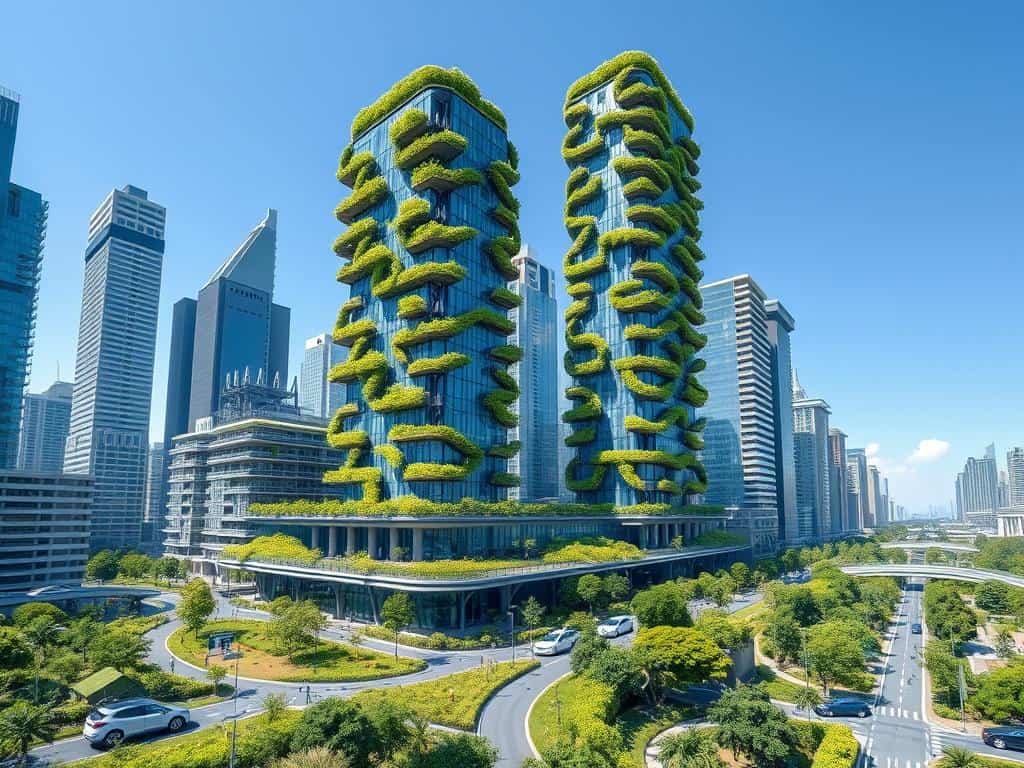
Smart cities show how cities can use green technologies to be more sustainable. These technologies make cities more energy-efficient and cleaner. Let’s look at some key projects that highlight the power of green tech.
Renewable Energy Initiatives
Smart cities focus on renewable energy to be sustainable. Denmark, for example, uses wind and solar power for half its energy. This move helps cities like Copenhagen use less fossil fuel and cut down on pollution.
One big success is the district heating system. It uses extra heat from making electricity to save energy. This makes the most of resources.
Energy-Efficient Urban Planning
Energy-efficient buildings are key in smart cities. These buildings use green tech to be sustainable. Architects and planners use *intelligent systems* with IoT sensors to save energy.
These systems help cities use energy better. They also focus on keeping air and water clean. This is important for a sustainable city.
Green Transportation Solutions
Green transport is essential for a sustainable city. Cities like Zurich and Singapore have lots of bike lanes. This encourages people to cycle, reducing traffic and pollution.
Electric vehicles and renewable energy for charging stations are also part of the solution. This makes cities more eco-friendly for getting around.
Conclusion
The shift to Smart Cities is a big step towards a sustainable future. These cities use new technologies and work together to solve big problems. They focus a lot on being green.
Smart solutions make cities work better and improve life for everyone. For example, smart traffic systems save money and reduce pollution. Working together, cities and businesses can create solutions that really help people.
Looking at the future, we see that being open and involving people is key. Sharing data and listening to citizens helps cities use technology wisely. It’s not just about making cities smarter. It’s about making life better for everyone now and in the future.


MOST COMMENTED
Nature & Sustainability
Affordable Green Energy Solutions for Your Home
Health & Lifestyle
How to Gain Weight the Healthy Way with These 5 Tips
Home & Garden
Outdoor Rugs That Will Instantly Elevate Your Patio Decor
Home & Garden
Top 10 Flowers to Plant for a Colorful, Vibrant Garden
Health & Lifestyle
7 Effective Cardio Workouts You Can Do Anywhere
Health & Lifestyle
10 Guilt-Free Healthy Snacks You Can Enjoy Anytime
Home & Garden
How to Build with Recycled Materials for a Sustainable Home