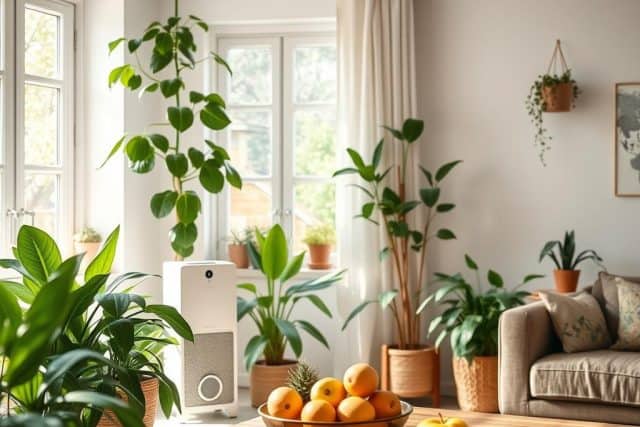
Did you know the average American spends 87% of their life indoors? This fact highlights how important indoor air quality is. Indoor pollutants can be 100 times higher than outdoor ones, yet many of us ignore their health risks.
Poor air inside can lead to many health problems, from breathing issues to serious diseases. It’s vital to improve the clean air in our homes. In this article, I’ll share seven tips to help you breathe easier at home.

Key Takeaways
- The majority of our time is spent indoors, making air quality critical for our health.
- Regular maintenance, like changing AC filters, can greatly improve indoor air quality.
- Using air purifiers is a proven way to cut down harmful airborne particles.
- Controlling humidity and ensuring proper ventilation are key to preventing mold growth.
- Household cleaning routines, such as washing rugs and carpets, significantly enhance air quality.
Understanding the Importance of Indoor Air Quality
The importance of indoor air quality (IAQ) is huge. We spend about 90% of our time indoors. Poor air quality can harm our health, making it key to know why.
By learning about indoor air pollution sources, we can make our homes and workplaces better. This helps protect our health.
Common Sources of Indoor Air Pollution
Many things can make indoor air bad. Volatile organic compounds (VOCs) from cleaners and paints are big offenders. They can make our air worse.
Mold and mildew also harm air quality. They grow in damp places. Keeping humidity levels right is important to stop them.
Not enough air coming in can also hurt. Dust and carbon monoxide can build up. Not keeping HVAC systems clean is another problem.
Health Effects of Poor Indoor Air Quality
Poor indoor air quality can hurt our health. It can cause breathing problems, like asthma. It’s worse for kids and older people.
Long-term exposure can lead to serious diseases. These include pneumonia and heart disease. Ignoring indoor air quality can harm us a lot.
By focusing on air quality, we can avoid these health risks. It’s important for our well-being.
Practical Steps to Improve Your Indoor Air Quality
Improving indoor air quality is essential for a healthier home. Each step is important for a better living space. It helps solve many air quality problems.
Change Air Filters Regularly
Changing air filters often is a simple yet effective tip. They catch dust, allergens, and pollutants. I change standard filters every one to three months.
HEPA filters are even better, capturing 99.97% of particles. This greatly improves the air quality in my home.
Use Air Purifiers
Air purifiers have made a big difference in my home. Those with HEPA filters are top-notch at removing harmful particles. Using them regularly cuts down on indoor pollutants, making my home healthier.
Control Humidity Levels
Keeping humidity levels right is key to avoiding mold and allergens. I aim for 30% to 50% humidity. This keeps my home comfortable and mold-free.
Dehumidifiers help keep this balance. They ensure my air quality stays optimal.
Ensure Proper Ventilation
Good ventilation is vital for fresh air in my home. I open windows when safe or use exhaust systems. High-quality window screens also help keep debris out while letting air in.
Conclusion
Improving indoor air quality is key to a healthier home. I spend about 90% of my time indoors, just like many Americans. Knowing the sources of indoor pollution, like mold and harmful chemicals, helps me take action.
Using clean air strategies is important. This includes changing air filters, using air purifiers, and controlling humidity. These steps help reduce health risks from bad indoor air.
It’s scary to think about the health risks from poor indoor air. The World Health Organization says 3.8 million deaths worldwide are caused by indoor air pollution. This makes me focus more on my home’s air quality.
Following important indoor air quality tips keeps me and my family safe. It also improves our health in the long run. This is why I make indoor air quality a top priority.
In short, making indoor air quality a priority is essential. Indoor spaces often have more pollutants. Simple steps can make a big difference in having cleaner air. By acting now, I’m ensuring a healthier future for myself and my family.



MOST COMMENTED
Nature & Sustainability
Affordable Green Energy Solutions for Your Home
Health & Lifestyle
How to Gain Weight the Healthy Way with These 5 Tips
Home & Garden
Outdoor Rugs That Will Instantly Elevate Your Patio Decor
Home & Garden
Top 10 Flowers to Plant for a Colorful, Vibrant Garden
Health & Lifestyle
7 Effective Cardio Workouts You Can Do Anywhere
Health & Lifestyle
10 Guilt-Free Healthy Snacks You Can Enjoy Anytime
Home & Garden
How to Build with Recycled Materials for a Sustainable Home