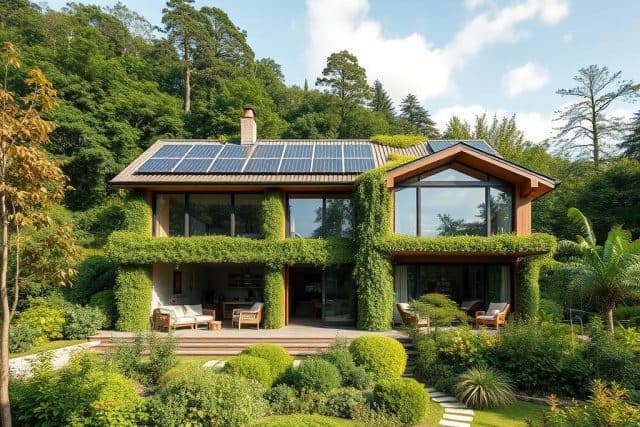
Did you know the U.S. has the highest carbon footprint per capita? It averages around 16 tons per person. This is a shocking fact that shows we need better solutions in sustainable home design. By making our homes eco-friendly, we can cut down our carbon footprints and help the environment.
Sustainable architecture is not just a trend. It’s a key response to today’s challenges. It includes energy-saving appliances and renewable energy like solar power. I’m excited to share how we can all help make a sustainable future through smart design.
Key Takeaways
- Sustainable home design minimizes environmental impact while boosting energy efficiency.
- Building an eco-friendly living space can save a lot on utility costs.
- Renewable energy sources, like solar and geothermal, are key for energy sustainability.
- Using energy-efficient appliances and systems is essential for lowering carbon footprints.
- The principles of sustainable architecture have evolved to tackle ecological challenges effectively.
- Creating a sustainable home benefits both personal well-being and the local ecosystem.
Understanding Sustainable Home Design
Sustainable home design is all about building homes that are good for the planet. It uses materials that can be replaced and saves energy. This makes homes healthier and can even save money on bills.
These homes also increase in value. Plus, they improve the air inside, which is better for the people living there.
Definition and Importance of Sustainable Architecture
Sustainable architecture is more than just building homes. It’s about making homes that are good for the environment and the people living in them. It uses materials that are recycled and local, and designs that let in lots of natural light.
This approach helps save energy and reduces waste. It’s a step towards a greener future.
Historical Context of Sustainable Building Practices
The idea of sustainable building has been around for a long time. In the past, people used materials that were available locally. The 1970s saw a big push for environmental awareness.
In 1992, ENERGY STAR was introduced, and the U.S. Green Building Council was formed the next year. These steps helped make sustainable homes more popular. They changed how homes are built forever.
Key Principles of Sustainable Home Design
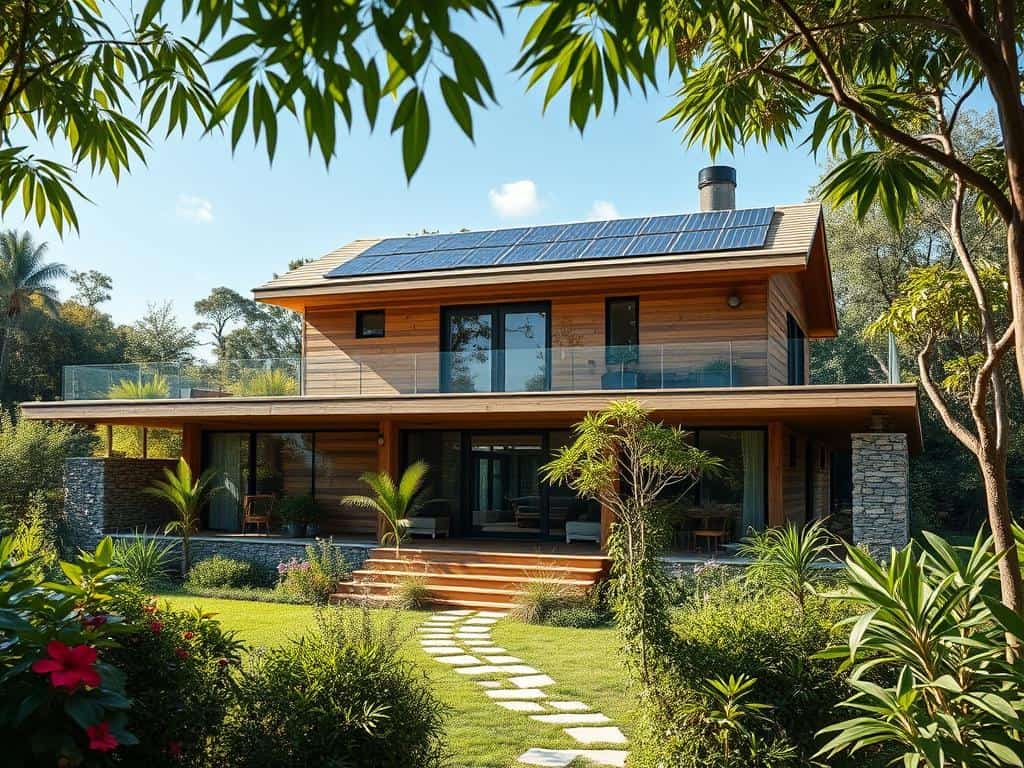
Creating a sustainable home involves several key principles. These include focusing on energy efficiency, using renewable energy, and choosing eco-friendly materials. Thoughtful landscape design also plays a big role. Together, these elements help reduce our ecological footprint and promote a harmonious lifestyle.
Energy Efficiency and Conservation Techniques
Using energy-efficient lighting and appliances can cut energy use by up to 25%. This leads to lower energy bills. Proper insulation can save 20-30% of energy, and switching to energy-efficient hot water systems can save up to $300 a year.
Optimizing sun exposure and using passive solar design helps create a cozy home. It uses natural resources effectively.
Use of Renewable Energy Sources
Renewable energy solutions, like solar panels, let me generate my own electricity. This reduces my need for traditional power sources. It cuts my energy bills by 70-100% and offers tax incentives to help with the cost.
By using these technologies, I can control my energy use. This helps the environment.
Incorporating Eco-Friendly Materials
Choosing eco-friendly materials like reclaimed wood and low-VOC products is key. These choices can cut a home’s carbon footprint by up to 50%. They also make for a healthier indoor environment.
By using locally sourced and recycled materials, I support a sustainable future. I choose materials that are both beautiful and functional.
Landscape Design for Eco-Living
Landscape design is vital for eco-living. Using native plants that need little water is one way to reduce our impact. Adding features like rainwater harvesting systems and efficient irrigation helps use resources wisely.
This approach promotes sustainability in my home and community.



MOST COMMENTED
Nature & Sustainability
Affordable Green Energy Solutions for Your Home
Health & Lifestyle
How to Gain Weight the Healthy Way with These 5 Tips
Home & Garden
Outdoor Rugs That Will Instantly Elevate Your Patio Decor
Home & Garden
Top 10 Flowers to Plant for a Colorful, Vibrant Garden
Health & Lifestyle
7 Effective Cardio Workouts You Can Do Anywhere
Health & Lifestyle
10 Guilt-Free Healthy Snacks You Can Enjoy Anytime
Home & Garden
How to Build with Recycled Materials for a Sustainable Home