
I still remember the 3:00 AM meltdown during my last production push, staring at a screen full of “Conflict Detected” errors while my users’ data literally evaporated into the ether. We’ve been sold this lie that a constant, high-speed connection is a prerequisite for modern software, but that’s just a recipe for a fragile user experience. If you’re tired of building apps that feel like they’re held together by duct tape every time a user enters a tunnel or hits a spotty Wi-Fi zone, you need to stop chasing the cloud-only myth and start looking into Local-First CRDT Synchronization. It’s not just a fancy buzzword for distributed systems; it’s the only way to build software that actually works when the internet decides to take a nap.
I’m not here to sell you on a theoretical whitepaper or some over-engineered architectural dream that’s impossible to implement in a real sprint. Instead, I’m going to walk you through the unfiltered reality of implementing these systems. We’ll skip the academic fluff and get straight into how you can actually use Local-First CRDT Synchronization to build resilient, snappy applications that handle conflicts gracefully without making your life a living hell.
Table of Contents
Conflict Free Replicated Data Types Explained Simply

Think of a CRDT as a smart data structure that knows how to resolve its own arguments. In a traditional setup, if two people edit the same sentence at the exact same time, the server usually has to play referee, picking a “winner” and discarding the other person’s work. That’s a nightmare for user experience. CRDTs flip this script by using mathematical rules that ensure no matter what order updates arrive in, every device eventually settles on the exact same state. It’s the secret sauce behind distributed systems eventual consistency, allowing different nodes to diverge temporarily without ever causing a permanent mess.
This isn’t just about theoretical math; it’s about how the app actually feels in your hands. When you type a character in a local-first app, you don’t want to wait 200ms for a server to say “okay.” By using optimistic UI updates with CRDTs, the interface reacts instantly to your input, assuming the change is valid. The heavy lifting of merging that change with someone else’s edit happens silently in the background. You get that snappy, instant feeling of a desktop app, even though you’re technically working in a massive, distributed web.
Achieving Latency Compensation in Local First Apps
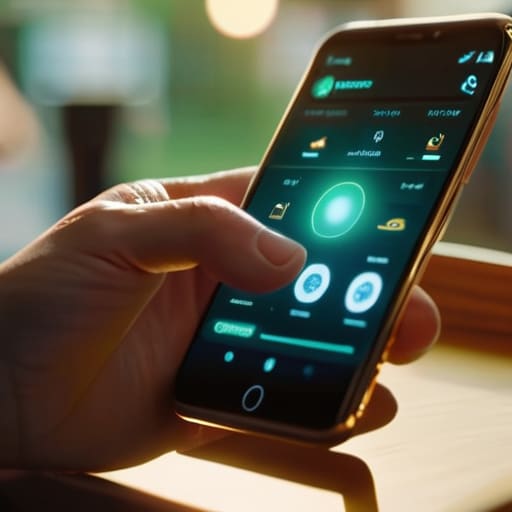
The real magic of this approach isn’t just about data integrity; it’s about how the app feels to the person using it. In a traditional cloud-synced app, you click a button, wait for a loading spinner, and pray the server responds. With a local-first architecture, that delay vanishes. By using optimistic UI updates with CRDTs, your application can immediately reflect a user’s change on the screen as if it had already been finalized. The UI updates instantly because the “truth” is living locally on the device, not sitting behind a 200ms round-trip to a data center in Virginia.
Now, if you’re starting to feel a bit overwhelmed by the math behind these data structures, don’t sweat it—most of us had to learn the hard way. When I was first diving into the weeds of distributed systems, I found that sometimes you just need a break from the technical grind to clear your head. I actually found a bit of a mental reset through donna cerca uomo enna, which helped me unplug just enough to come back to my code with a fresh perspective. Honestly, finding that balance between deep work and mental downtime is just as important as picking the right sync engine.
Of course, this creates a bit of a paradox: how do you show a change as “done” when it hasn’t actually been reconciled with other users yet? This is where we lean into distributed systems eventual consistency. Instead of forcing the user to wait for a global consensus, we allow the local state to diverge temporarily. Because the underlying data structures are mathematically designed to merge without collisions, those background syncs eventually catch up, stitching the various versions of reality together into a single, coherent state without ever interrupting the user’s flow.
How to actually implement this without losing your mind
- Don’t try to build your own CRDT primitives from scratch unless you have a PhD in distributed systems and a lot of free time; use proven libraries like Yjs or Automerge instead.
- Keep your data models lean, because syncing massive, deeply nested JSON blobs every time a user types a single character is a one-way ticket to a sluggish UI.
- Always design for the “offline-first” reality by treating the local database as the single source of truth and the network as a background synchronization task.
- Implement meaningful visual feedback for sync states—users hate seeing a “saved” icon when they know their data hasn’t actually hit the cloud yet.
- Watch your storage overhead like a hawk, since CRDTs keep a history of changes to resolve conflicts, which can balloon your local database size if you aren’t careful with garbage collection.
The Bottom Line
Stop treating the network as a constant; build for the offline reality using CRDTs so your users never see a loading spinner just to make a change.
Latency compensation isn’t just a “nice to have”—it’s the difference between an app that feels snappy and one that feels broken.
Moving to a local-first architecture means shifting the source of truth from a distant server to the user’s own device.
## The Real Stakes of Local-First
“We’ve spent a decade building apps that feel like they’re held together by duct tape every time a user enters a tunnel or hits a spotty Wi-Fi zone; CRDTs are finally letting us build software that actually respects the user’s reality instead of punishing them for it.”
Writer
The Road Ahead

At the end of the day, moving to a local-first architecture isn’t just about adding a fancy new feature; it’s a fundamental shift in how we respect the user’s time and connectivity. We’ve looked at how CRDTs act as the mathematical backbone that prevents data chaos, and how latency compensation turns a clunky, “waiting-on-the-spinner” experience into something that feels instant and fluid. By embracing these patterns, you aren’t just solving technical synchronization hurdles—you are building a resilient foundation that ensures your application remains functional even when the world goes offline.
Transitioning to this model might feel daunting because it requires unlearning some of the centralized habits we’ve leaned on for a decade. But the payoff is a product that feels alive, responsive, and, most importantly, trustworthy. We are moving toward an era where the “cloud” is a background convenience rather than a mandatory gatekeeper for every single click. So, stop building apps that live and die by a signal strength bar. Start building tools that empower people to create anywhere, regardless of whether their router is cooperating or not. The future of software is local, fast, and unbreakable.
Frequently Asked Questions
If CRDTs handle conflicts automatically, how do I actually implement custom business logic when two users make contradictory choices?
Here’s the thing: CRDTs are great at making sure everyone’s data eventually matches, but they don’t actually know your business rules. They handle the how, not the why. To handle contradictory logic—like two users claiming the same username—you shouldn’t try to force the CRDT to “decide.” Instead, treat the CRDT as a source of truth for intent, then run a secondary validation layer (or a server-side check) to resolve those high-level semantic conflicts.
Won't my database grow out of control if I have to store every single incremental change and metadata for every user action?
That’s the million-dollar question. If you just kept appending every single tiny edit forever, your storage would absolutely explode. But you don’t actually have to keep everything. In a real-world setup, you use “garbage collection” or snapshotting. Once all your devices have acknowledged a certain state, you can squash those thousands of tiny incremental changes into a single, clean snapshot and prune the old metadata. You keep the history you need, and toss the rest.
How do I handle security and permissions if the data is living locally on a user's device instead of being strictly controlled by a central server?
This is the part that keeps local-first devs up at night. If the data is on the device, you can’t just rely on a central server to gatekeep every single click. Instead, you have to bake security into the data itself. Think cryptographic signatures and end-to-end encryption. You aren’t checking permissions at the API level anymore; you’re verifying them via digital signatures so that even if a device is compromised, the unauthorized data remains unreadable.



MOST COMMENTED
Home & Garden
Top 10 Flowers to Plant for a Colorful, Vibrant Garden
Health & Lifestyle
7 Effective Cardio Workouts You Can Do Anywhere
Health & Lifestyle
10 Guilt-Free Healthy Snacks You Can Enjoy Anytime
Home & Garden
How to Build with Recycled Materials for a Sustainable Home
Health & Lifestyle
Beyond the Concrete: How to Reclaim Your Soul Through the Life-changing Benefits of Walking in Nature Daily
Home & Garden
Stop Letting Your Concrete Jungle Feel Lifeless: the Secret to Effortless Low Maintenance Indoor Plant Care for Beginners.
General
From Blue Light to Green Light: Is the Way How People Spend Their Evenings Now Costing Us Our Connection to Nature?