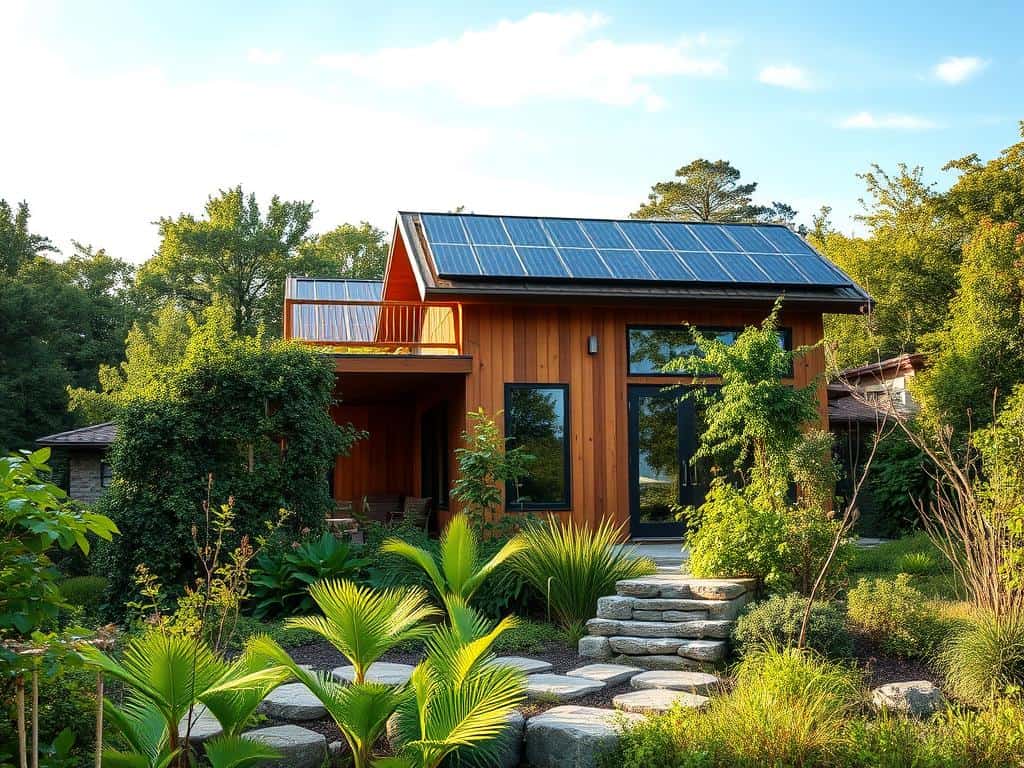
Did you know that better home insulation can cut down on bills and carbon emissions a lot? Eco homes are key in our quest for sustainability. They blend green design and sustainable architecture, reducing our environmental footprint. At the same time, they keep our homes stylish and cozy.
As we explore this, I’ll share top design tips for an energy-saving home. These eco-friendly upgrades boost your home’s value and help our planet. They’re a step towards a greener future for all.
Key Takeaways
- Upgrading insulation significantly reduces both energy costs and carbon footprints.
- Eco-friendly insulation options include materials like sheep’s wool and recycled plastic.
- Incorporating water-saving techniques can greatly reduce household water usage.
- Renewable energy sources offer a viable alternative to fossil fuels for home heating.
- Smart home technologies streamline energy consumption by adapting to user behavior.
Creating Sustainable Architecture for Eco Homes
In my quest to build an energy-efficient home, I’ve learned about sustainable architecture. It combines elements to boost comfort and cut down on environmental harm. Every decision I make helps my home and the planet.
Leveraging Passive Solar Design
Passive solar design is key for sustainable homes. It lets me use natural sunlight to control indoor temperatures. This cuts down on the need for artificial heating and cooling.
I place my home to catch the most sunlight in winter and shade in summer. Big windows help. Overhangs and plants like deciduous trees also help cool and warm the home naturally.
Utilizing Reclaimed Materials
Using reclaimed materials is a smart choice for sustainable homes. It reduces the need for new resources and cuts down on environmental harm. I choose reclaimed wood and other materials for their unique look and to reduce landfill waste.
I also pick low-VOC paints and finishes for better indoor air quality. This makes my home healthier. When buying new materials, I look for those that support good forestry practices.
Prioritizing Indoor Air Quality
Good indoor air quality is vital in sustainable homes. I avoid harmful substances like VOCs in traditional building products. Eco-friendly paints, natural carpeting, and non-toxic adhesives are my choices.
Effective ventilation systems keep the air clean. This makes my home not just energy-efficient but truly eco-friendly.
Transforming Your Space with Green Design
Choosing green design for my home makes it healthier and helps the planet. I focus on using energy-efficient appliances and saving water. These steps make my home welcoming and eco-friendly.
Incorporating Energy-Efficient Appliances
Buying energy-efficient appliances is key for me. I look for the Energy Star label to ensure they use less energy. For example, an efficient fridge or dishwasher cuts down on energy costs.
This choice also reduces my carbon footprint. It’s part of making my home eco-friendly.
Implementing Water Conservation Techniques
Conserving water is essential for a sustainable home. I use low-flow fixtures and water-saving appliances. This way, I use less water every day without losing comfort.
I also use rainwater harvesting to save even more water. This keeps my garden healthy. Plus, drip irrigation makes my outdoor space beautiful and water-efficient.
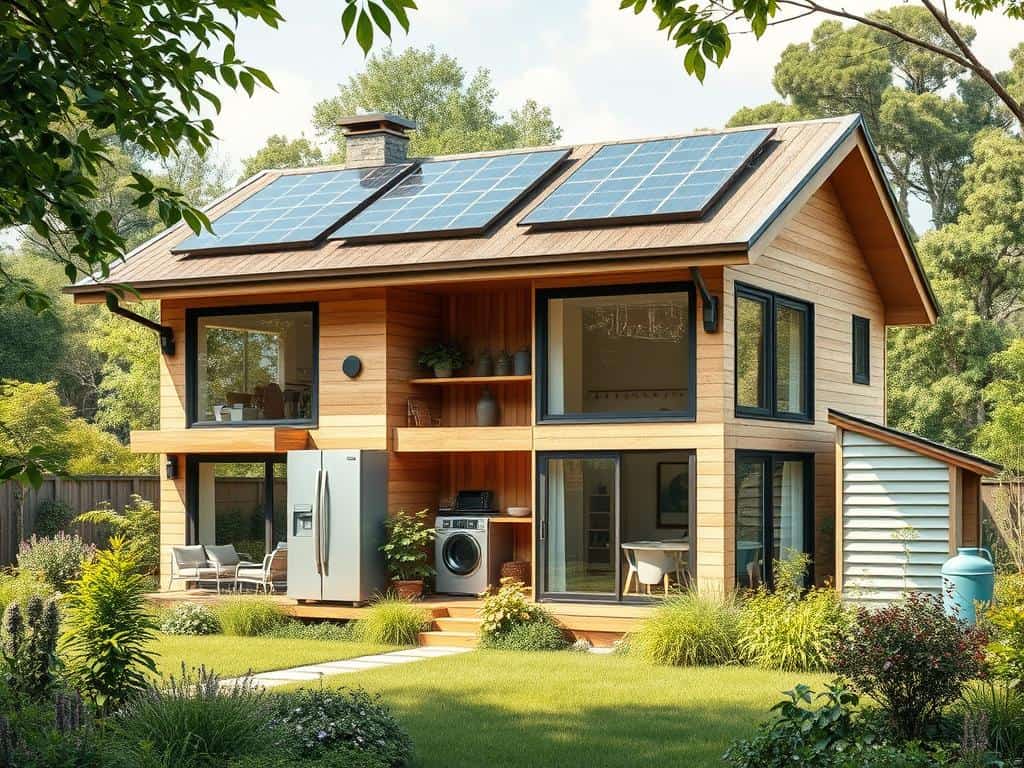
Eco Homes: Enhancing Energy Efficiency and Comfort
When designing an eco-friendly home, I focus on insulation and window efficiency. This improves energy efficiency and comfort. Proper insulation keeps the indoor climate stable all year.
I choose natural materials like sheep’s wool or recycled plastics for insulation. They help reduce my carbon footprint and keep my space comfortable. High-performance windows, such as double or triple-pane installations, also play a key role. They reduce heat transfer and enhance my living experience.
Maximizing Insulation and Window Efficiency
Effective insulation and high-quality windows transform an energy-efficient home. The right materials are essential. For example, using materials like mineral wool or foam keeps energy bills low and comfort high.
High-quality windows improve thermal efficiency and reduce noise. They also let in natural light, making my home brighter and more welcoming.
Engaging in Smart Home Technology
Smart home technology offers many benefits for energy efficiency. Smart devices adjust heating, lighting, and cooling based on my routines. This means I can manage energy use easily without extra effort.
Systems like smart thermostats and automated lighting collect data on my energy use. This data helps me make informed decisions to save even more. An eco-friendly home with smart technology is not only sustainable but also very comfortable.
Conclusion
Building an eco-friendly home is more than just a choice. It’s a way to live in harmony with nature while enjoying your style. By using passive solar design and energy-saving appliances, I help make my home healthier.
Every decision I make in my home matters. It helps create a space that’s good for me and the planet. This is important because it tackles big issues like energy use and waste.
I’m dedicated to green design, which means using recycled materials and new tech. These choices make my home more efficient and cut down on pollution. It’s not just a trend; it’s essential for living sustainably.
My goal is to make my home as energy-smart as possible. This shows my commitment to caring for the environment and feeling comfortable. The benefits are clear: saving money, staying healthy, and making my home more valuable.
In the end, choosing an energy-efficient home is a positive step. It lets me live in a way that’s good for the planet while enjoying the comforts of today.


MOST COMMENTED
Nature & Sustainability
Affordable Green Energy Solutions for Your Home
Health & Lifestyle
How to Gain Weight the Healthy Way with These 5 Tips
Home & Garden
Outdoor Rugs That Will Instantly Elevate Your Patio Decor
Home & Garden
Top 10 Flowers to Plant for a Colorful, Vibrant Garden
Health & Lifestyle
7 Effective Cardio Workouts You Can Do Anywhere
Health & Lifestyle
10 Guilt-Free Healthy Snacks You Can Enjoy Anytime
Home & Garden
How to Build with Recycled Materials for a Sustainable Home