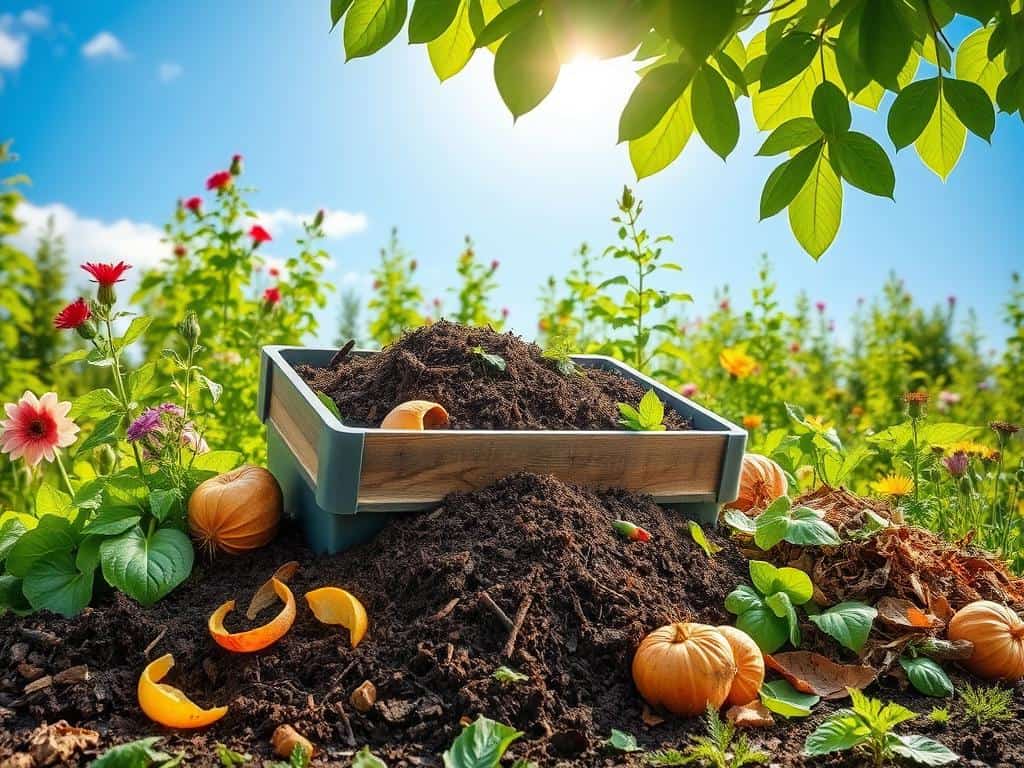
Did you know 24% of landfill waste is food? This shows we need better ways to handle waste. Composting turns organic waste into something valuable for our gardens. Through my journey in eco-friendly gardening, I’ve seen composting’s power.
It not only cuts down on waste but also makes soil better for plants. In this guide, I’ll share the basics of composting. You’ll learn how to make your own compost bin and turn kitchen scraps into garden fertilizer.
Key Takeaways
- Composting can significantly reduce the amount of organic waste in landfills.
- It enriches soil health, aiding in plant growth and sustainability.
- Setting up a compost bin is an easy way to contribute to eco-friendly gardening.
- Proper ratios in composting enhance efficiency and effectiveness.
- Many communities offer compost collection services to make composting easier.
Understanding the Benefits of Composting
Composting is great for the environment and our gardens. It helps us use organic waste in a better way. This makes our gardens healthier and our planet too.
Reducing Organic Waste in Landfills
Food scraps and yard waste make up about 30% of landfill materials. When they break down without air, they release methane, a harmful gas. Composting cuts down on landfill waste, saving money and reducing emissions.
By making compost, we turn waste into something good for our gardens. It’s a win-win for both our planet and our gardens.
Improving Soil Health
Compost is key to better soil. It adds nutrients and supports good microbes. This makes the soil rich and healthy.
It also means we use less chemical fertilizers and pesticides. These are bad for the environment and expensive. Plus, compost helps keep the soil moist, preventing erosion and runoff.
Our plants grow strong and fight off diseases better. It’s a big win for our gardens.
Conserving Resources
Adding just 1% organic matter to soil can save 20,000 gallons of water per acre. Water is precious in farming. Composting helps keep nutrients in the soil, saving water and reducing the need for fertilizers.
It also helps pull carbon out of the air, making our gardens more sustainable. This is good for the planet and our gardens.
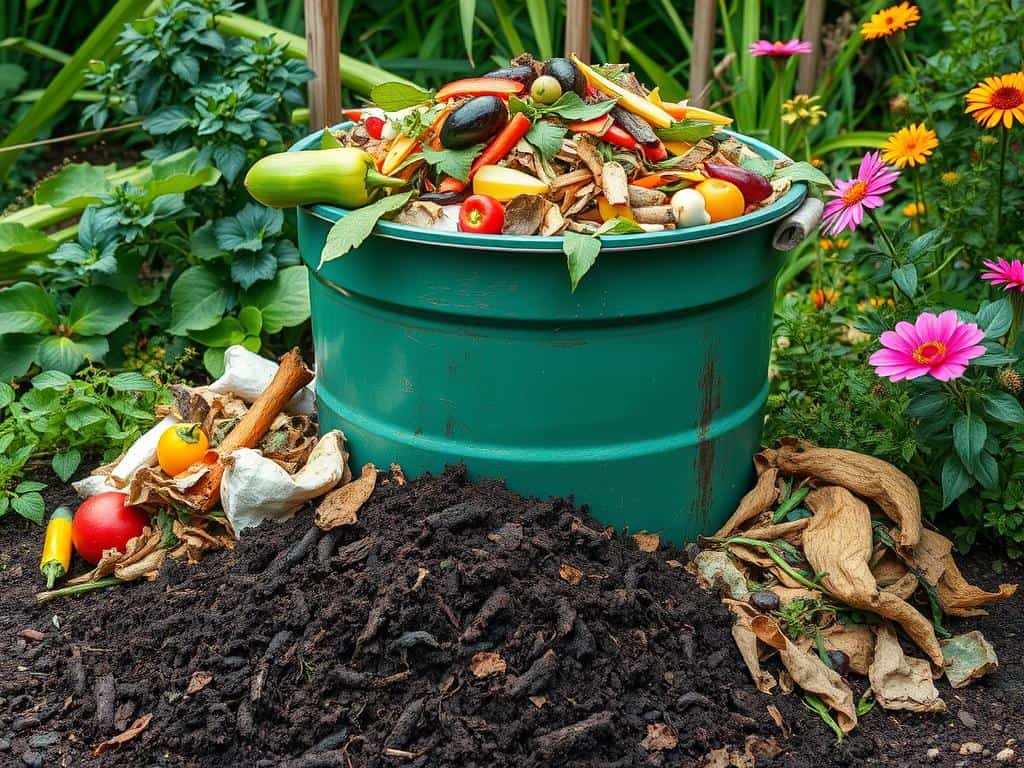
Composting: An Easy Guide to Getting Started
Starting a composting journey is rewarding and good for my garden and the planet. I’ll talk about different composting methods, the best ingredients, and how to set up my bin. Knowing these basics is essential for making rich soil from kitchen and garden waste.
Types of Composting Methods
There are two main composting methods: cold and hot composting. Cold composting is easy and needs little effort, letting nature do the work. Hot composting, on the other hand, requires more work but makes compost faster. With hot composting, I can get compost in just four weeks.
Each method has its own benefits and fits different schedules and gardening needs.
What to Compost
It’s important to choose the right things to compost. I divide materials into “greens” and “browns.” Greens are high in nitrogen, like fruit scraps and coffee grounds. Browns are high in carbon, like dried leaves and cardboard.
I aim for a mix of two parts browns to one part greens. This mix helps microbes work well and speeds up composting.
Setting Up Your Compost Bin
Choosing the right compost bin is key. It should be three feet tall, wide, and deep for good air and heat. I can pick from wood, plastic, or reuse materials.
It’s best to place the bin in a shaded area with good drainage. Keeping the compost moist and turning it every week or so improves its quality. This process not only makes my garden soil better but also supports eco-friendly gardening.

MOST COMMENTED
Nature & Sustainability
Affordable Green Energy Solutions for Your Home
Health & Lifestyle
How to Gain Weight the Healthy Way with These 5 Tips
Home & Garden
Outdoor Rugs That Will Instantly Elevate Your Patio Decor
Home & Garden
Top 10 Flowers to Plant for a Colorful, Vibrant Garden
Health & Lifestyle
7 Effective Cardio Workouts You Can Do Anywhere
Health & Lifestyle
10 Guilt-Free Healthy Snacks You Can Enjoy Anytime
Home & Garden
How to Build with Recycled Materials for a Sustainable Home