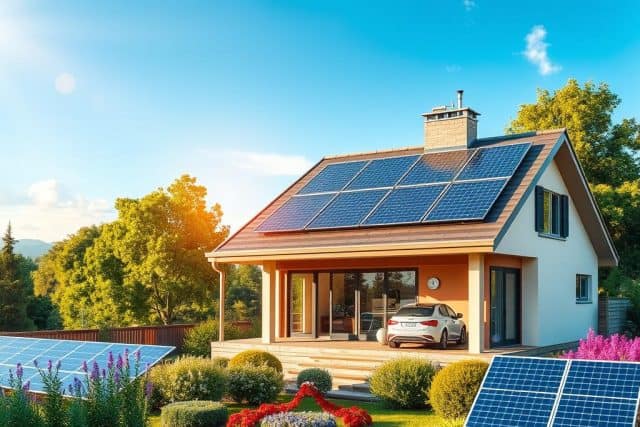
Did you know nearly 4 million American households now make their own power with solar energy? This change shows a big move towards using renewable energy. It also shows how important solar panels are for a green home.
Solar panels do more than just help the environment. They also save money and make homes more independent. With a 30% tax credit for solar systems, now is a great time to invest in green energy.
Next, we’ll look at how affordable solar panels are. We’ll see how they save money on utility bills over time. We’ll also talk about how they help create a sustainable future. This shows why solar panels are a smart choice for our planet and homes.
Key Takeaways
- Nearly 4 million American households utilize solar energy.
- Taxpayers can claim a 30% tax credit on solar systems until 2033.
- The monthly cost of a solar loan is often lower than an average utility bill.
- Homes with solar panels can see increased property values.
- Solar technology can operate efficiently across different climates.
Affordability of Solar Panels in Today’s Market
The cost of solar panels is getting better, making them more appealing to homeowners. A 6-kilowatt system costs about $12,700 on average. This is a big investment, but it’s helped by financial incentives.
The federal solar tax credit can cut installation costs by 30%. This makes solar panels more affordable. Starting in 2033, the credit will drop to 26%, encouraging people to act sooner.
Tax Incentives and Financial Assistance
In the U.S., many tax credits and programs help with the cost. These can greatly lower what you pay upfront. Solar loans offer monthly payments that might be less than your current utility bills.
This makes it easier to start using renewable energy without a huge upfront cost.
Declining Installation Costs
Installation costs have gone down, making solar panels more affordable. The average price per watt is about $2.75 before any credits. This means you can find a good deal based on your needs.
Different types of panels also affect the price. Monocrystalline panels are more efficient but cost a bit more. Polycrystalline and thin-film panels offer more budget-friendly options. These changes help make solar panels more affordable for more people.
Long-Term Savings with Solar Energy
Investing in solar energy offers many chances for long-term savings. It leads to big cuts in utility bills. Homeowners can better manage their energy costs over time.
Reduction in Utility Bills
The average household spends about $1,834 a year on electricity. This is a big financial load, as rates have gone up by 32% in ten years. With an average use of 10,791 kWh and rates at $0.17 per kWh, solar power can save a lot.
Homeowners can save around $1,530 a year with solar panels. Over the system’s life, savings can be from $28,000 to $120,000. This depends on electricity prices and state incentives.
Fixed Energy Rates
Another benefit of solar energy is fixed energy rates. This helps protect against future rate hikes. The industry sees annual price increases of 2.8%.
Systems let homeowners buy power at lower rates than the utility. This adds to financial stability. The payback period is about 8.5 years, showing how quickly savings can start.
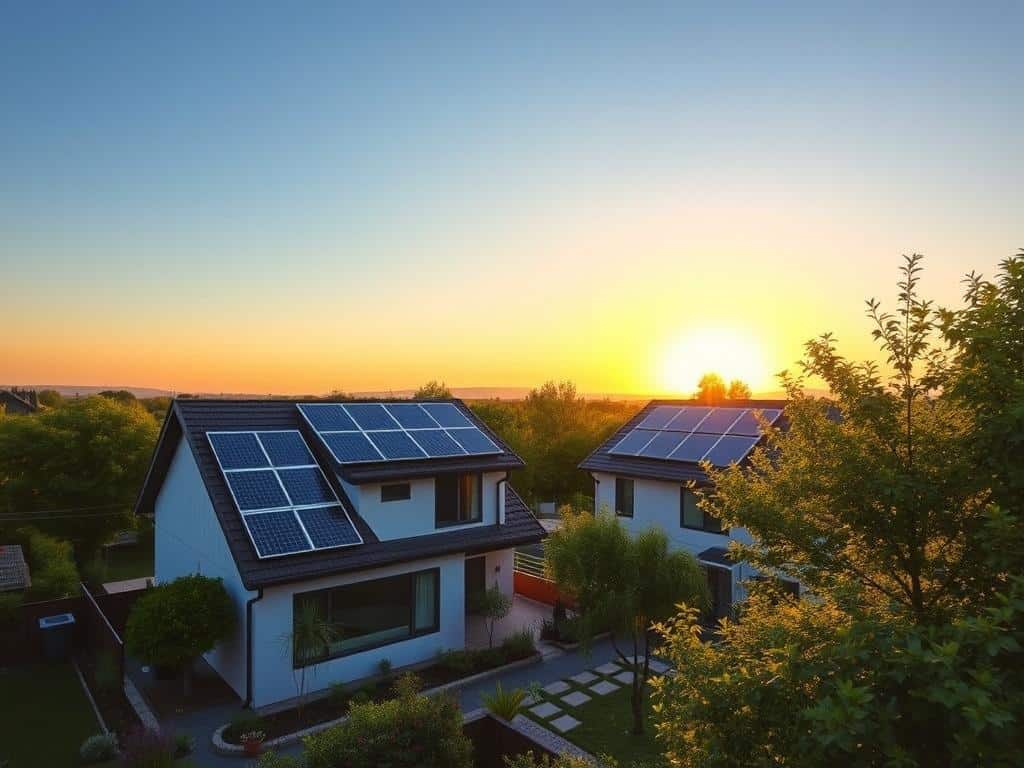
Solar Panels and Energy Independence
Switching to solar panels boosts my energy independence. I can make my own electricity. This means I stay powered, even when the power goes out.
Stay Powered During Outages
Thanks to better energy storage, using solar power during outages works well. I can save extra energy. This keeps my home running, even when the power is out.
This green way of powering my home also cuts down on pollution. It uses clean energy instead of dirty fossil fuels.
Contributing to a Sustainable Future
Choosing solar energy helps our planet. It cuts down on fossil fuel use and lowers carbon emissions. Using solar power fights climate change by making electricity without pollution.
By using energy-saving appliances, I save money and help the environment. This choice supports a greener future.
Conclusion
Adding solar panels to our daily lives is a big step toward living green. It saves money and gives us energy freedom. With costs going down and tax breaks available, the benefits are obvious.
By using solar power, our home is moving toward a cleaner future. We’re using less fossil fuels and helping the planet. This change is good for our family and the environment.
Using solar energy is key to our future. It could meet all global energy needs in just one hour of sunlight. Solar tech is getting better, making it the top energy choice for tomorrow.
This move to solar is an investment in a greener tomorrow. It benefits my family and the planet. I’m excited to see how it will shape our future.
With solar power, we can cut down on carbon emissions and make free electricity. It might even make our home more valuable. Solar energy keeps getting better, leading us to a more sustainable world.
My choice to go solar is for the health of our planet. It’s a step toward a better world for all of us. I’m proud to be part of this change.



MOST COMMENTED
Nature & Sustainability
Affordable Green Energy Solutions for Your Home
Health & Lifestyle
How to Gain Weight the Healthy Way with These 5 Tips
Home & Garden
Outdoor Rugs That Will Instantly Elevate Your Patio Decor
Home & Garden
Top 10 Flowers to Plant for a Colorful, Vibrant Garden
Health & Lifestyle
7 Effective Cardio Workouts You Can Do Anywhere
Health & Lifestyle
10 Guilt-Free Healthy Snacks You Can Enjoy Anytime
Home & Garden
How to Build with Recycled Materials for a Sustainable Home