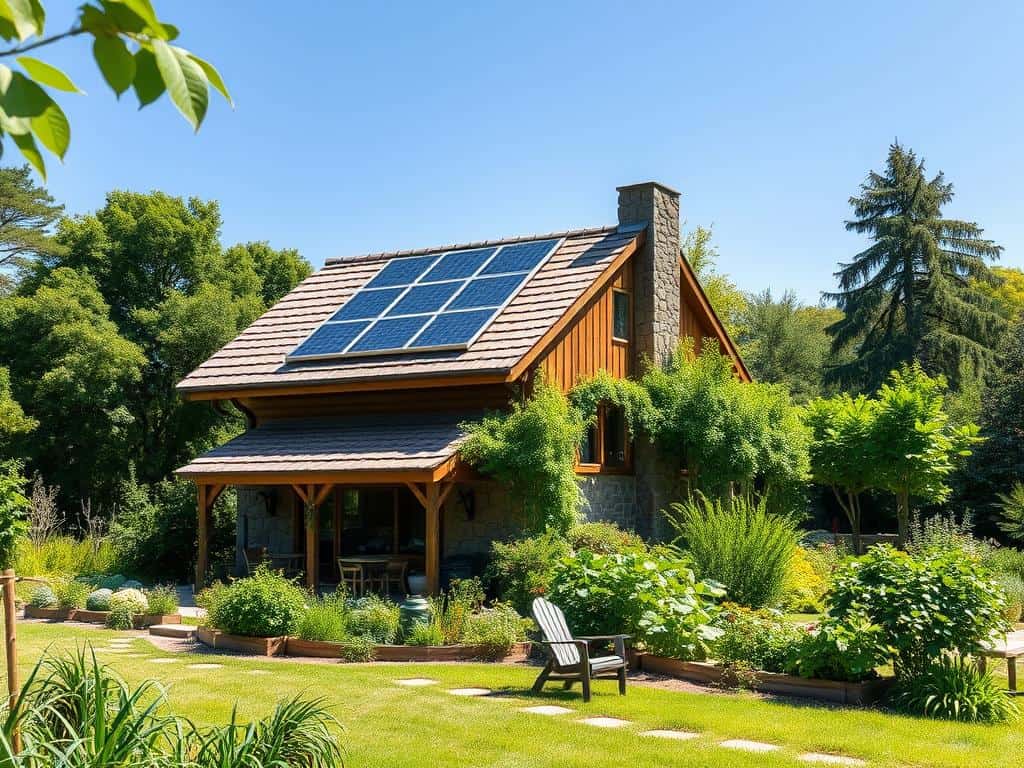
Did you know homes can lose up to 50% of their heat through unsealed attics? This shows how important it is to make homes eco-friendly. Sustainable design is more than a trend; it’s a key to a healthier planet and better living.
In this article, I’ll share seven easy steps to make your home eco-friendly. By saving resources and choosing sustainable materials, you can cut down your ecological footprint. This change not only improves your home but also saves money and supports a greener future.
Key Takeaways
- Eco-Friendly Homes can significantly lower energy consumption.
- Using energy-efficient appliances saves water and energy.
- Proper insulation and sealing prevent heat loss and lower heating costs.
- Sustainable design makes for a healthier home environment.
- Small actions, like using reusable bags, help the environment.
- Smart thermostats can save money in the long run.
Understanding Eco-Friendly Homes and Their Benefits
Eco-friendly homes are key to living sustainably. They are built to reduce harm to the environment and use energy wisely. Living in one supports a green lifestyle and improves health and the environment.
The Importance of Sustainable Living
Sustainable living helps keep our planet safe for the future. Eco-friendly homes help save resources and cut down on pollution. They are important because buildings use a lot of energy and cause pollution.
How Eco-Friendly Homes Benefit the Environment
These homes use less energy, saving up to 30%. Solar panels can lower energy costs a lot. Homes spend over $2,000 a year on energy, but eco-friendly homes can cut that cost.
Water-saving features can also cut water use by 50%. This supports a greener lifestyle.
Personal Health Advantages of Going Green
Living in eco-friendly homes is good for your health. They use safe materials, improving air quality. This makes homes healthier and more comfortable.
Choosing sustainable living makes me feel connected to my home. It also makes me happy knowing I’m helping the environment and my health.
7 Easy Steps to Create an Eco-Friendly Home
Making your home eco-friendly is easy and impactful. It helps create a better future. Here are simple steps to live greener by saving energy, water, and using sustainable materials.
Implement Energy-Efficient Lighting Solutions
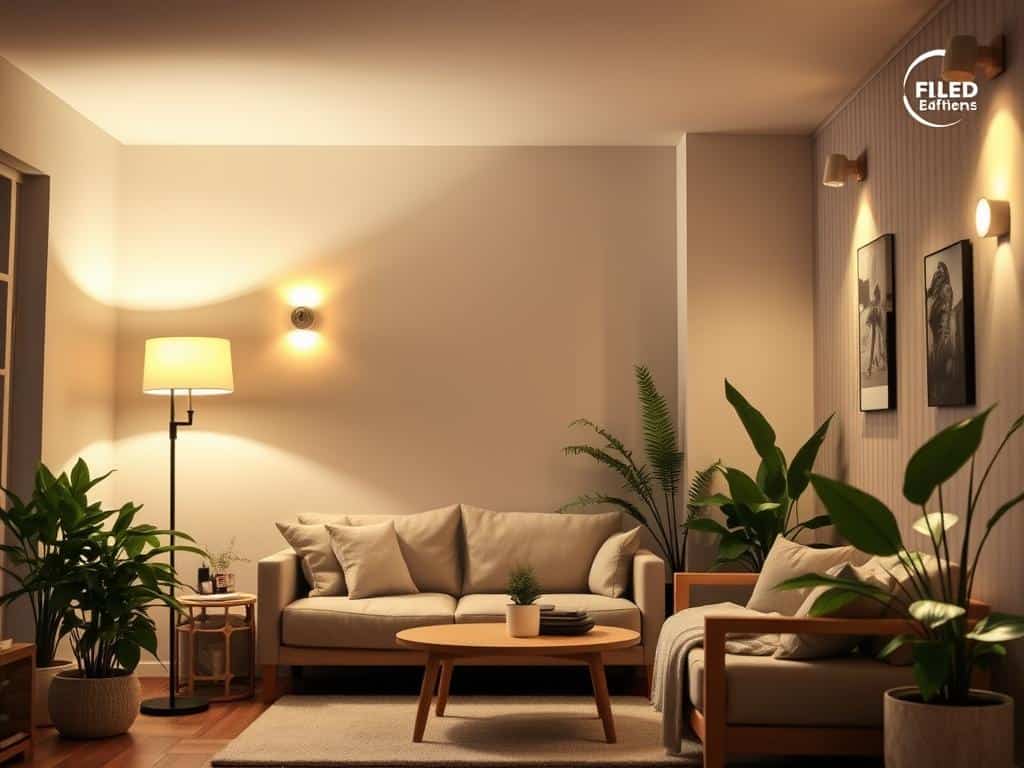
Switching to energy-efficient lighting is a big step. LED bulbs use 75% less energy and last longer than old bulbs. This change saves me $225 a year and cuts down on carbon emissions.
Choose Sustainable Materials for Furnishing
Choosing the right materials for your home is key. Bamboo and reclaimed wood are good choices. They’re good for the planet and make your home look great. These materials add unique touches to your space.
Establish a Reduce, Reuse, and Recycle System
Setting up a recycling system is vital. I’ll use special bins for different types of waste. This helps reduce waste and teaches me and others about saving resources.
Improve Water Conservation Measures
Water-saving steps are important for an eco-friendly home. Low-flow faucets and fixing leaks save a lot of water. A typical home wastes 9,400 gallons of water each year. Fixing this can save money and help the planet.
Embracing Eco-Friendly Homes Through Technology and Design
Exploring new tech and design helps me move toward eco-friendly homes. Modern energy-saving tech lets me cut down on environmental harm. At the same time, I get to enjoy today’s comforts.
Modern Technologies for Energy Efficiency
My search for sustainability led me to smart home tech. Smart thermostats help me control heating and cooling, saving energy. LED bulbs also cut down on electricity use, lowering my bills.
With solar panels getting easier to use, I can power my home with clean energy. This makes my home a green haven.
Choosing Appliances That Support Sustainable Living
Choosing the right appliances is key. I look for ones with energy star ratings, which use less power than old models. This choice cuts down on carbon emissions and saves money over time.
From fridges to washers, using energy-efficient tech makes a big difference. I’m proud to be part of a movement that cares about the planet.
Conclusion
Creating eco-friendly homes is a journey that requires dedication to sustainable living. Simple steps can make our homes more environmentally friendly and improve our health. Using onsite solar photovoltaic (PV) systems is key to saving energy and reducing carbon emissions.
Modern building codes already include energy-saving features like insulation. But, upgrading insulation doesn’t always save much energy. Instead, I focus on real solutions like solar power systems. These can power my whole home.
Choosing green living is more than just making my home better. It’s a commitment to the planet and future generations. Every eco-friendly change I make helps reduce my carbon footprint. By making smart choices, I support a healthier world for all.


MOST COMMENTED
Tech & Innovation
Why Quantum Cryptography Is the Future of Data Security
Nature & Sustainability
Affordable Green Energy Solutions for Your Home
Health & Lifestyle
How to Gain Weight the Healthy Way with These 5 Tips
Home & Garden
Outdoor Rugs That Will Instantly Elevate Your Patio Decor
Home & Garden
Top 10 Flowers to Plant for a Colorful, Vibrant Garden
Health & Lifestyle
7 Effective Cardio Workouts You Can Do Anywhere
Health & Lifestyle
10 Guilt-Free Healthy Snacks You Can Enjoy Anytime